CDN NEWS |
  US NEWS







By API – American Petroleum Institute
Rising fuel costs driven by global disruption are the headline story this year, but America’s energy affordability challenge is broader — and predates this crisis.
America has the capacity to produce abundant, affordable energy. The challenge is getting it where consumers need it. A slow and unpredictable federal permitting process delays the pipelines, transmission lines and other infrastructure needed to move energy from where it’s produced to where it’s needed.
Those projects spend years in reviews and legal challenges before construction even begins, adding costs and making it harder for our energy system to keep pace with demand.
That’s why permitting reform is an affordability issue.
Permitting reform isn’t a Republican-vs-Democrat — or renewables-vs-oil-and-gas — issue.
Lawmakers may disagree over energy policy and technologies. But pipelines, transmission lines, power plants and other critical infrastructure face the same problem — they must be permitted before they can be built.
Slow and unpredictable reviews make every type of energy project more difficult and expensive to complete, regardless of the technology involved.
Voters are connecting the dots. Recent polling found 74% of Americans agree that producing more energy and building the infrastructure to move it can help keep consumer costs lower.
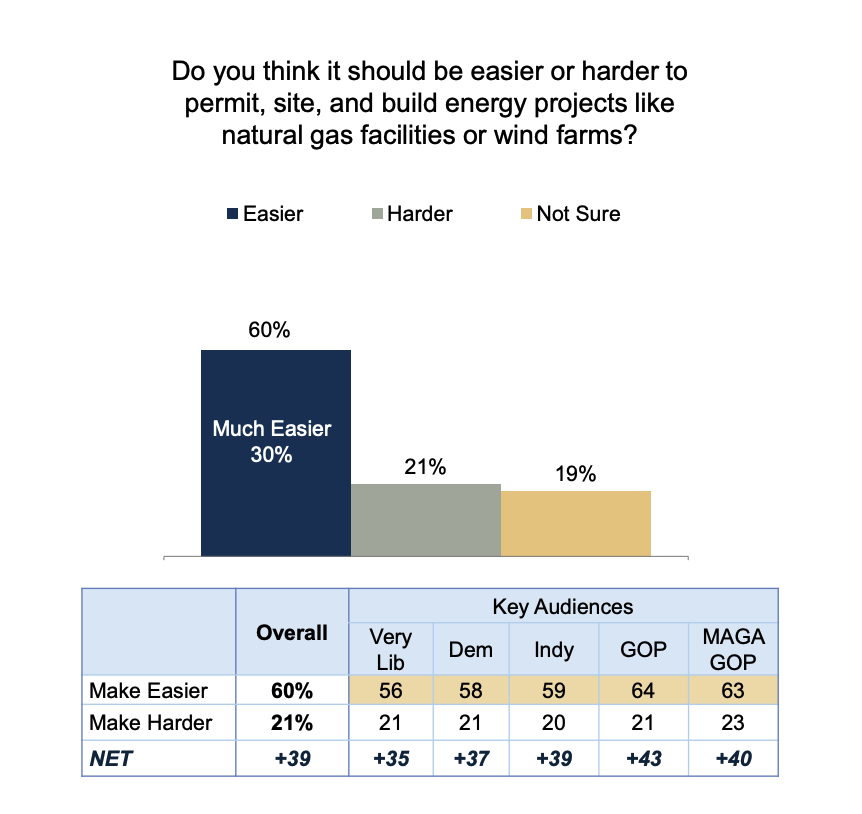
And that support crosses party lines. The same research found 58% of Democrats, 59% independents and 64% of Republicans say it should be easier to “permit, site, and build” energy projects.
Additional polls from Fabrizio Ward and Blue Rose Research also show broad, bipartisan support for permitting reform.
Permitting roadblocks are showing up in energy bills.
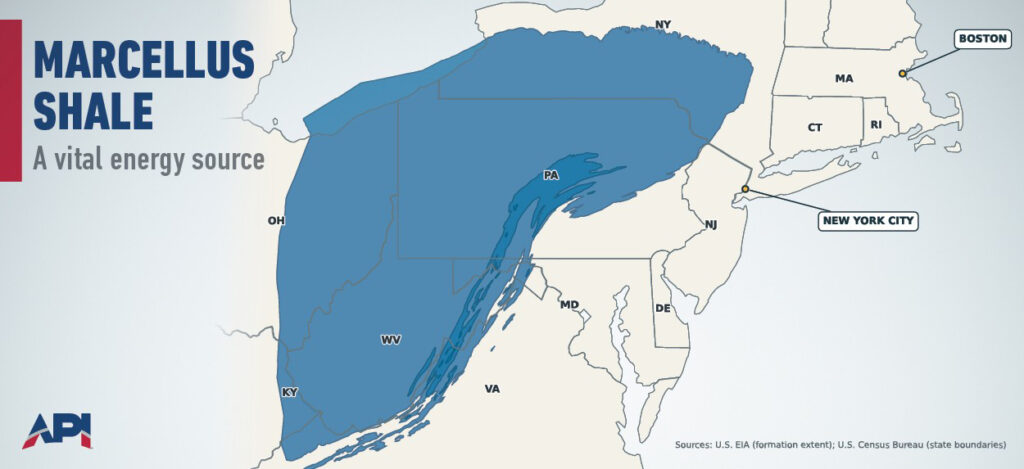
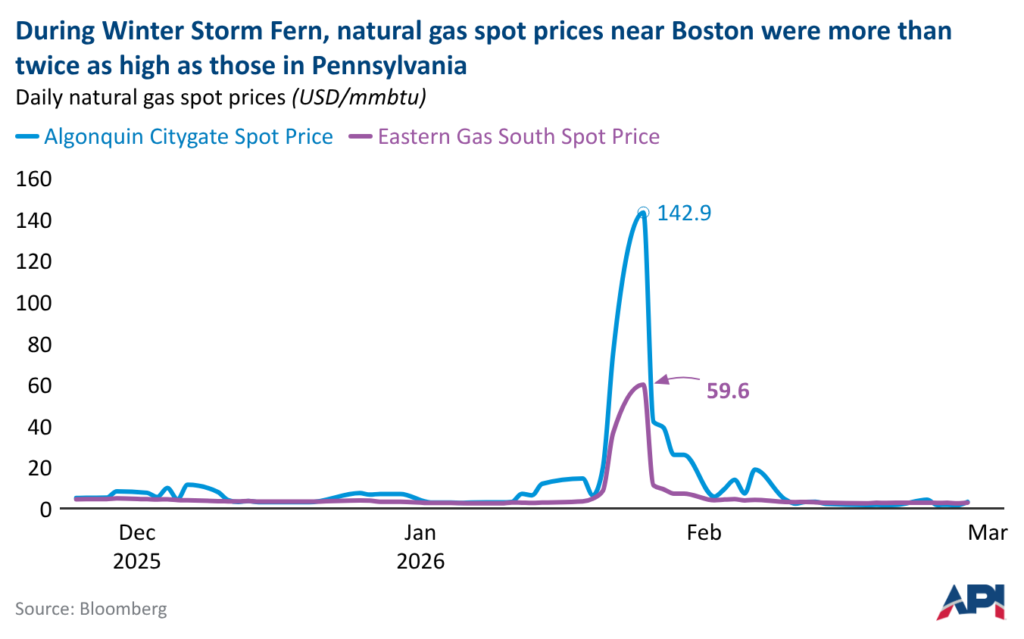
New England sits near the Marcellus — North America’s largest natural gas field — yet limited pipeline capacity in the region, particularly during periods of peak winter demand, can leave it more dependent on imported LNG that is generally more expensive than domestic pipeline gas.



Families there pay nearly $400 more each year for electricity than the national average, and studies have found pipeline shortages can push prices in Boston and New York up as much as 160% during peak periods.
California faces a different version of the same problem. Policy choices have reduced regional refining capacity, increasing the state’s reliance on imported fuels. California had the most expensive fuel prices in the country even prior to this year’s disruption. Recently, Californians have been looking at gas prices above $5.90 and diesel prices above $8 per gallon.
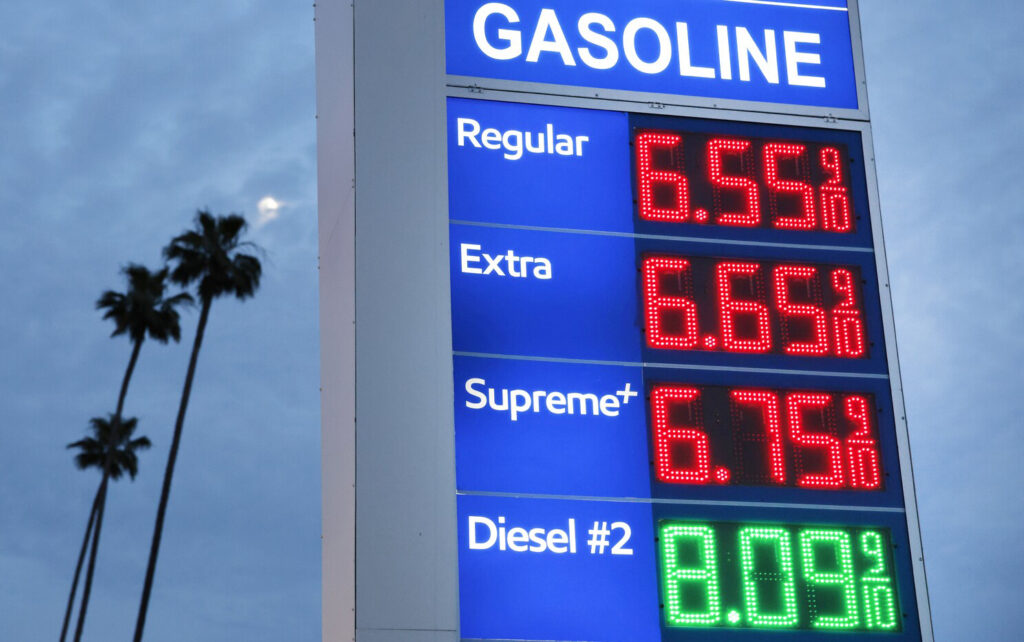
A recently proposed pipeline would bring additional fuel into the state, but first, the project will have to navigate our nation’s difficult permitting process.
A system that cannot approve projects cannot lower costs.
America once built — efficiently — major infrastructure projects that were the envy of the world. The Empire State Building was built in just over a year and the Pentagon in 16 months.
Today, just the review timeline for energy projects takes about 4.5 years on average. Major transmission projects can take six to seven years — sometimes reaching a decade or more.
Those timelines do more than push back an opening date. Years of review, overlapping approvals, litigation and uncertainty add costs and make it harder to move energy to the people and communities who rely on it.
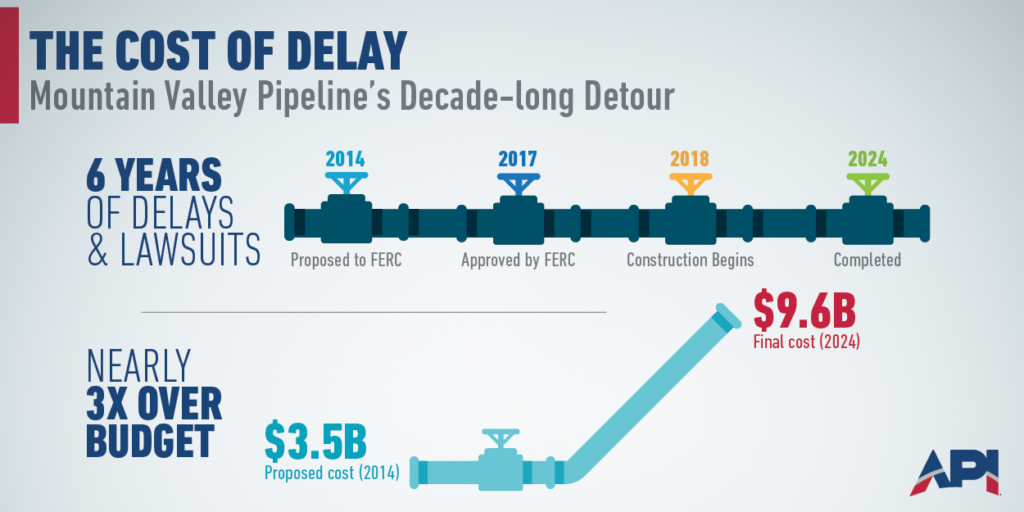
The Mountain Valley Pipeline took nearly a decade to permit and build — about as long as it took America to put a man on the moon. Ultimately it took an act of Congress to get the project completed.
The takeaway.
Energy costs are one of the biggest drivers of America’s broader affordability conversation, and a permitting system that makes it harder and more expensive to build only adds to that challenge.
Passing permitting reform is the single most consequential step Congress can take to strengthen energy affordability, reliability and security.
Share This: