CDN NEWS |
  US NEWS







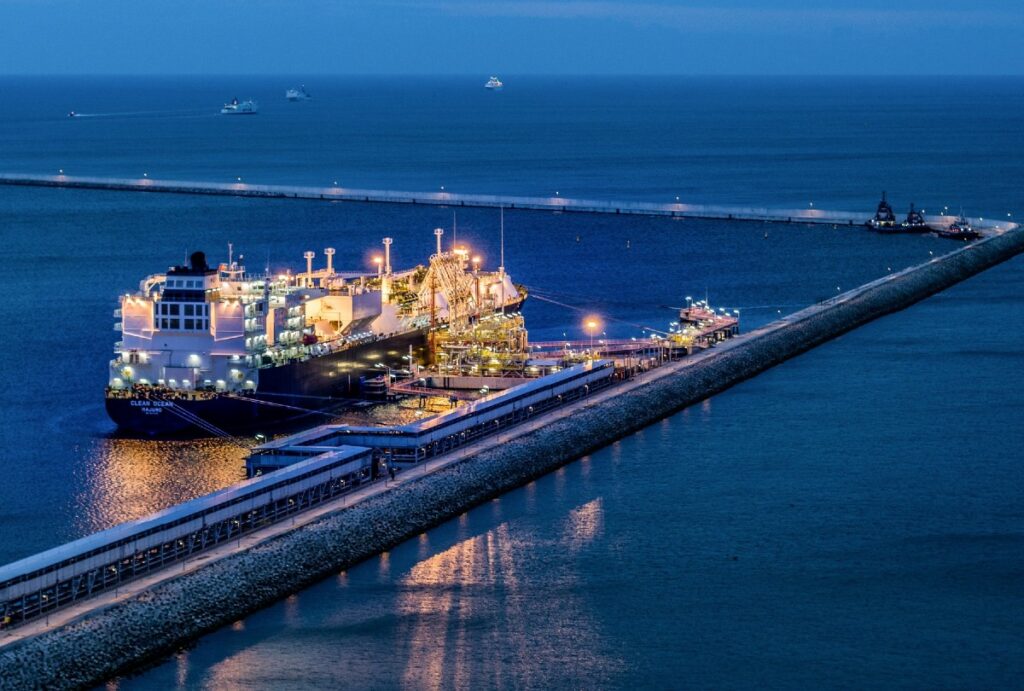
Global LNG prices could shoot higher this winter as Europe holds its lowest stocks in years and North Asian buyers face increased competition with the Strait of Hormuz still closed, executives said at an industry conference this week.
Europe will enter this winter more vulnerable than usual amid storage levels that are lower than last year, industry executives and analysts said at Gastech in Bangkok.
At the same time, the war on Iran has prevented Qatar and the United Arab Emirates from shipping liquefied natural gas through the Strait of Hormuz, leading to a loss of 36 million metric tons of supply this year, according to Shell.
“Right now, where we stand in Europe is at a historically low storage level heading into the end of fall,” said Shell’s President of Integrated Gas Cederic Cremers.
European Union natural gas stocks are currently 67% full, a record low for this time of year and far below an EU target of storage at 80% of capacity by December. Executives from Norwegian major Equinor said gas stocks could reach 75% full by November 1.
Unlike the Ukraine crisis in 2022, European countries did not rush to build stockpiles during summer to meet winter demand due to a lack of financial incentives in a backwardated market, where prompt prices are higher than those in future months.
“Unfortunately, it seems to us that Europe is in a very difficult position going into this winter,” Cheniere Energy Chief Commercial Officer Anatol Feygin said.
“(It’s) not a secret to any of us that inventory levels are low. The prompt depends on how weather plays out.”
Germany’s state-owned energy firm SEFE said on Wednesday it had already started increasing its natural gas storage levels as Europe heads into winter with the lowest inventories in years.
PRICES COULD RISE BY A THIRD



Asia’s spot prices this year have already nearly tripled to close to $30 per million British thermal units, dampening demand, industry executives said, down from a pre-war range of around $10/mmBtu.
“There’s a big risk if we have a cold winter because there’s very little spare supply available, and it’ll really test the market,” said Simon Flowers, chairman of consultancy Wood Mackenzie.
If it’s a colder winter than normal, prices may reach $40/mmBtu, equivalent to about $240 per barrel for Brent, Flowers said, adding that prices that high would probably result in some demand destruction.
“If it turns out to be warm… Prices will still be elevated, but they may not be much higher than they are today,” he said, noting that with the Iran war escalating and widening, the Strait of Hormuz will likely remain constrained through the year-end.
Equinor’s Senior Vice President Marketing and Supply Helle Ostergaard Kristiansen told Reuters a cold winter in Europe and Asia and continued disruption to Hormuz LNG shipments would mean that European buyers likely have to compete with Asia for US supplies.
The 45-day journey from the U.S. to North Asia, however, could pose a challenge for Asian buyers looking to deploy their ships quickly to meet demand, said ExxonMobil Vice President for Global LNG Marketing Andrew Barry.
“This winter can be a challenging time for sure,” Barry said.
Shell’s Cremers said: “We can all hope for a warm winter. But I think in all likelihood, with what we’ve seen the last few years, there will be more restocking need of getting into the winter, and no doubt then afterwards as well.”
(Reporting by Florence Tan, Emily Chow and Helen Clark; Editing by Tom Hogue)
Share This: