CDN NEWS |
  US NEWS







By Jason Chiu
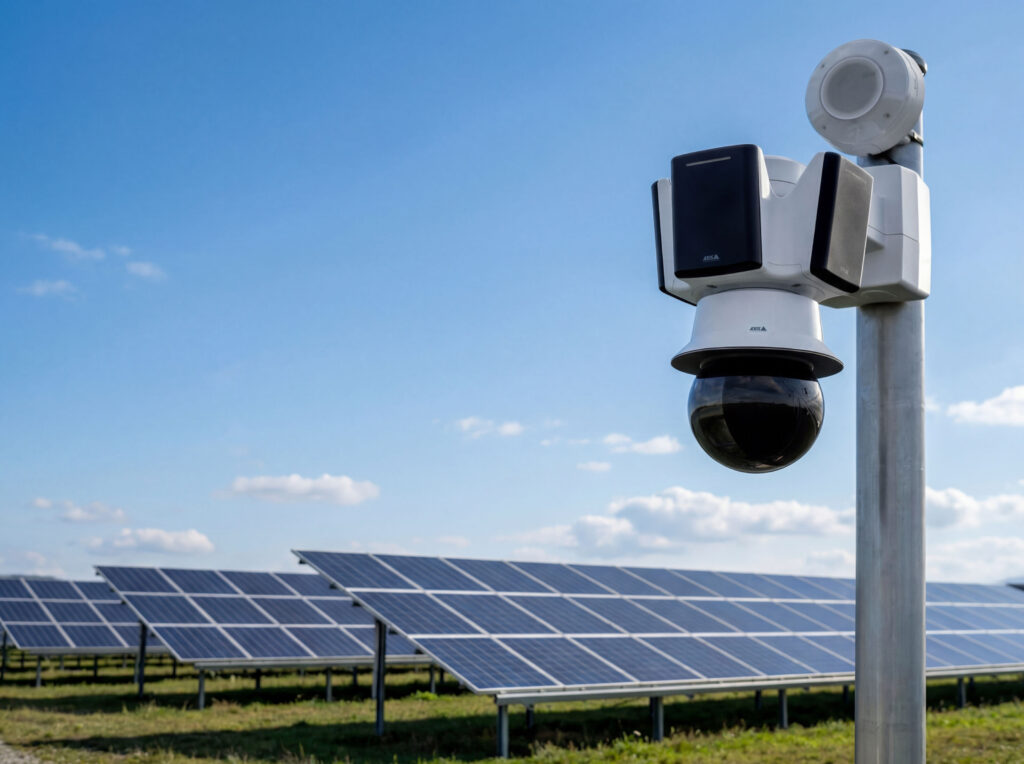
AXIS D2123-VE monitoing a solar field
Energy operations are often defined by environments that are remote, complex, and difficult to access. From pipelines that span vast geographies to well sites and processing facilities operating under demanding conditions, maintaining consistent awareness is not just a technical challenge – it is an operational requirement.
Video systems are already a familiar part of that landscape. But as video technologies become more advanced and connected, the way these systems are being used is beginning to evolve. The Axis Perspectives Report points to a broader shift across industries – from a tool primarily used for monitoring to one that supports operational insight, decision-making, and system integration.
For energy operators, understanding this shift can help unlock more integrated and efficient ways of managing operations.
From Monitoring to Operational Insight
One of the most notable changes is how video is being used once it is in place. Rather serving solely as a visual reference, it is increasingly being treated as a source of data that can support operational understanding. According to the Report, 38% of organizations are now using video to generate business intelligence – up from just 20% prior. Meanwhile, 42% are using it to improve operational efficiency. This reflects a broader move toward extracting more value from existing systems.
In energy environments, network cameras with embedded analytics can be used at well sites to track pump movement and operating cycles, helping operators identify irregular activity that may indicate maintenance needs or inefficiencies. Video management software (VMS) platforms can aggregate this data across multiple sites, allowing operators to compare performance and identify patterns that would be difficult to detect through manual checks alone.
Similarly, thermal cameras can be deployed at substations or processing facilities to monitor heat variations in equipment, providing early indicators of potential failures before they escalate. Radar devices can support perimeter and asset monitoring in low-visibility conditions, reducing false alarms while still capturing meaningful activity data.
In each case, the goal is not just to observe what is happening, but to generate actionable insight – turning video systems into a consistent source of operational intelligence rather than a passive recording tool.
From Passive Footage to Real-Time Decision Support
One of the clearest developments is the move from retrospective review to real-time awareness. Rather than relying on recorded footage after an event has occurred, video systems are increasingly being used to detect and respond to conditions as they happen.
According to the Report, 82% of organizations are using or planning to use real-time data processing, while more than 75% are starting to layer AI and machine learning into their systems to process growing volumes of data. This reflects a growing emphasis on immediacy, where the value of video lies not just in what it captures, but in how quickly it can inform action.
In energy environments, analytics-enabled cameras can be deployed along pipeline corridors to detect movement near critical infrastructure, triggering alerts the moment unusual activity occurs. These alerts can be assessed remotely, allowing operators to determine next steps without delay.
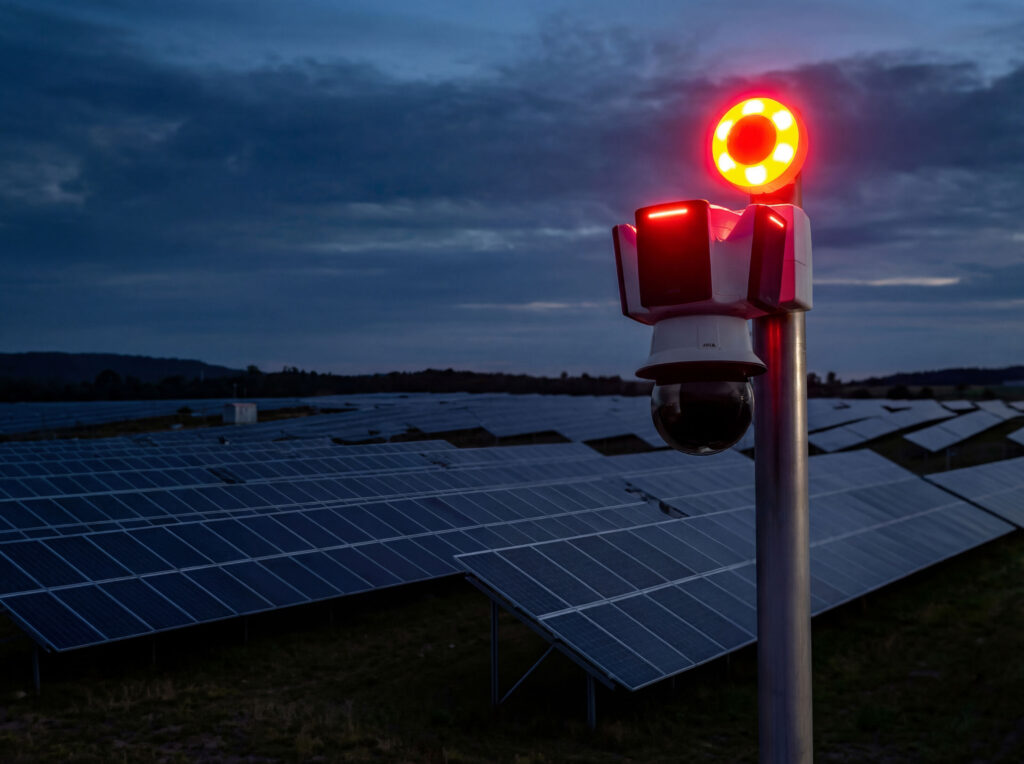
Axis camera overlooking solar field with red LED alert
Network audio systems can also be integrated to enable bi-directional communication, allowing operators to issue warnings or instructions directly to individuals on site. At remote facilities, this can help de-escalate situations or guide personnel without requiring immediate physical intervention.
Body worn cameras can further extend this capability by providing a real-time first-person view of conditions on site. During inspections or maintenance activities, this allows remote teams to assess situations as they unfold, keep remote or lone workers safe, support decision-making, and guide personnel without requiring additional site visits. In complex or high-risk environments, this added perspective can improve coordination and reduce response times by ensuring that the right information is available in the moment.
In this context, video is no longer just a record of events, but an active tool for enabling faster, more informed decisions in the moment.
From Centralized Monitoring to Intelligence at the Edge
Another important development is the shift toward processing video data closer to where it is generated. Rather than relying entirely on centralized systems, organizations are increasingly leveraging systems that can analyze and interpret data directly at the point of capture, improving responsiveness and reducing reliance on limited or constant connectivity.
This shift is closely tied to the growing emphasis on real-time insight highlighted earlier. As organizations look to act on information more quickly, processing data at the source becomes a practical way to reduce latency and maintain performance – particularly in environments where connectivity may be limited.
For energy operators, this is especially relevant across remote or bandwidth-constrained sites. Network cameras with edge analytics can be deployed at substations or pump stations to analyze conditions locally and generate alerts only when specific thresholds are met, reducing the need to transmit continuous video streams.
Video compression technologies like AV1 that prioritize relevant motion and activity in the scene, combined with event-triggered streaming, can further support this approach – reducing bandwidth use while maintaining overall system awareness.
By shifting this intelligence closer to the source, video systems become more resilient and responsive, supporting consistent oversight across geographically dispersed operations.
From Standalone Systems to Integrated Infrastructure
A further development is the growing integration of video systems with other operational technologies. Rather than functioning independently, video is increasingly becoming part of a broader, connected infrastructure.
According to the Report, 41% of organizations prioritize integrating different systems into a unified platform, highlighting the importance of interoperability and system-level visibility.
In energy environments, this can be seen in the integration of VMS with access control systems, environmental sensors, and building or process management platforms. At processing facilities, for example, video feeds can be correlated with environmental data or access events, providing operators with a more comprehensive view of site conditions.
IoT sensors can extend this visibility by contributing additional data points, while network audio systems can support coordinated responses across different parts of a facility. Together, these technologies create a more unified operational picture, reducing silos and improving coordination.
As a result, video becomes less of a standalone system and more of an integrated layer within the broader operational ecosystem.
Implementing These Shifts in Practice
As video becomes more embedded within operational systems, the question shifts from what these technologies can do to how they should be implemented in practice. Whether operators are working with legacy systems that need to be replaced or more modern deployments that require refinement, the focus is increasingly on how video is configured and aligned with operational needs, rather than simply how it is deployed.
In practical terms, this often begins with defining the operational objective. Instead of starting with system specifications or coverage requirements, operators are first identifying what needs to improve – whether that is reducing site visits, improving visibility across remote assets, or detecting irregular equipment behavior earlier. From there the role of video becomes clearer, allowing systems to be applied where visual data can provide meaningful insight.
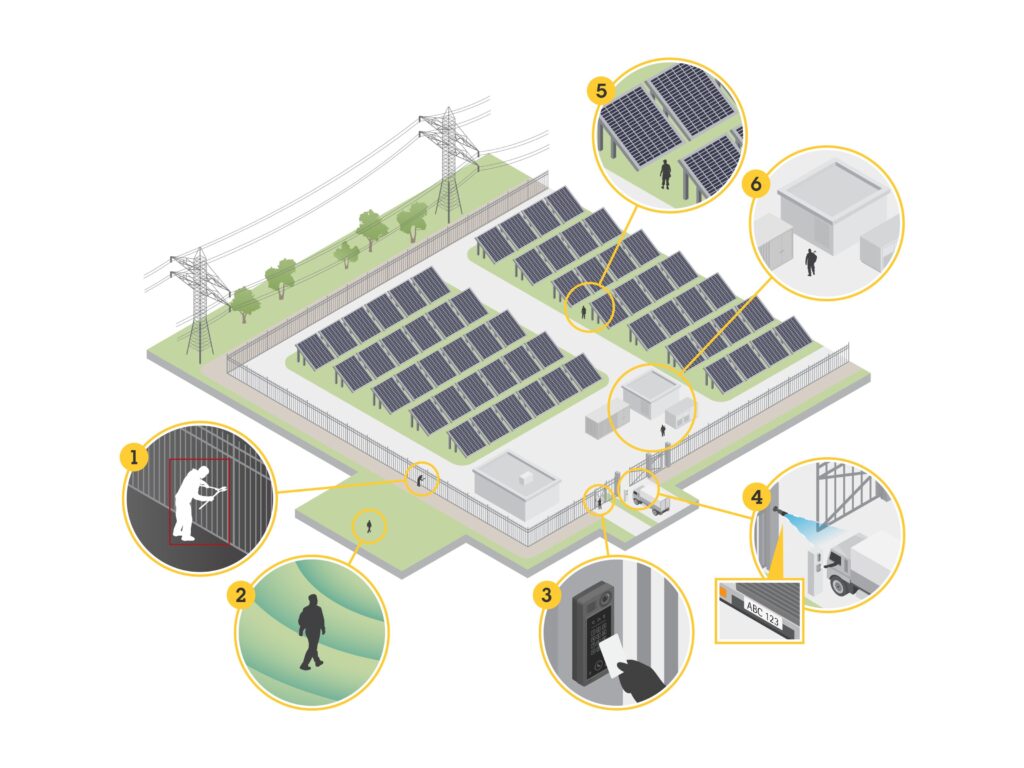
Solar plant operational efficiency use cases
Once those use cases are established, implementation shifts toward configuring systems to detect and respond to relevant conditions. This includes defining what events or patterns should be identified, determining where processing should occur, and ensuring that insights are delivered in a way that supports timely action. In remote or bandwidth-constrained environments, this may mean prioritizing edge-based processing, while in more connected facilities, a hybrid approach may be more effective. In both cases, the goal is to ensure that information is not only captured but surfaced in a way that can be acted upon.
At the same time, implementation increasingly extends beyond the system itself. As video becomes part of a broader operational ecosystem, it must be integrated with other technologies and workflows, contributing to a more unified view of site conditions. This also places greater importance on the role of the solutions partner. Selection is no longer based on installation and setup, but on the ability to support the system throughout its life cycle – from configuration and optimization to ongoing updates and eventual upgrades or decommissioning.
Across these stages, the common thread is alignment. Video systems deliver the most value when they are designed around operational priorities, configured to detect what matters, and supported in a way that allows them to evolve alongside the environments in which they are deployed.
Turning Insight into Operational Advantage
As these developments continue to take shape, the role of video in energy operations is becoming more clearly defined. What was once primarily a tool for monitoring is now contributing to how sites are understood, managed, and optimized on a day-to-day basis. The shift is not about replacing existing systems, but about expanding their function – using the same infrastructure to generate insight, support faster decisions, and connect with broader operational workflows.
For energy operators, the impact lies in how effectively these capabilities are applied. Whether through better configuration, stronger integration, or more intentional use of data, video systems are increasingly positioned as part of the operational backbone rather than a peripheral tool. As environments grow more complex and distributed, that added layer of insight can play a meaningful role in improving efficiency, responsiveness, and overall system performance.
BIO
Jason Chiu is the Professional Services Group Manager with Axis Canada. He has a background in IT and networking and has spent over 20 years in the security industry, from being an integrator, consultant and manufacturer. Jason is an ASIS board certified Physical Security Professional (PSP), is trained in Critical Infrastructure Protection (CIP), Crime Prevention Through Environmental Design (CPTED Levels 1 & 2), and (ISC)2 Certified in Cybersecurity.
Share This: