CDN NEWS |
  US NEWS






As the oil and gas industry faces aging infrastructure, tightening emissions regulations, and a growing skilled labor shortage, one question is defining the next decade of operations: how do you inspect what you can’t safely reach?
Microwatt Controls is heading to the Energy and Drone Summit this June with an answer, and it is the only one of its kind in North America.
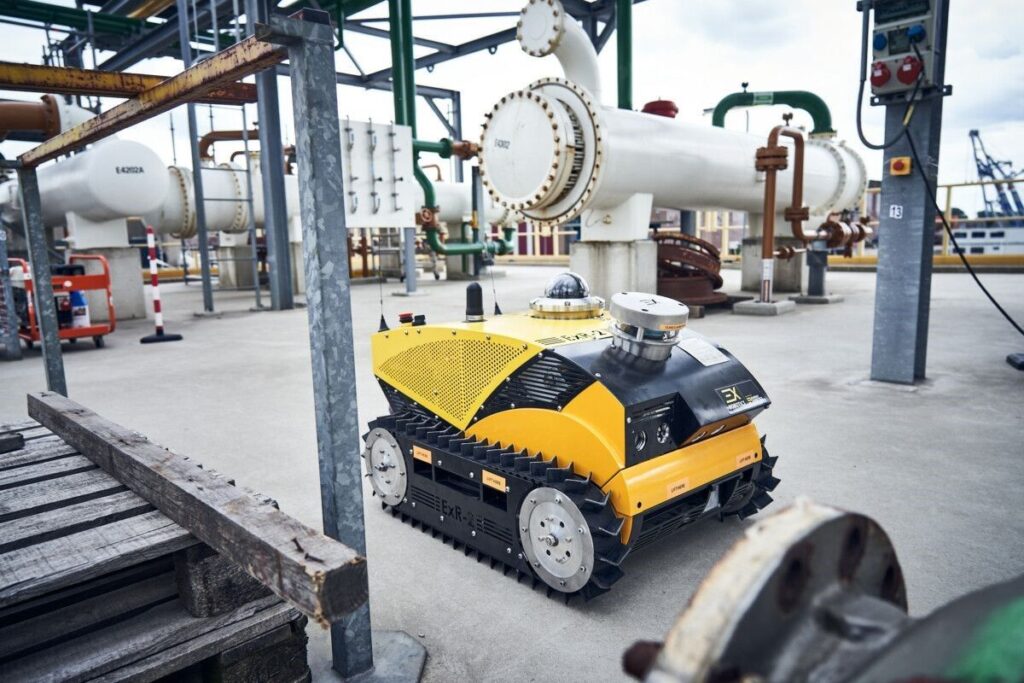
The centerpiece of Microwatt’s presence at this year’s summit is the ExR-2.5, ExRobotics’ tracked autonomous inspection robot. A key focus of our presentation will be an exploration of UL 6260, currently an active Outline of Investigation developed by UL Solutions.
For operators evaluating hazardous area robotics for North American deployment, understanding this pathway matters. An Outline of Investigation is a certification that shapes the engineering and compliance requirements that any robot must meet to operate safely in classified areas. We’ll walk through what this means for real-world deployment decisions, what the process entails, and what operators should ask their robotics vendors about certification readiness.
Smarter Inspection. Less Risk. Better Data.
Traditional inspection in hazardous facilities depends on human technicians walking fixed routes, reading gauges, and logging observations that vary with fatigue, lighting, and time pressure. Autonomous robotic missions replace that variability with consistency.
The ExR-2.5 follows pre-programmed routes, stops at defined checkpoints, and collects structured data every single time — building a longitudinal record of asset health that supports trend-based decisions rather than gut-feel assessments. Equipped with thermal imaging, acoustic cameras, optical gas imaging, and point gas detectors mounted low in the hull to catch heavier-than-air VOCs, the platform detects concentrations down to parts-per-million levels during routine patrols.
The principle is simple: detect small, fix small — before a minor seepage becomes a safety event, an environmental liability, or a costly unplanned shutdown.
Come See It at the Summit
Whether you’re evaluating autonomous inspection for the first time or looking to expand an existing robotics program, this is a session built for operations and asset integrity professionals who need practical answers — not proof-of-concept pitches.
Join us at the Energy and Drone Summit this June. See the ExR-2.5 in action, and find out how autonomous inspection is moving from pilot project to essential infrastructure.
To learn more or arrange a meeting at the summit, contact the Microwatt team at https://www.microwattcontrols.com/en/energy-drone-summit-exr25?hs_preview=PCchkvND-212400783740
Share This: