CDN NEWS |
  US NEWS







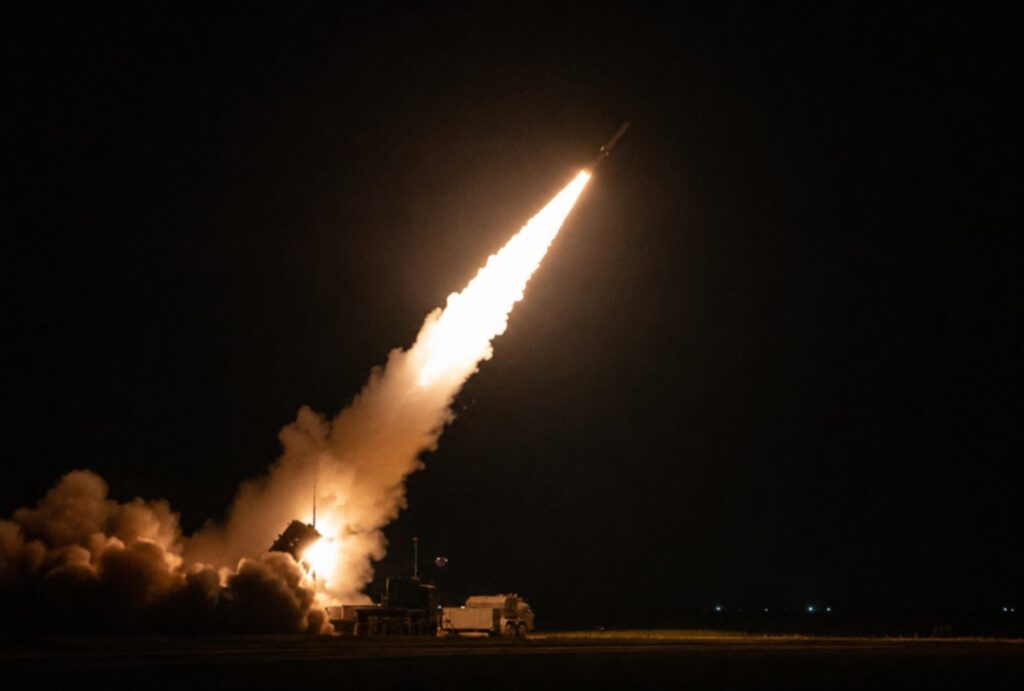
The US and Iran have intensified tit-for-tat military strikes in recent days, remaining locked between ceasefire and all-out war as the White House struggles to end the six-month conflict.
“Very clearly militarily, we are stalled,” Republican Representative Pat Harrigan of North Carolina, who sits on the House Armed Services Committee, said in an interview on Wednesday. “There’s no question about that.”
The latest back and forth has seen Iran hit merchant vessels, spurring the US to strike Islamic Revolutionary Guard Corps sites that were used for targeting ships in the Strait of Hormuz. That led to Iran firing missiles and drones on US bases in the region, including in Jordan, Kuwait and Bahrain.
Iran said the US killed 18 people with its attacks on Tuesday night. It vowed to punish Washington for a strike on a wedding ceremony in the southern city of Sirik, which the Iranian Red Crescent Society said killed at least four people and injured 67.
Energy prices that dipped during a lull in fighting for most of August have risen again, putting more pressure on US President Donald Trump to end a conflict that’s increasingly unpopular with voters ahead of midterm elections in two months.
Brent crude oil has climbed more than 6% this week to $95 a barrel, while US pump prices for diesel are at a four-year high. The jump in energy costs has contributed to a global bond sell-off.
The hostilities have underscored Iran’s continued ability to choke a crucial maritime artery. The Hormuz strait handled a fifth of oil and liquefied natural gas flows before the war.
Iran and the US seem far from getting back to formal negotiations and their so-called memorandum of understanding, signed in mid-June, expired without the sides making much progress toward a permanent peace deal.
While the tempo of airstrikes and number of casualties remain far below the opening weeks of the war — when the US and Israel were blitzing Iranian cities and the Islamic Republic fired thousands of projectiles at American allies in the region — the low-level conflict is still stretching Washington’s military. And a return to all-out warfare remains a possibility.
“Both sides are progressively upping the ante with new conditions for a return to talks,” Dina Esfandiary and Becca Wasser of Bloomberg Economics wrote. “This means the uneasy stalemate — even with occasional flare-ups in violence — will continue for now.”
Trump said he didn’t think the latest round of US strikes would go on for “too long.” His treasury secretary, Scott Bessent, announced a plan for renewed economic pressure on Iran last week, complementing a US naval blockade on its ports. Bessent said the push to squeeze Iran’s economy meant “that likely there will not be a large-scale kinetic restart” of fighting.
Read more: Saudi Oil Exports Dive as Tankers at Risk From Hormuz to Red Sea



The blockade is already hitting Iran, stopping it from exporting oil and importing essential goods, sending inflation up to around 80%. Bessent’s campaign to get countries, whether allies of Washington or not, to further cut ties may exacerbate Tehran’s problems and eventually force it to make concessions.
For now, though, Iran’s leaders seem to think they can withstand US economic pressure for months longer and many of its trading partners — including the likes of China, Pakistan and Turkey — are shrugging off the idea of ending all ties.
The new attacks, which follow a pattern that’s been repeated throughout the conflict, make it even less likely that the two sides can find their way toward any sort of diplomatic arrangement.
The Trump administration has repeatedly insisted it aims to prevent Tehran from obtaining a nuclear weapon, but at times has appeared more focused on simply opening up the Strait of Hormuz as it faces domestic pressure to wind down the unpopular war.
Tehran, meanwhile, sees the conflict as existential, and has retained the ability to raise the costs of the conflict to Trump by menacing the strait. It has also hit the energy infrastructure of wealthy Gulf Arab states such as Saudi Arabia and the United Arab Emirates with drones and missiles.
Read more: GLOBAL INSIGHT: Six Months Into War, US and Iran Are Both Losing
“I don’t think either side has a well-developed strategy of victory,” said Jon Alterman, global strategy and security chair at the Center for Strategic and International Studies. “For the Iranians, mere survival is victory. For the Americans, it’s not acceptable to let the Iranians control the strait. But it’s hard to find a way to keep the Iranians from threatening the strait.”
The US blockade is the best available option, and imposes considerable pressure on Iran, said Michael O’Hanlon, defense and strategy chair at the Brookings Institution.
The military presence enables and complements the economic campaign spearheaded by Bessent, he said.
“We can keep 15 ships operating in the Persian Gulf as long as we need to,” O’Hanlon said. “Compared to any other military operation I can think of at this stage in the showdown, this is the best one for us.”
Harrigan, the Republican lawmaker, believes the US has accomplished some of the goals it laid out at the beginning of the conflict but is now “stuck.”
“We have to stop fighting a limited war” indefinitely, “thinking that we’re going to use limited conflict to achieve unlimited outcomes,” he said. “What we’re doing right now is irresponsible and we need to make a decision.”
— With assistance from Roxana Tiron and Carla Canivete
Share This: