CDN NEWS |
  US NEWS







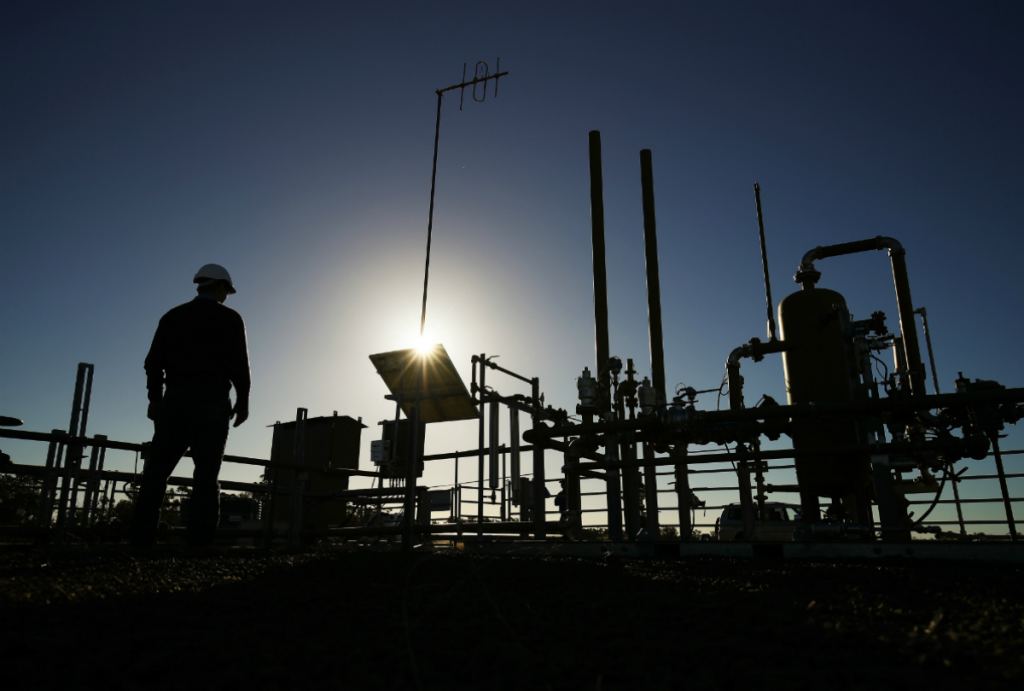
(Reuters) – Hundreds of kilometres from anything resembling civilisation, a remote shale natural gas field in northern Australia may seem like an unusual beneficiary of the Iran conflict.
But energy security is once again paramount as Asia grapples with the fallout from the war, and a new scramble for long-life resources is taking shape.
The Beetaloo basin lies about 600 kilometres (373 miles) from the Northern Territory capital of Darwin, a remote city closer to the Indonesian capital Jakarta (2,740 km) than it is to Australia’s major city of Sydney, some 3,940 km away.
Beetaloo marked a milestone in its protracted development this week with the first natural gas flowing from an appraisal well to a new pipeline connected to an existing pipeline going to Darwin.
The initial flow is a tiny 40 terajoules (37 million cubic feet) per day, and will be fed into the Northern Territory’s grid for electricity, and industrial and household use.
But while the startup flows are modest, the potential is vast with the companies operating in the Beetaloo reporting that recoverable natural gas reserves are at least 200 trillion cubic feet (tcf), an endowment comparable to the Marcellus shale in the United States.
Just as shale has revolutionised the natural gas market in the U.S. and provided the feedstock to make it the world’s biggest exporter of liquefied natural gas (LNG), there are hopes the Beetaloo can do the same for Australia.
Australia is the world’s third-largest exporter of LNG, with shipments of 77 million metric tons in 2025, according to data compiled by commodity analysts Kpler.
Offshore gas fields in northern and north-western Australia feed plants in Darwin and Western Australia state, while three LNG facilities in eastern Queensland state rely on onshore coal-seam gas supplies as feedstock.
Beetaloo would be the first major shale play, and the main challenge is building the infrastructure needed to transport the gas from the field to either Darwin or Queensland.
Much of the discussion at this week’s South East Asia Australia Offshore and Onshore Conference (SEAAOC) was about how best to get the Beetaloo gas to market.
The initial development of the basin is being done by relatively smaller operators Tamboran Resources and its partner, a subsidiary of Texas-based Formentera Partners, as well as Beetaloo Energy.



However, the big players are involved as well, with Japan’s Inpex farming into Tamboran’s fields for an initial $208 million and Australia’s Santos starting its own drilling programme in the Beetaloo.
Inpex operates the 9.3 million tons a year Ichthys LNG facility in Darwin, while Santos operates the 3.7 million tons Darwin LNG plant, as well as the 7.8 million tons Gladstone LNG facility in Queensland.
Santos has approval to build a second LNG train at its Darwin plant and could use Beetaloo gas as feedstock for this, or if a pipeline is built to Queensland, it could be used to backfill the Gladstone facility.
The key for the rapid development of the Beetaloo is getting the various federal, state and territory governments to work with both the gas and pipeline companies to work out the cheapest and fastest way to build common-user infrastructure.
The view among delegates at SEAAOOC was that the crisis in the Middle East was the ideal call to arms for Australia to boost its LNG profile.
ADVANTAGE AUSTRALIA
Australia has the geographic advantage of being close to the major LNG buyers in Asia, such as China and Japan, as well as not being vulnerable to maritime chokepoints such as the Strait of Hormuz.
Qatar, which will lose its status as the world’s second-biggest LNG exporter back to Australia this year, has seen its shipments collapse amid the Iran conflict, which started on February 28 when the U.S. and Israel launched an aerial campaign against Iran.
While much of the focus has been on the loss of crude oil volumes after Iran tried to close the Strait of Hormuz, the conflict has also seen Qatar struggle to ship LNG, with Kpler data showing it sent no cargoes through the narrow waterway in August and only one in July.
The loss of about 6 million tons a month of Qatari LNG has tightened the market for the super-chilled fuel, with commodity price reporting agency Argus reporting the spot price reached $25.80 per million British thermal units on Wednesday, the highest in nearly four years and up nearly 150% from the $10.40 in the week prior to the start of the Iran war.
While spot prices are likely to eventually calm if a peace deal can be reached in the Middle East, the long-term impact of the current conflict will be a re-thinking of energy security in Asia.
That’s where the Beetaloo comes in. With natural gas demand in Asia expected to rise by around 30% in the next 10 years, the opportunity for a new source of secure LNG becomes compelling.
The views expressed here are those of the author, a columnist for Reuters.
Editing by Kate Mayberry
Share This: