CDN NEWS |
  US NEWS







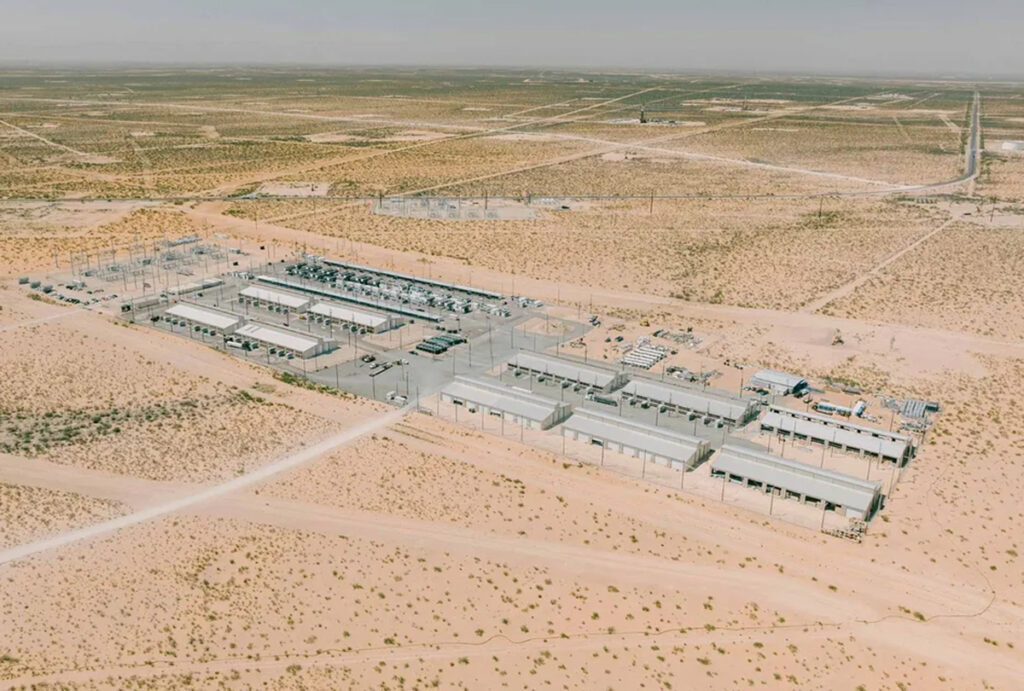
Today: The GOP split on data centers, more oil moves in Venezuela, and the SALT tax break’s expanding appeal.
Data Divergence
The backlash against AI data centers is uniting a huge swath of Americans, but splitting Republicans trying to defend their power in Washington.
Donald Trump’s call this week to “let Data Reign” put the divide in stark relief, as GOP candidates and officials grapple with an issue that’s increasingly at the forefront of state and federal campaigns.
“The only reason that communities throughout the U.S.A. should not want Data Centers is if they want to end up being backwards and poor,” Trump wrote on social media.
Cue typically close Trump ally Representative Tim Burchett:
“I guess I’m backwards and poor,” he told MeidasTouch’s Pablo Manrique.
Top Republican candidates such as Byron Donalds, running for governor of Florida, and Mike Rogers, competing for Senate in Michigan, have each come out (to varying degrees) with concerns about data centers, even as Democrats accuse them of flip-flopping on their previous support for AI.
In Texas, one of the epicenters of the revolt, leading Republicans are staking out opposing stands (more on that below).
The divided views illustrate the tensions pulling at the GOP as they head into the final two months of election season:
- On one side: the long-term race to lead on AI and the party’s traditional support of business.
- On the other: a populist political moment, worries about data centers’ local impacts, and fears about the consequences of a powerful technology growing with few limits.
A new industry group is planning to launch an eight-figure campaign to try to turn around public opinion, my Bloomberg Government colleague Kate Ackley scoops this morning. And Bloomberg recently reported on the perks tech firms are now dangling to communities where they want to build.
They have their work cut out.
Around 7 in 10 Americans oppose data center construction in their communities, per a Fox News poll, including 76% of Democrats and 60% of Republicans, leaving public officials in both parties scrambling to catch up.
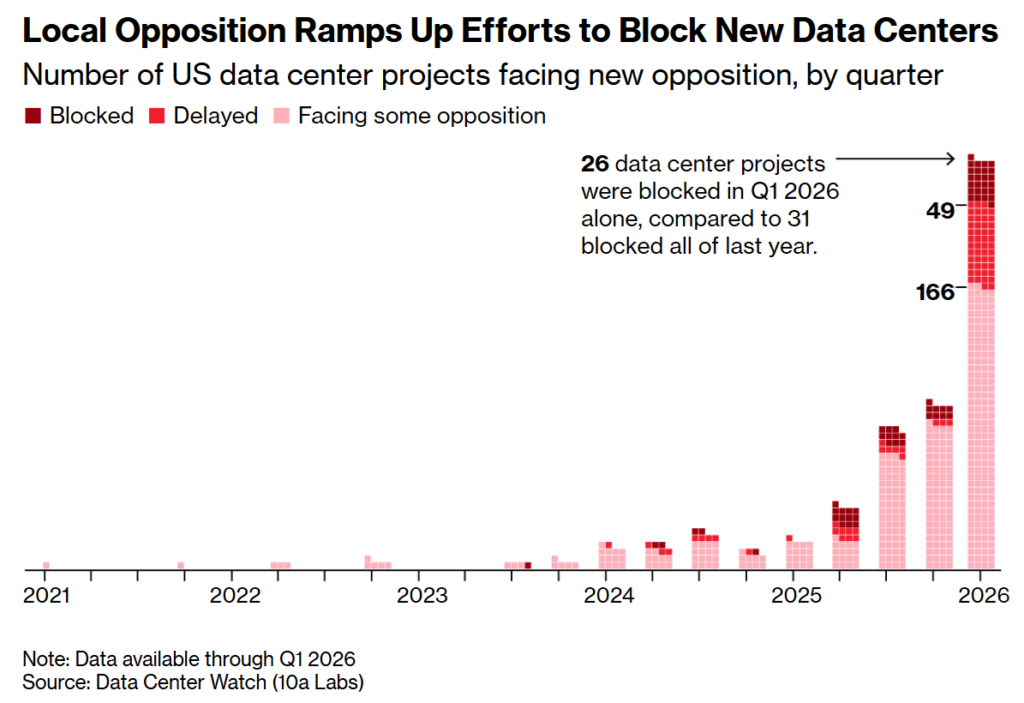
“Data centers have become politically toxic,” Texas Republican strategist Brendan Steinhauser wrote on Real Clear Politics. “This isn’t only about energy costs, water usage, aesthetics, or noise. The American people are worried about artificial intelligence replacing human beings.”
His state shows the GOP’s internal splits.
Senator Ted Cruz said he’s warning business leaders that the politics of data centers are even worse than they understand and could lead to widespread state bans — but he argued on his podcast Monday that it would be a mistake to cede ground to China on AI.
“If they convince us, OK, we’re gonna unilaterally disarm, the consequences are catastrophic,” Cruz said.
But Governor Greg Abbott and GOP Senate nominee Ken Paxton have called for tighter restrictions on data centers, Alexandra Samuels reported.
The moves are because of “real problems” facing communities that don’t want the new developments in “pristine” neighborhoods, Abbott told Fox News.
It’s another example of the old saying about all politics being local, even in a global AI race.
Top News
Fighting over the Strait of Hormuz has intensified, triggering a fresh jump in oil prices as fears grow that the Iran war may drag on indefinitely.
Energy companies are on the cusp of a series of deals in Venezuela that will rapidly expand its output of crude, Energy Secretary Chris Wright says.
Chevron, for one, plans to invest $7 billion over the next five years to more than double its oil production there, the largest financial commitment so far.
Trump, meanwhile, pressed US oil execs to increase domestic production of gasoline and diesel during a White House meeting Tuesday.



US diesel is now at its highest price since April, which itself was the costliest mark since 2022.
Massachusetts Senator Ed Markey, 80, easily fended off a Democratic primary challenger on Tuesday, as did two veteran House members, defying some calls for generational change.
Representative Brittany Pettersen is renewing her push to allow remote voting for new parents in the House, BGOV’s Maeve Sheehey reports.
Eight House Democrats joined Republicans in voting for a resolution condemning socialism, though the overwhelming majority of Dems opposed it.
Vladimir Putin and Xi Jinping have discussed the possibility of trilateral talks with Trump, a Kremlin aide says, in what would be an unprecedented meeting of the world’s three biggest nuclear powers.
Volodymyr Zelenskyy threatened to shut down Russian airspace with drones, warning airlines to avoid the area as he responded to Moscow’s escalating missile attacks.
The House censured retiring Representative Chuck Edwards in a 413-2 vote over accusations of sexual harassment and advances toward staffers.
Israeli forces captured a Hamas security chief in a rare raid deep into the Gaza Strip, prompting the Iran-backed militant group to warn that an already shaky ceasefire could break down completely.
The expanded state and local tax deduction championed by New York lawmakers is gaining favor around the US.
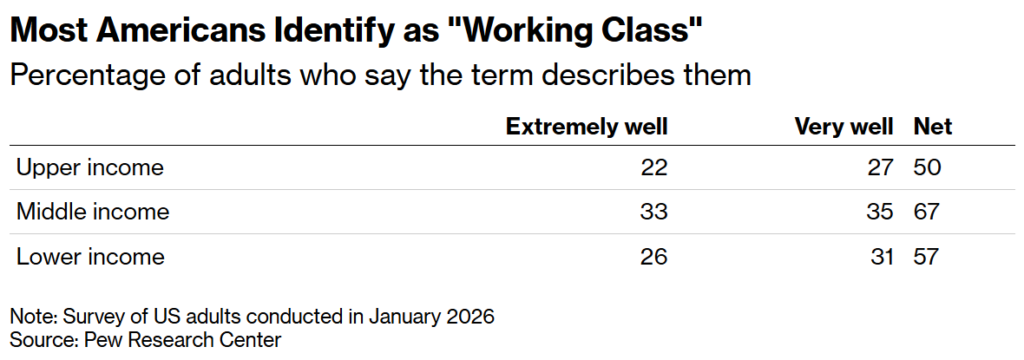
Some 60% of American adults consider themselves “working class,” including about half of college grads and people with higher incomes, per Pew.
Mexico’s murder rate has fallen to roughly half of its 2020 peak, but there’s debate over how much credit should go to President Claudia Sheinbaum.
Many of the world’s roughly 12 million to 20 million polio survivors also face post-polio syndrome, with health problems that can appear decades later.
The gains from Scott Bessent’s bond buybacks have been quickly wiped out by the market.
Apple Maps joined Google in labeling Lake Ontario as “Lake America” for US users. Some Democratic critics of Trump have thoughts.
Texas Republican Representative Chip Roy says Republicans need to make tough fiscal decisions to address mounting deficits.
Chris Sununu, president and CEO of Airlines for America and a former Republican governor of New Hampshire, says high jet fuel prices are “crushing” the airline industry even as travel demand remains strong.
Go Deeper With BGOV
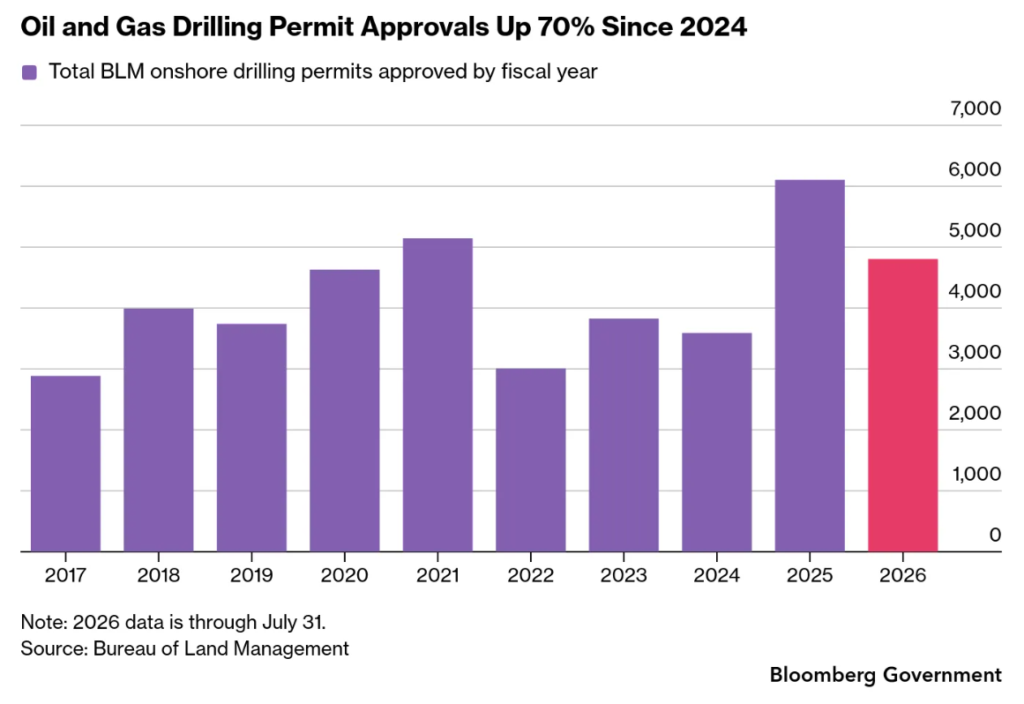
Fossil fuel interests are getting a lift from Trump’s energy policy overhauls, expedited permitting, and repurposed federal funds, BGOV’s Aaron Gregg writes in a new analysis.
Billions in federal funds are now flowing to nuclear reactor projects and formerly retired coal plants. The number of new renewable energy projects, meanwhile, have plunged amid Trump’s assaults on wind power and Republicans rescission of clean energy tax credits.
On Today’s Agenda
Jamieson Greer to brief House Republicans (BGOV).
Trump meets with US travel executives at 1:30 p.m. and participates in a Rose Garden dinner tonight.
The House Energy and Commerce Committee marks up bills related to the nuclear industry, diesel emissions, battery recycling, and more.
The House Financial Services panel holds a hearing featuring NYSE President Lynn Martin and others on strengthening the US economy.
More From Bloomberg
Like Washington Edition? Check out these newsletters:
- Balance of Power for the latest political news and analysis
- Fault Lines from Bloomberg Economics for daily research on how geoeconomics is reshaping business and markets
- Congress Tracker for BGOV clients to stay on top of the action on the Hill
- FOIA Files for Jason Leopold’s weekly newsletter uncovering government documents never seen before
- Morning Briefing Americas for catching up on everything you need to know
Explore all newsletters at Bloomberg.com.
Share This: