CDN NEWS |
  US NEWS







By Andrew Mills
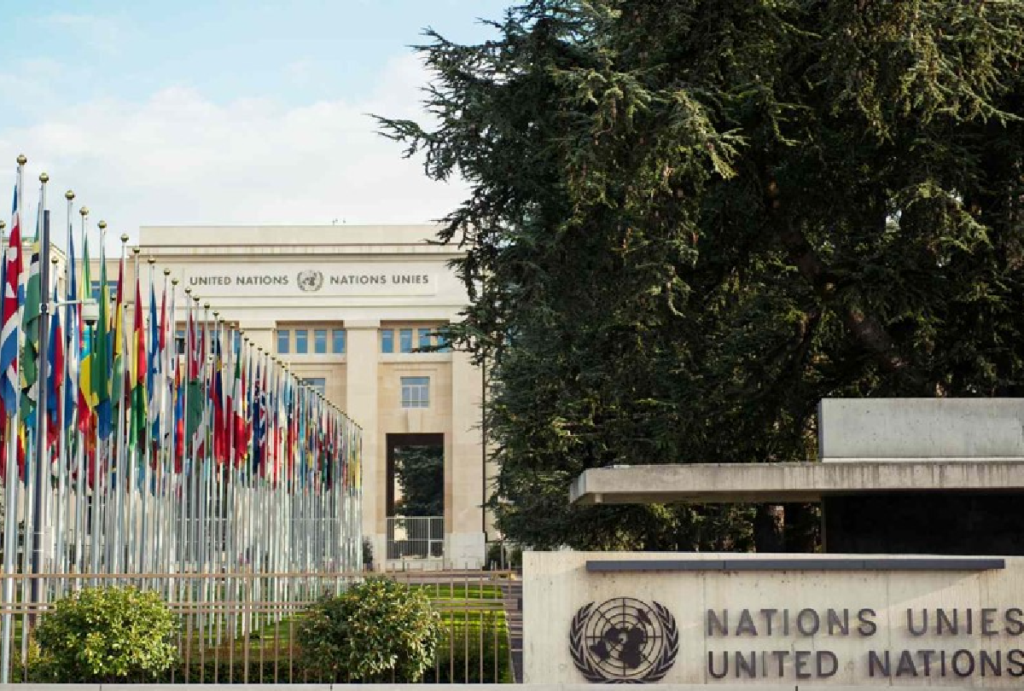
Sept 23 – US President Donald Trump’s UNGA sidelines meeting with Gulf leaders this week delivered a familiar bit of Trumpian theatre: after boasting that US naval escorts had shepherded more than a billion barrels of Gulf oil, he turned to Qatar’s Emir Sheikh Tamim bin Hamad Al Thani and quipped: “That’s not a lot to Tamim, but it’s a lot to most people.” It was classic Trump — the same long-running rich jokes he’s deployed in past Oval Office meetings and White House photo ops with Qatar’s emir, praising the state’s ability to buy “a lot of beautiful military equipment” while Tamim offers the polite, slightly nervous chuckle that has become part of their repertoire.
The irony, of course, is sharper this year: Qatar’s economy is under its heaviest strain in decades as the US-Israeli war on Iran and the effective closure of the Strait of Hormuz make it impossible to reliably export liquefied natural gas, still the country’s primary income source despite years of attempted diversification.
This week’s Gulf Currents follows that diplomatic shift to New York — where Gulf leaders and foreign ministers have effectively set up camp — with reporting on Iraq’s suspension of Iranian flights under US sanctions pressure, Yemen’s accelerating displacement crisis, and Aramco’s move to carve out a standalone gas division. Our analysis asks whether UNGA can deliver a real US–Iran opening, while the chart of the week tracks the global diesel squeeze.
NEWS BRIEFING
- Iraq suspended Iranian flights to Baghdad from Wednesday after Washington threatened secondary sanctions on any airport servicing Iranian carriers. US Treasury Secretary Scott Bessent warned violators would be “knocked out of the dollar system.” Oman has similarly blocked Iranian arrivals. The move shows US sanctions pressure escalating.
- The UN refugee agency has warned that Houthi advances along Yemen’s Red Sea coast have displaced more than 130,000 people this month, with 100,000 more projected over three months. Sea crossings to Djibouti could triple to 10,000 people as calmer weather arrives. The agency’s response plan is less than 20% funded, underscoring how the widening war’s humanitarian toll is outpacing both financial commitments and diplomatic engagement.
- Aramco plans to spin off a standalone gas division — its third major unit alongside upstream and downstream — with possible minority stake listings to raise cash, sources say. The move builds on Jafurah, its flagship shale gas field, and mirrors ADNOC’s playbook. It signals Aramco leaning harder into gas and outside capital as the Iran war disrupts its core oil export routes.
WILL UNGA PRODUCE A TANGIBLE US–IRAN OUTCOME?
It’s UNGA — the UN General Assembly’s annual gathering that packs world leaders and top diplomats into New York for a few days — and the whipsaw diplomacy in and around UN headquarters may be remembered as the moment this war’s trajectory finally turned.
Or it may not. Seven months in, the fighting has only widened. The question now is whether the backroom talks happening blocks from the General Assembly floor can finally bend that curve, or whether they simply become the latest in the war’s long list of near-misses.
Even as Trump on Tuesday warned the General Assembly that he faced a choice between a deal and annihilating Iran, envoys Steve Witkoff and Jared Kushner were sending messages via Qatari shuttles to Iranian officials a few blocks away. Trump called it “a very good meeting”, while Gulf leaders huddled with US officials on next steps.
UNGA has produced real openings before. In 2013, then-US Secretary of State John Kerry and Iranian Foreign Minister Javad Zarif held the first US-Iran foreign minister contact since 1979 — a tentative sidelines meeting that, almost two years later, became the JCPOA nuclear deal that curbed Iran’s enrichment program in exchange for sanctions relief.
Last year, a meeting on the UNGA sidelines anchored by Trump and Turkish President Tayyip Erdogan, brought Arab and Muslim leaders together on Gaza and produced a joint declaration underpinning what became the US-brokered ceasefire and hostage-release framework. It represented a more recent template for how the Trump administration has built multilateral cover for a deal.
What makes UNGA week structurally different from ordinary diplomacy is proximity: nearly every relevant player is in Manhattan simultaneously, collapsing weeks of protocol into hallway conversations. This year, the proximity isn’t starting cold, since Iran had already conveyed its response to a new proposal to mediators before the week began, and Qatar has been circulating draft language between the two sides.



Having Trump, Witkoff, Kushner, Iranian President Masoud Pezeshkian, Iranian Foreign Minister Abbas Araqchi and the Gulf states all in the same city at once is the precondition for a breakthrough, however — not a guarantee of one.
A few clear tests will tell us whether this week produced real movement: Iran has signalled it could reopen the Strait of Hormuz within days if Washington eases its blockade and unfreezes assets, which would be a specific, verifiable marker. Will Qatar’s draft surface publicly? Will Araqchi meet US officials again before Iran’s delegation leaves Saturday? And will Saudi Arabia — most exposed by September’s advance by Yemen’s Houthis, yet still absent from the visible diplomatic track — get pulled in?
No matter what gets negotiated in Midtown Manhattan this week, what happens on the ground back in the Gulf has the potential to spoil it all. This war is being fought across multiple active fronts at once — Houthi missiles over the Red Sea, tankers threading the Strait of Hormuz, pipelines and export terminals within easy reach of Iranian-aligned groups — and a single incident on any of them could eclipse the entire diplomatic process.
CHART OF THE WEEK
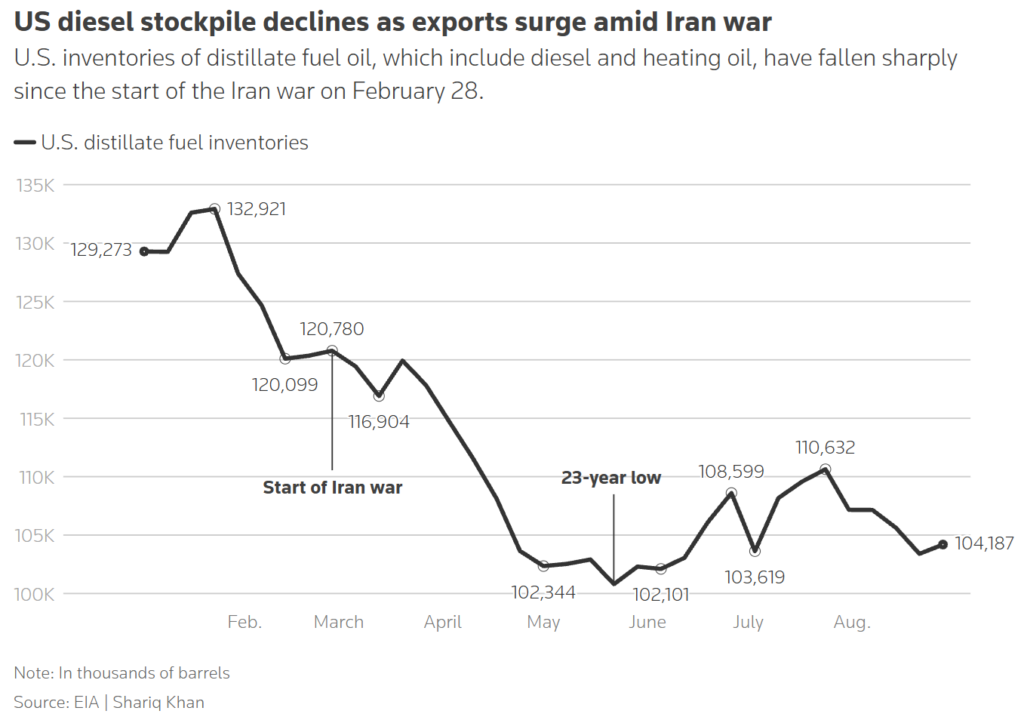
The global diesel shortage driven by wars in Iran and Ukraine is unlikely to ease before next year, according to storage market indicators and industry participants, extending a spike in fuel costs that is weighing on economies worldwide. Shariq Khan and Siddharth Cavale examine diesel prices, stockpiles, and availability of storage facility leases for insights on market expectations.
LAST WAVE: Houthis seize strategic highlands as Riyadh comes under fire
Houthi fighters pushed into Yemen’s highlands this week, seizing strategic ground meant to sever the Red Sea coast from Saudi-backed government territory — a lightning advance that has already displaced nearly 130,000 people and, according to the UN, killed close to 700.
Riyadh was apparently struck for the first time since the war widened, with explosions heard and a column of black smoke rising from near the airport, and Trump reportedly called off retaliatory US strikes at the last minute as bombs were being loaded onto aircraft.
Yemeni analyst Mohammed Al-Qadhi called the fighting for the Kahboub Mountains potentially decisive: “These mountains could become critical to determining whether the Houthis succeed in consolidating their recent territorial gains.”
Saudi Arabia has meanwhile rerouted oil exports through Hormuz at record wartime fees, with Britain and France stepping in militarily to provide Saudi Arabia with refuelling and infrastructure protection.
Editing by Aidan Lewis
Share This: