CDN NEWS |
  US NEWS







EnergyNow Media
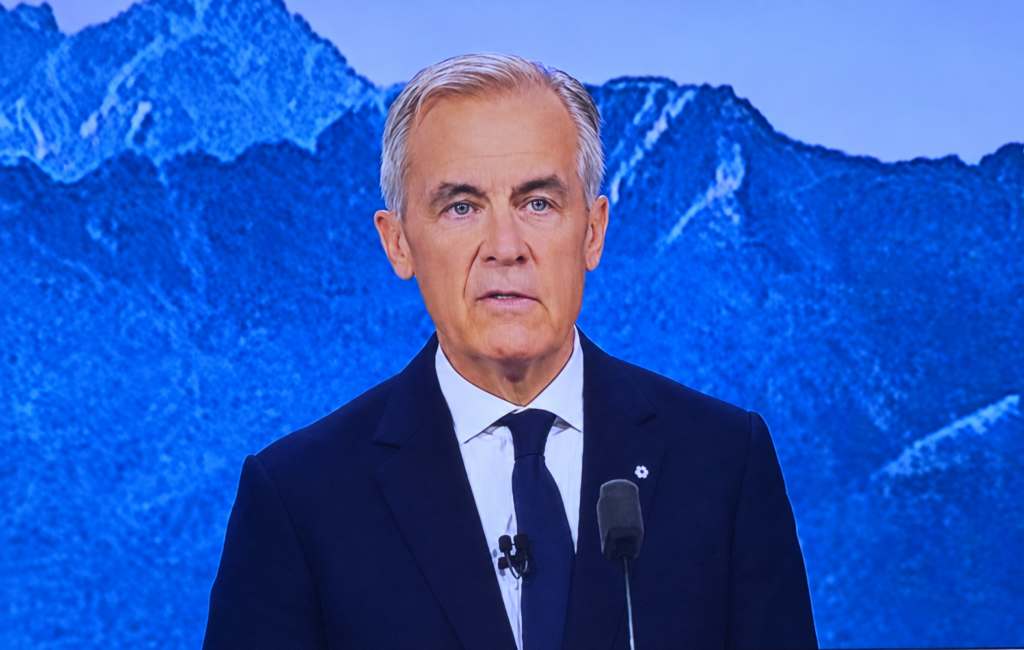
Prime Minister Mark Carney used his keynote address at the Canada Investment Summit in Toronto on Tuesday to declare that Canada intends to become the most attractive investment destination in the G7.
Carney set an ambitious national target: attracting and catalyzing $1 trillion in investment over the next five years across energy, transportation, technology, data infrastructure, defence, critical minerals and other strategic industries.
“Our goal is to catalyze $1 trillion of investment in Canada over the next five years in energy, in transportation, in tech and data, in defence and beyond,” Carney said.
His central message to international investors was that Canada offers political stability, abundant resources, affordable energy, a highly skilled workforce and trusted access to major global markets at a time when the international economy is becoming increasingly unpredictable.
Carney described Canada as both a “safe harbour” and a base from which companies can build and compete in a rapidly changing global economy.
“This is Canada today, a country that’s building, trading and investing with an ambition and speed not seen in generations,” he said. “A country that’s predictable, reliable and principled in a world that’s anything but.”
Three Major Investment Announcements
Carney organized Canada’s investment strategy around three commitments: making investment cheaper, accelerating project approvals and attracting private capital into major transportation and communications infrastructure.
1. Immediate Expensing and a “Productivity Mega Deduction”
Effective immediately, Canada will allow businesses to claim immediate tax deductions for most new capital investments.
Approximately two-thirds of capital assets will qualify, including:
- Manufacturing machinery and equipment
- Software, patents and research and development
- Fibre-optic and digital infrastructure
- Railways
- Pipelines
- Other transportation and economic infrastructure
Carney called the measure a “productivity mega deduction,” saying it would cover more than four times the capital assets previously eligible for immediate expensing.
“When you invest in Canada, you can deduct substantially more of that investment immediately,” he said.
According to Carney, the measure will give Canada the lowest marginal effective tax rate on new investment in the G7—less than half the comparable U.S. rate, approximately one-third of the OECD average and one-quarter of the G7 average.
“Put simply, your investment dollars will go a lot further in Canada than anywhere else in the advanced world,” he said.
2. One Project, One Review, One Year
The federal government will introduce the Build Canada Strong Act, extending expedited review processes beyond projects currently being handled by the Major Projects Office.
The government’s new approval standard will be:
“One project, one review, one year.”
Carney said Canada would continue to enforce high environmental, Indigenous and regulatory standards, but would eliminate unnecessary duplication and prolonged decision-making.
“High standards do not require slow decisions,” he said. “Speed, certainty, predictability themselves are competitive advantages.”
“Investors should know that when Canada says it wants something built, Canada will get it built.”
The government has already referred 27 nation-building initiatives to the Major Projects Office. Carney said those projects—including ports, mines and energy corridors—represent approximately $500 billion in potential private investment.
3. Private Investment in Canada’s Four Largest Airports
Carney announced that Ottawa will seek private investment through long-term concessions to operate Canada’s four largest airports: Toronto, Montreal, Calgary and Vancouver.
The federal government would retain ownership of the underlying lands and assets, while private investors would provide capital and operating expertise. Reuters reported that the four airports involved are Toronto, Montreal, Calgary and Vancouver.
Carney said the initiative could raise tens of billions of dollars, which would be reinvested in:
- Regional and remote airports
- More affordable regional air service
- Local transportation and commuter infrastructure
- Nation-building trade infrastructure
- A sovereign broadband backbone connecting Canada more securely with Europe and Asia
“It’s time to bring that same expertise back home to directly benefit Canadians,” Carney said, referring to Canadian pension funds that already invest in airports internationally.
Canadians would retain a stake in the future value created through the proposed Canada Strong Fund, described by Carney as a new sovereign wealth fund.
Canada’s Energy Investment Pitch
Energy was central to Carney’s presentation. He said Canada intends to fully leverage its oil, natural gas, hydroelectricity, uranium and nuclear capabilities to become a global energy superpower.



Among the government’s stated objectives are:
- Advancing a new pipeline capable of carrying at least one million barrels per day of lower-emission Alberta oil to Asian markets
- Creating a Canadian large-scale carbon capture and storage industry
- Doubling Canadian LNG exports to 50 million tonnes annually by 2030
- Doubling LNG exports again shortly after 2030
- Developing small modular reactors and utility-scale nuclear generation
- Expanding Canadian uranium production
- Doubling Canada’s electricity grid
- Building new Atlantic, Pacific, Hudson Bay and Arctic ports and trade corridors
“If you need clean, affordable power—and who doesn’t? Canada is your answer,” Carney told investors.
He pointed to the recently announced 14-gigawatt hydro, wind and storage development involving Newfoundland and Labrador, Quebec, Ottawa and the Innu Nation as an example of the scale Canada intends to pursue.
“That’s what an energy superpower looks like when it decides to act like one,” he said.
Fiscal Discipline to Support Investment
Carney said Canada’s ability to attract capital would be supported by fiscal discipline and the lowest net debt-to-GDP ratio among major economies.
He announced that the federal government is on track to balance its operating budget next year—one year earlier than scheduled—while maintaining what he described as the lowest overall deficit in the G7.
The government plans to:
- Reduce the federal civil service by 10 per cent
- Cut spending on consultants by 20 per cent
- Reduce annual operating-spending growth from more than eight per cent to less than two per cent
- Recycle selected public assets to free capital for infrastructure investment
- Preserve fiscal capacity for social programs and economic growth projects
Carney stressed that this was not “austerity as a fetish,” but an attempt to distinguish between everyday operating costs and investments capable of strengthening Canada’s long-term productive capacity.
“This gives us the capacity to invest alongside private capital and the macroeconomic resilience that investors value in uncertain times,” he said.
Opening Canada to the World
Carney also presented trade diversification as a core part of making Canada more attractive to global capital.
Canada currently has preferential access to markets representing approximately 1.5 billion consumers. The government intends to double that reach over the next six months through prospective agreements with India, ASEAN members and other partners.
Carney said Canada had signed:
- More than 20 trade and security agreements across five continents during the past year
- More than 50 critical-minerals agreements with over 15 countries
- Critical-mineral agreements representing approximately $20 billion in investment
Canada will also begin discussions with the European Union on a new economic and security alliance. Carney noted that Canada is the only non-European participant in the EU’s Security Action for Europe defence procurement initiative.
“We have earned our most valuable asset, which is trust,” Carney said.
Defence, AI and Critical Minerals
Carney said Canada’s defence industrial strategy is expected to catalyze $500 billion in investment over the next decade, focusing on aerospace, shipbuilding, artificial intelligence, cybersecurity, quantum computing, robotics and autonomous systems.
Canada is now on a budgeted path toward total defence spending equal to four per cent of GDP by 2030, he said.
The government will also pursue an “AI for all” strategy covering the entire artificial-intelligence infrastructure chain—from the clean electricity powering data centres to cloud computing, frontier AI, quantum technologies and robotics.
The plan includes improving AI literacy, giving every Canadian post-secondary student access to a trusted AI agent and helping businesses, workers and governments adopt AI to increase productivity.
Open for Business
Carney’s address amounted to a declaration that Canada is prepared to make significant policy changes to secure international investment and reduce its economic dependence on the United States.
His pitch combined lower investment taxes, faster approvals, public-private infrastructure partnerships, fiscal discipline, expanded market access and a major buildout of Canadian energy, transportation, defence and digital infrastructure.
While Canada would continue to protect its lands and waters, consult Indigenous communities and maintain strong regulatory standards, Carney insisted that those commitments would no longer be used as an excuse for indecision.
“Our goal is simple: to make Canada the most attractive place in the G7 to invest,” he said.
“We have the resources, the talent, the fiscal capacity and the access to the world’s largest pools of capital. And now we’re matching those fundamental advantages with the speed, ambition and execution needed to build.”
Carney ended his address by emphasizing that Canada would not retreat from global uncertainty, but would use its stability, resources and reputation to compete more aggressively for investment.
“We won’t use those harbours to shelter from that stormy world,” he said. “Instead, we’re expanding our ports to connect to the opportunities in it.”
“We’re just getting started.”
Share This: