CDN NEWS |
  US NEWS







By Erik Hertzberg and Brian Platt
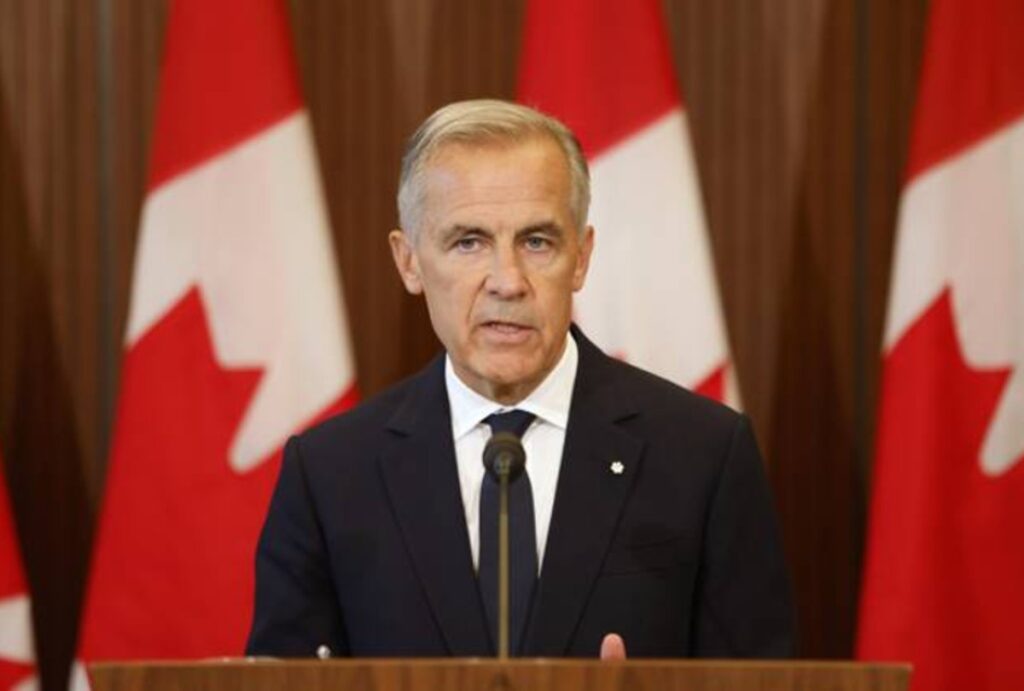
Prime Minister Mark Carney is expanding the scope of a major investment tax write-off, adding oil and gas pipelines, oil production equipment, mining property and more to the list of assets eligible for immediate expensing in Canada.
Carney announced the tax measure — dubbed the productivity mega deduction — Tuesday as his government hosts an investment summit. Dozens of firms have gathered at Toronto’s Four Seasons hotel to discuss possible stakes in Canadian projects in natural resources, manufacturing and other sectors.
A number of those projects will now qualify for immediate expensing of some of their capital spending, under the new rules. It’s one of the most significant changes in decades to the tax treatment of business investments in Canada, and is poised to ease the income tax burden for many companies.
Normally, businesses can write off only a percentage of a capital asset’s cost each year. Allowing them to deduct those outlays right away encourages firms to invest sooner, since they can reduce their taxes immediately or choose to save those credits for later.
The expansion of the tax write-off means it will now apply to businesses that spend on aircraft, fiber-optic cables, Canadian-made passenger vehicles, computer equipment, bridges, roads and other assets. It’s expected to cost C$36 billion ($25.9 billion) over the next five years.
The government says it expects the change to have an economic return of 1.4 to 3 times the federal cost, totaling C$22 billion worth of output annually and increasing employment by 80,000 jobs per year a decade from now.
Reform is needed because “we have had a productivity issue in this country,” Carney said in an interview with Bloomberg News. “We need more investment in machinery, equipment, intangibles, R&D.”
The change covers roughly two-thirds of the categories of assets that companies invest in, up from 15% currently, Carney said.
The government states that extending and expanding tax relief will reduce Canada’s marginal effective tax rate on new business investment to 6.4% from 13% — the lowest among Group of Seven countries, and half the rate in the US.
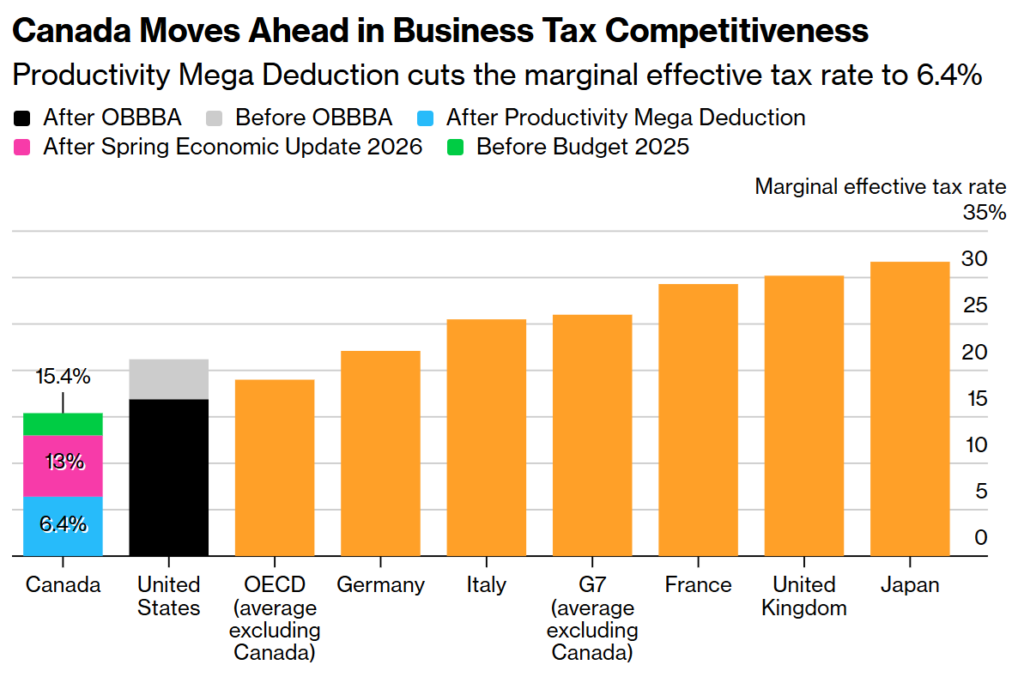
Note: OBBBA refers to One Big Beautiful Bill Act.
Source: Canada Department of Finance
The new measure, which requires a legislative change, applies to property purchased on or after Sept. 15, and is permanent.
Carney’s government had expanded immediate expensing for some assets in its 2025 budget. That measure covered a limited range of investments such as buildings used in manufacturing and zero-emission vehicles, and was to be phased out by 2034.



In the spring, it was extended to liquefied natural gas equipment, but only if it met certain carbon costing requirements. Those emissions-intensity criteria have been removed, the government said.
Policy’s Effect
“This very much fits in with what Canada’s overall strategy is, which is to drive investment in sectors where we can export our products to the world,” said Avery Shenfeld, chief economist at Canadian Imperial Bank of Commerce.
“It makes perfect sense that we’re taking a tax measure that originally was much more restricted to parts of manufacturing and broadening it to sectors like mining and technology,” he added.
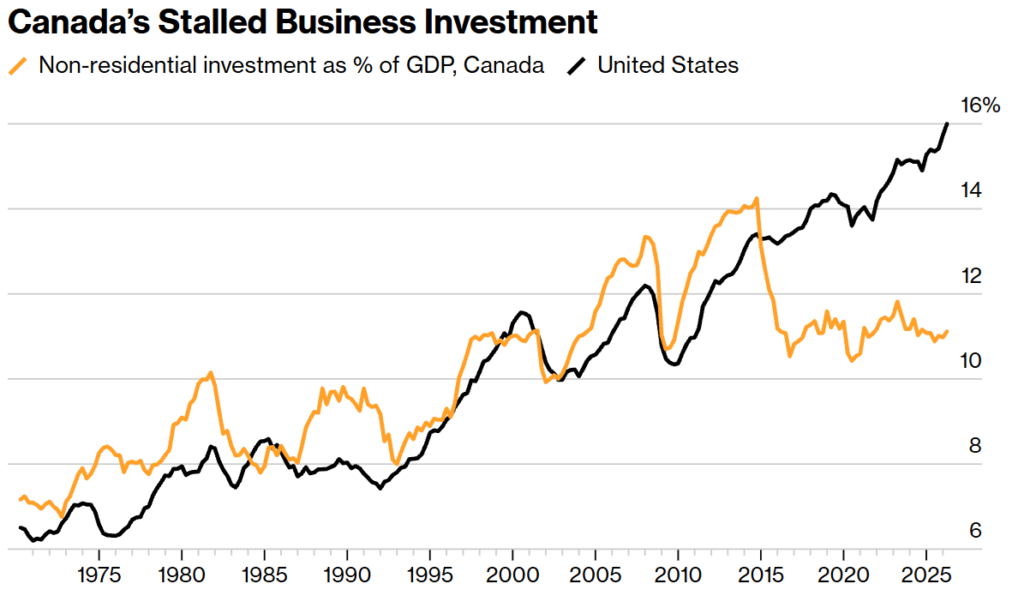
Note: Business investment includes intellectual property products, machinery and equipment, and non-residential structures. Calculations on chained data.
Source: Statistics Canada
Canada’s economy has struggled to boost capital spending for years, and the Bank of Canada has called the country’s meager productivity gains an emergency. Last year, Deputy Governor Nicolas Vincent warned that the country was in a “vicious circle,” wherein weak productivity leads to reduced investment.
As uncertainty about its relationship with the US continues to hang over Canada, Carney’s government is trying to show investors it’s serious about addressing lingering concerns about taxes and regulation. The prime minister has pledged to mobilize C$1 trillion worth of private and public investment over five years.
The government has already announced billions in new investments for pipelines and other infrastructure, along with financial support for sectors hit hard by the trade war.
Over half of economists surveyed by Bloomberg last month said they expect deeper deficits, even as higher energy prices add to federal coffers. But Carney insisted his government will meet its pledge to balance its operating budget, saying the added expenses will be categorized as capital because they stimulate investment. His government is set to release its next budget in the coming months.
“We’re moving to the lowest deficit in the G7,” he said. “So we’re going to maintain that and have far and away the most competitive tax environment.”
In April, the government projected C$242 billion in deficits over a four-year period.
Previous federal governments have allowed companies to speed up the write-off of capital costs, but the measures were often temporary or limited in scope. Prime Minister Justin Trudeau’s government, for example, applied the provision to clean technologies and for certain property bought by small businesses.
— With assistance from Nojoud Al Mallees, Mario Baker Ramirez, and Thomas Seal
(Adds detail, including policy name and economist reaction, starting in first paragraph.)
Share This: