CDN NEWS |
  US NEWS







By Afiq Fitri Alias
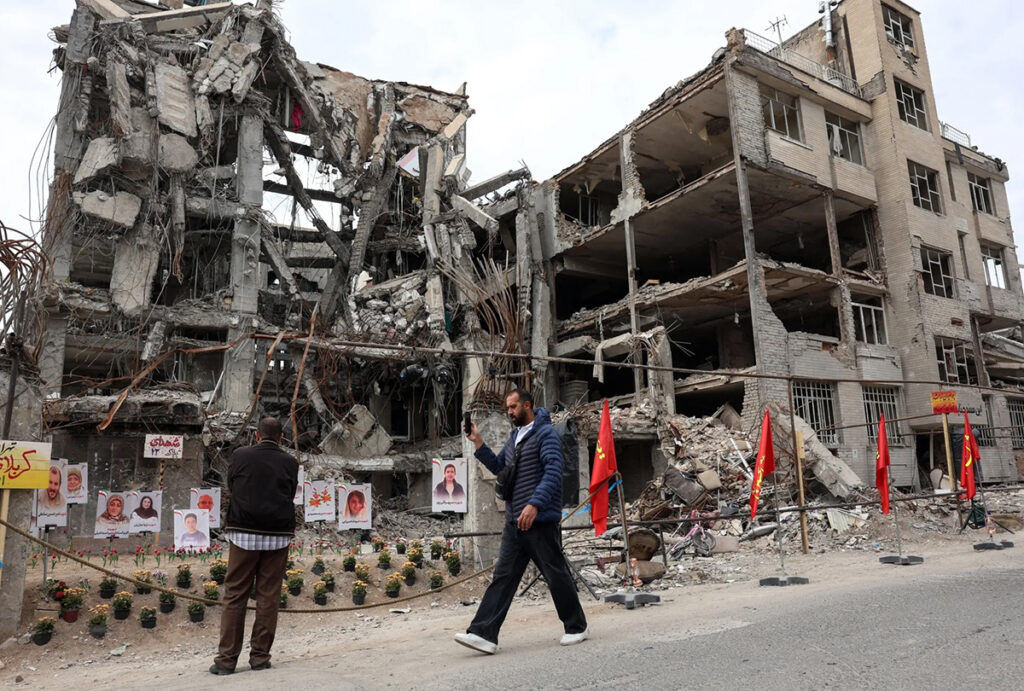
LONDON, July 3 (Reuters Breakingviews) – The United States is again trying to lure foreign capital into Iran. A key part of last month’s ceasefire signed between Washington and Tehran was a $300 billion “reconstruction fund” for the Islamic Republic. The details may differ from a similar push in the wake of the 2015 Joint Comprehensive Plan of Action (JCPOA) to limit Iranian nuclear capabilities. But it’s likely to yield the same underwhelming outcome. After the JCPOA, Iran attracted $37 billion in announced deals and memorandums of understanding with companies including Airbus and Peugeot. Yet the promised investment boom never materialised; annual FDI inflows rose from $3.4 billion in 2016 to a peak of just $5 billion in 2017, according to UNCTAD data. Even the flagship South Pars gas project led by TotalEnergies was eventually abandoned following President Donald Trump’s 2018 withdrawal from the JCPOA. On the face of it, 2026 looks more promising. For one thing, the sums are bigger. And the reconstruction fund has already attracted more than $150 billion in commitments from private companies across Asia, the Gulf and the U.S. to develop Iran’s energy, logistics, manufacturing and transport sectors, a source with direct knowledge of the deal told Reuters.
Yet these capital providers remain unnamed. Given the gap between good intentions and actual investment, that’s telling. Sheikh Mohammed bin Abdulrahman Al-Thani, Qatar’s prime minister, has described the $300 billion headline figure as an “aspirational number”. Meanwhile, many of the underlying obstacles for western companies remain. A decade ago international signatories of the JCPOA eventually had to issue a joint statement reassuring financial institutions that Iran was investable despite the thicket of U.S. sanctions that had held sway. In 2026 these barriers look, if anything, more problematic. Washington has designated the Islamic Revolutionary Guard Corps (IRGC) as a foreign terrorist organisation, while the U.S. Treasury found Iran’s construction sector was dominated by IRGC-linked firms. Admittedly, last month’s U.S.-Iran memorandum of understanding promises licences and waivers for the reconstruction fund, and lifting “all types of sanctions”. Yet such waivers typically require renewal every six months – hardly an ideal foundation for long-term investment. Companies could actively try to limit sanctioned entities’ involvement, as TotalEnergies attempted in 2018, but the post-war deepening of the IRGC’s role in the economy complicates matters. Many other Iran-related sanctions are also statutory, complicating efforts to remove them permanently through executive action alone.
One potential workaround is Gulf state involvement. The Abu Dhabi Investment Authority and Saudi Arabia’s Public Investment Fund alone have over $2 trillion in assets, and could assist Iran reconstruction in return for pledges on regional security. Yet recently-bombed Gulf monarchies are unlikely to bankroll the Islamic Republic’s economic rebound simply at Washington’s behest – nor write cheques on the scale currently discussed. Anyone expecting a transformative boom fuelled by them – or any other overseas capital – shouldn’t hold their breath.



CONTEXT NEWS:
The United States and Iran’s memorandum of understanding, signed on June 17, envisages a $300 billion reconstruction and development programme for Iran, and broad sanctions relief once a final deal is signed.
A source with direct knowledge of the talks said that more than half of the planned funding has already been committed by companies from the Gulf, Asia, South America, Africa and the United States, Reuters reported on June 16.
The author is a Reuters Breakingviews columnist. The opinions expressed are his own.
Editing by George Hay; Production by Maya Nandhini
Share This: