CDN NEWS |
  US NEWS







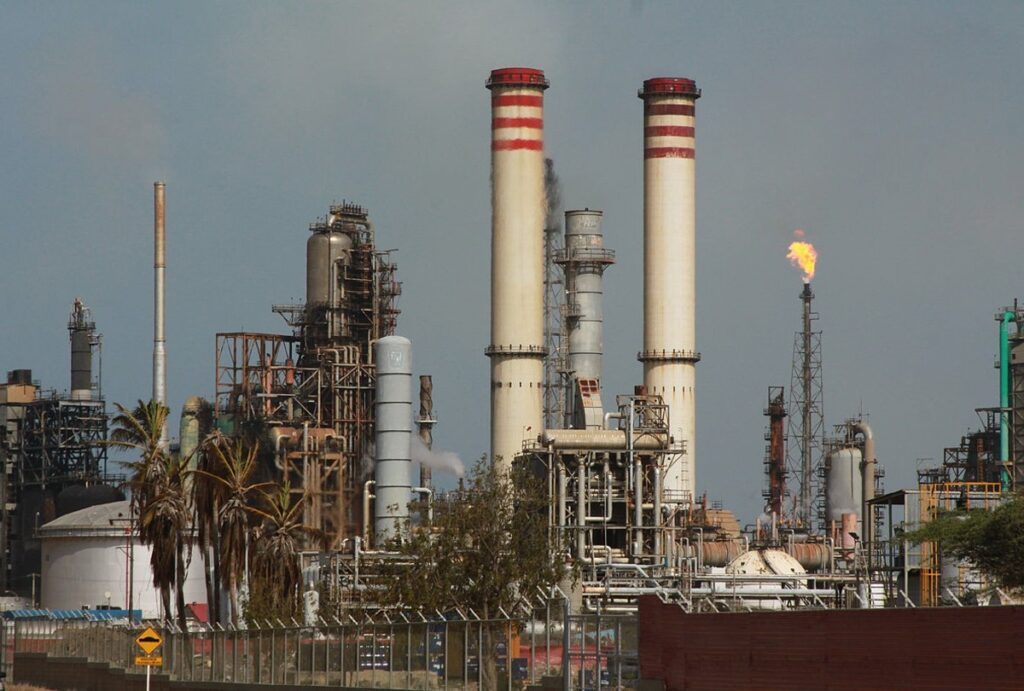
Six months after Energy Secretary Chris Wright pledged that the US-Venezuela partnership would lead to a “dramatic increase” in oil, natural gas and electricity production, the gusher has yet to gush.
True, Venezuelan crude shipments to the US have surged since the Trump administration effectively turned the South American country into a protectorate. But production has stalled near 1.1 million barrels a day for three months running, according to OPEC’s secondary sources, after climbing from about 920,000 barrels at the beginning of the year. Early talk of quickly hitting 1.2 million to 1.5 million barrels a day is fading as fresh investment fails to materialize. Venezuela’s oil industry needs capital, clear rules and time, three ingredients it can’t secure even with Washington calling the shots.
Which is what makes the forced exit of former Trump golf buddy Harry Sargeant III from Venezuela’s second-largest private oil producer so intriguing. It suggests a shift underway among US officials toward a more integrated approach to the Venezuelan problem.
Sargeant earlier this month agreed to sell Bluewave Properties Ltd., his offshore vehicle for a minority stake in North American Blue Energy Partners, to Venezuelan businessman Alejandro Betancourt, the company’s controlling shareholder, for $300 million, my Bloomberg News colleagues reported, citing people familiar with the deal. Sargeant had been under pressure from the Trump administration to divest, and the Treasury Department had already frozen some of his assets.
Why would a tycoon who served as a regular back channel between Washington and Caracas during the darkest years of Nicolás Maduro’s dictatorship leave just as Venezuela’s oil industry is supposedly about to take off?
Theories abound: One points to the bad blood with Secretary of State Marco Rubio, Venezuela’s self-styled viceroy; another highlights Betancourt’s own direct line to the White House, making Sargeant expendable; or simply that he was too cozy with Maduro to survive the transition once Donald Trump moved to extract the mustachioed strongman from Caracas. I don’t claim to know exactly what happened. But people who followed the deal told me Sargeant tried shopping his stake to major international firms first and found no takers. Betancourt, one of the original “bolichicos” who built his fortune on Chavista contracts, was apparently the only buyer willing to step up.
On its face, that’s discouraging. If shady connections like Betancourt’s are the only way into Venezuela’s oil sector, there isn’t much room for fair-ish competition, let alone the long-term investment the country desperately needs.



But there’s another read: Sargeant’s exit may be part of Washington’s housecleaning as it enters a deeper phase of its Venezuela nation-building project. The signs are already there. Since the June 24 earthquake that killed thousands across the northwest and center of the country, Rubio & Co. have taken a more hands-on role in the country’s day-to-day affairs, with latitude from Trump to shape policy and heavy leverage over Caracas.
The first round of Washington-brokered talks between Delcy Rodríguez’s government and part of the opposition ended last week with a joint pledge to renew the top courts and recover the gold reserves held at the Bank of England for earthquake relief. The negotiations must deliver results, including on the key step of revamping the country’s electoral council, by December. That’s encouraging and the first concrete attempt at political transition in Chavismo’s new era of submission to Washington. It comes as Rodríguez has quietly reshuffled the armed forces and dramatically pivoted Venezuela’s foreign policy away from ideology and toward alignment with US allies, including Israel. The regime on Friday also announced the release of more than 130 political prisoners.
The direction seems right, even acknowledging that Chavismo has mastered the art of gaining time with talks that never went far. Whether this time the efforts are solid enough to produce general elections next year, the goal that Venezuela can’t keep postponing, remains to be seen. But the talks at least implicitly acknowledge that Rubio’s three-stage plan for the country — stabilization, recovery, political transition — has to run on parallel tracks, not in sequence.
The oil sector, and the lack of international buyers for Sargeant’s assets, prove the point: Political transition can’t wait for economic recovery. Despite a government desperate for foreign investment, and Trump’s boasts about controlling Venezuela’s oil, companies — American ones included — remain wary of sinking money into a destination that still lacks a durable institutional and legal framework. Venezuela’s economy will take off only after political transition, not the other way round.
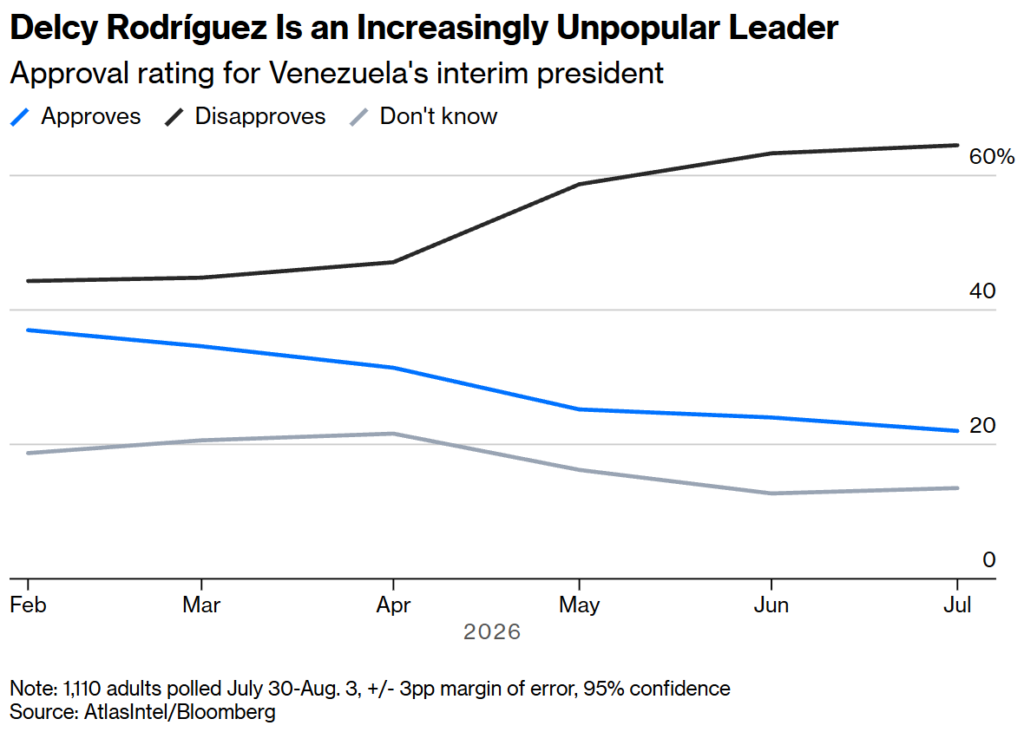
Domestic politics on both sides are sharpening that calculus. With midterms approaching, Rubio faces mounting pressure to show progress and lay out a credible path forward, along with more transparency over the handling of Venezuelan resources. The bipartisan resolution in support of free and fair elections introduced earlier this month shows that Congress is watching closely. Meanwhile, Rodríguez has her own problems: Her approval keeps sliding. Nearly two-thirds of Venezuelans now disapprove of her, after the government’s botched earthquake response laid bare Chavismo’s familiar ineptitude. She also faces dissenting voices within Chavismo itself.
All that only strengthens the case for finding a political exit before the fight for Trump’s succession starts gathering steam. A transition of this scale is unlikely without sustained US involvement. But that involvement comes at a cost: It puts Washington on the hook to actually deliver.
Therein lies the contradiction of playing empire in the 21st century. Trump can joke about Venezuela becoming the 51st state, the State Department can claim the whole Western Hemisphere as its backyard and cynics can point to the materialistic drivers of Maduro’s removal. But ownership carries obligation. Once a great power annexes another country’s problems, it inherits its future. And Venezuela’s future will cost Washington far more time and political capital than simply removing one troublesome oil guy.
Share This: