CDN NEWS |
  US NEWS







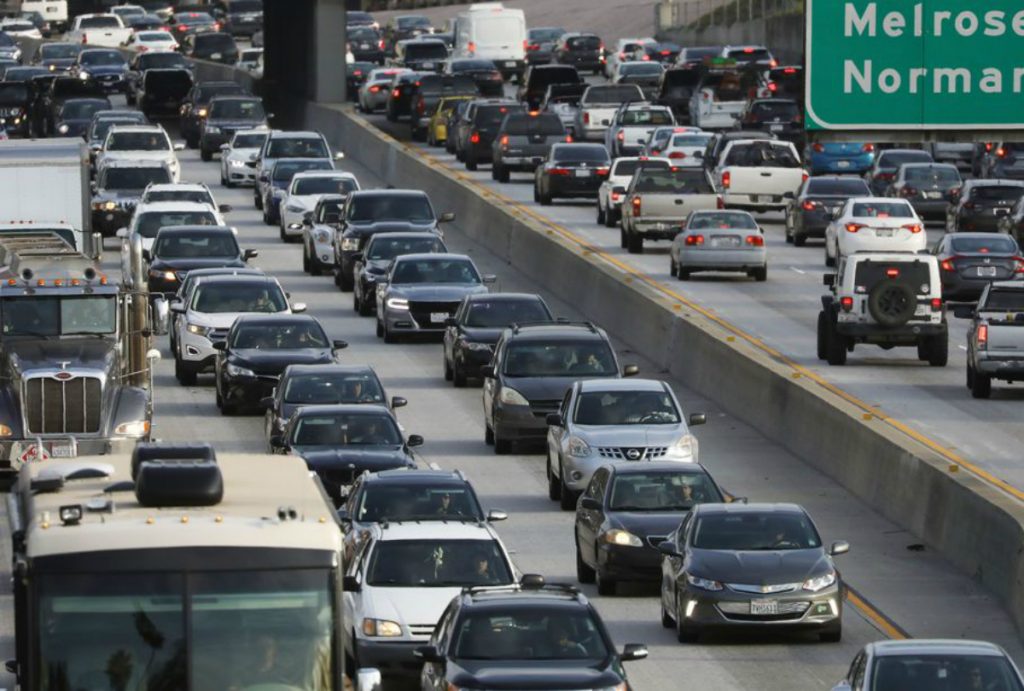
(Reuters) – Americans are revving up for the Fourth of July holiday, undeterred by gasoline prices that remain elevated and well above historical levels. The easing of tensions between the U.S. and Iran has provided some relief at the pump, reducing fears that disruptions to oil shipments through the Strait of Hormuz could send fuel prices sharply higher. Despite recent declines, motorists are on track to pay the second-highest Independence Day pump prices on record this weekend. Price-tracking service GasBuddy last week projected the price of gasoline in the country to average about $3.75 per gallon on July 4, behind only the record $4.80 per gallon logged on July 4, 2022. The national average price of gasoline stood at $3.79 per gallon on Thursday, up 63 cents from last year’s average, according to GasBuddy. “The declines came despite a turbulent week, as fresh attacks were traded between the U.S. and Iran before both sides agreed to halt hostilities just in time for Sunday…. For now, GasBuddy anticipates the national average will continue drifting lower this week, though the situation remains anything but predictable,” Patrick De Haan, head of petroleum analysis at GasBuddy, said in his weekly note on Monday. U.S. President Donald Trump has pressed gasoline retailers to cut prices more aggressively, arguing that pump prices have not fallen enough since tanker traffic through the Strait of Hormuz resumed last month. U.S. Treasury Secretary Scott Bessent reinforced Trump’s message to gasoline retailers on Tuesday, urging them to lower prices as the U.S. celebrates its 250th birthday.
Still, motorist group AAA expects a record of 72.2 million people to travel at least 50 miles from home around the U.S. Independence Day holiday, surpassing last year’s record of 71.8 million travelers. However, the number of travelers driving and flying to their destinations is expected to be relatively flat compared to last year, as travel by other modes, including cruises, becomes more popular.
Some 61.4 million people will drive while nearly 5.85 million are forecast to fly and 4.93 million are expected to travel by bus, train or cruise ship, AAA said.



“I think when it comes to summer holidays Americans will go through with their plans…. It’s the ‘I have had something planned’ mindset and ‘I am not changing it, I’ll figure it out next week’,” said Denton Cinquegrana, chief oil analyst at Dow Jones Energy. U.S. gasoline supplied, a proxy for demand, rose by 356,000 barrels per day ahead of the holiday weekend to 9.13 million bpd last week, compared with 8.64 million bpd the same time last year, the EIA said on Wednesday. Gasoline prices could remain elevated if fuel balances continue to tighten across key U.S. markets as stock levels in the U.S. Gulf Coast remain well below normal. Supply disruption from unplanned refinery outages, including in Russia and Mexico, and the approaching Atlantic hurricane season could also reverse recent price declines. Gasoline inventories fell by 2.3 million barrels during the week to 214 million barrels and stocks along the U.S. Gulf Coast fell to 76.48 million barrels, their lowest since October 2024.
“That (Gulf Coast inventory level) is probably more concerning from a supply standpoint than the U.S. being at the current deficit,” Cinquegrana said. Refineries along the Gulf Coast account for more than 55% of total U.S. refining capacity and are a major supplier and exporter of fuel to other regions.
Overall U.S. gasoline stockpiles stood at around 213.97 million barrels in the week ended June 26, roughly 8% lower than the same time last year, EIA data showed.
Reporting by Nicole Jao in New York; Editing by Mark Porter
Share This: