CDN NEWS |
  US NEWS







G7 leaders welcome prospect of more Canadian crude in world markets
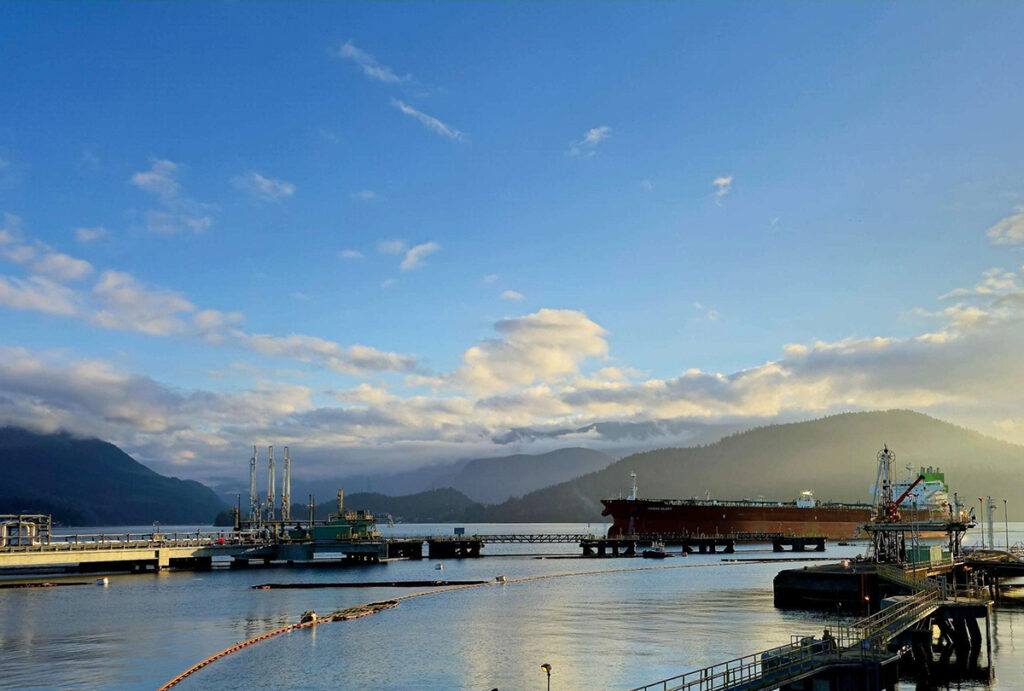
Tanker calling at the Westridge Marine Terminal in the Port of Vancouver. Photo courtesy Trans Mountain Corporation
Canada’s heavy oil has taken on a new shine as oil importers around the world continue to navigate shipping risks in the Strait of Hormuz.
While hostilities between Iran and the U.S. appear to be subsiding, the reopening of the Strait will shape trade flows in the days, months, and years ahead, according to RBC analysts.
Much of the energy gap is in heavy oil, they noted, with refineries in Asia built for heavy sour Middle Eastern crude “force-feeding” light sweet American barrels as a stopgap.
One way to think of it is that heavy oil is thick and does not flow easily, while light oil is thin and flows freely, like fudge compared to apple juice. The grades have different components that require different processing equipment.



Canada is one of the world’s largest heavy oil producers.
With the Trans Mountain expansion now in service, Canada’s oil exports to Asia – primarily heavy oil from Alberta’s oil sands – have increased substantially.
Prior to the project coming online, Canada sold $500 million of oil to Asia in 2023. In 2025, exports jumped more than 1,700 per cent to $9.3 billion, according to ATB Economics.
Canada’s allies in the G7 want more Canadian energy to reach world markets, a point reinforced in a joint statement following their June meeting in Évian, France.
After committing to move faster to diversify energy supply routes in order to reduce global vulnerability to the Strait of Hormuz, leaders said they “welcome the potential for Canada to deliver significant additional capacity to global markets in the coming years.”
The unaltered reproduction of this content is free of charge with attribution to the Canadian Energy Centre.
Share This: