CDN NEWS |
  US NEWS







‘We are at risk of letting this opportunity pass Canada by,’ said the Oil Sands Alliance, which represents five of Canada’s largest oilsands companies
By Naimul Karim
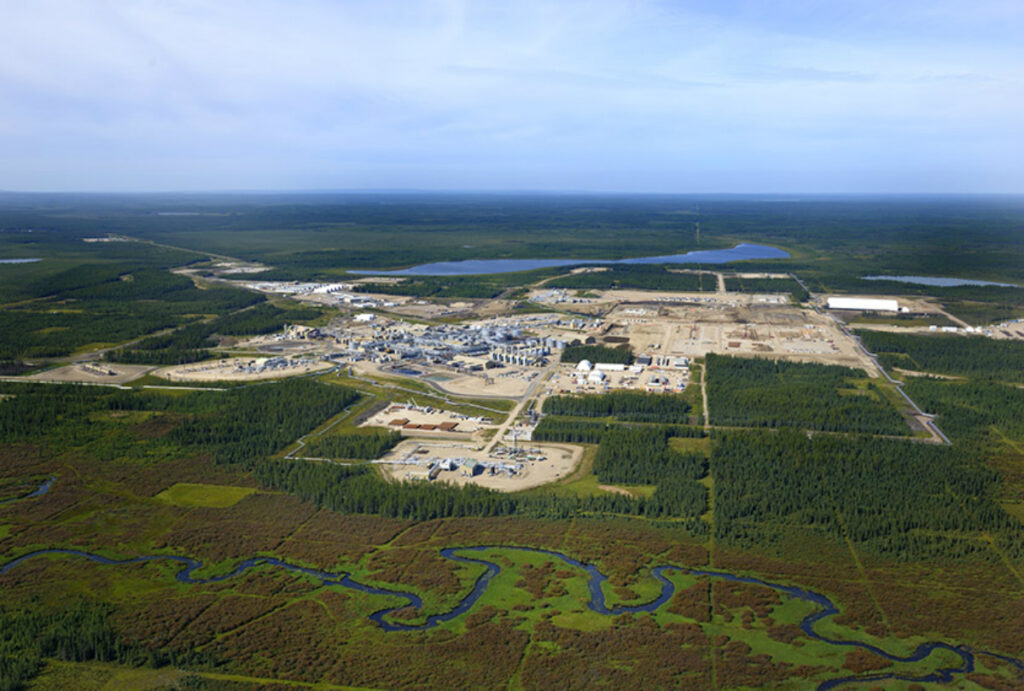
Capital investment in Canada’s oilsands has nearly halved over the past decade compared to the previous one, an industry group said Monday, warning the country is not moving quickly enough to boost oil production and meet its energy security goals.
It has been six months since Ottawa and Alberta signed a memorandum of understanding to make way for a possible new oil pipeline, but the “pace of change has been slow,” the Oil Sands Alliance Inc., which represents five of Canada’s largest oilsands companies, said in a statement.
The group took aim at what it called “an uncompetitive industrial carbon tax,” which it said competitors in other countries don’t have to deal with, and would “limit our industry’s ability to attract investment and grow.”
“The prime minister has set a vision for Canada to realize its full potential as an energy superpower,” the statement said. “We are at risk of letting this opportunity pass Canada by.”
Ottawa has been looking to accelerate key Canadian energy projects to boost its economy and reduce its reliance on the United States. As part of that plan, it signed an MOU with the government of Alberta to unlock the full potential of its energy resources, while keeping a check on carbon emissions.
But for that to happen the oilsands industry needs capital investments, which fell to $11.9 billion on average per year between 2016 and 2025, from $21.6 billion between 2006 and 2015.
“Because of complex regulatory processes, uncompetitive carbon frameworks and fiscal systems that do not incent growth, there has not been a major new greenfield oil sands project sanctioned in Canada since 2013 and investment has dramatically declined,” the Oil Sands Alliance said.
An oil price collapse that began late 2014 led to a recession in Alberta for the following two years and capped off a period of significant investment and growth in the oilsands region. The Trudeau government later swept to power and imposed a series of environmental policies that critics say chased away capital investment from the oil and gas industry.
Economists often point out that the spending pullback was not just a Canadian phenomenon, but that global investment in oil and gas production has also not recovered to levels seen during the boom era of the early 2010s.



More recently, the federal and Alberta governments have been trying to seize on a moment of apparent public support for expansion in the oilpatch.
They have reached agreements in principle on various sticking points outlined in their energy MOU, but more than a month after their self-imposed deadline of April 1, they still haven’t settled on two key issues: industrial carbon pricing and a a three-way agreement with oilsands companies on a carbon capture megaproject.
The Oil Sands Alliance has provided a number of recommendations to the government, it said, including one involving a “carbon framework which supports competitiveness and production growth.”
“Oil Sands Alliance members are committed to continuing to reduce emissions of intensity, including advancing a world-scale carbon capture and storage project,” it said. “However, a project of this size requires supportive regulatory and fiscal frameworks, not an uncompetitive industrial carbon tax that no other major heavy oil producing jurisdiction faces.”
Under the terms of the MOU, Alberta — which put a freeze on its industrial carbon tax a year ago — agreed in principle to ramp up the effective price for heavy emitters to $130 tonne. Currently, the headline carbon price in Alberta is $95 per tonne.
In a separate statement, Cenovus Energy Inc. chief executive Jon McKenzie said that the industrial carbon tax makes Canada “uncompetitive” and that “those are things that need to be reformed or removed if we’re going to form capital in this industry and grow in a meaningful way,” according to a Bloomberg story published on Monday.
Charlotte Power, a spokesperson for Natural Resources Minister Tim Hodgson, said that buyers of Canada’s resources — oil and gas, steel, and aluminum — are “increasingly looking” for low-carbon sourcing, adding that “we are looking to continue to meet that demand.”
“Industrial carbon pricing is critical to this effort,” she said. “Canadians expect us to meet our climate targets while supporting energy affordability, good jobs and long-term energy security.”
Sam Blackett, a spokesperson for the Alberta government, said negotiations with the federal government are ongoing,” and that “any agreement must keep Alberta’s energy and industrial sectors competitive and thriving on the global stage.”
— With files from Meghan Potkins, Financial Post
- Email: [email protected]
Share This: