CDN NEWS |
  US NEWS







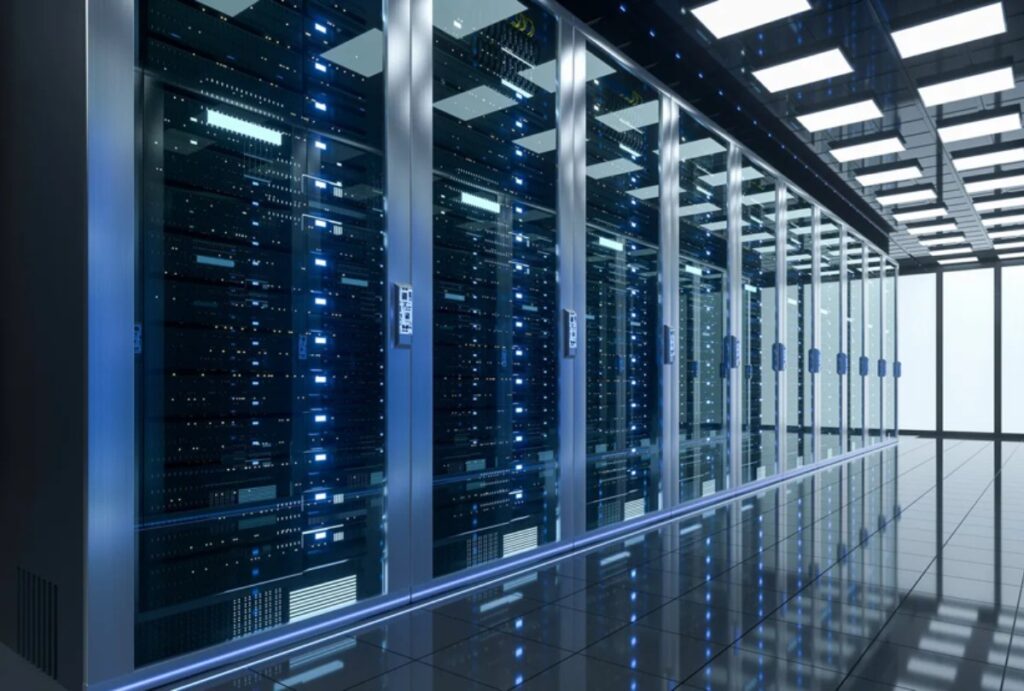
Across North America, data centers have moved from being a background part of the digital economy to one of the most important pieces of modern infrastructure. They support cloud computing, online banking, streaming, ecommerce, government systems, scientific research, and now artificial intelligence. Their rapid expansion is creating major economic opportunities, but it is also triggering difficult debates about electricity demand, land use, water consumption, and local community impacts. The result is a new infrastructure race: one driven by data, dominated by scale, and increasingly constrained by power and public acceptance.
What Data Centers Are and What They Do
A data center is a specialized building or campus that houses servers, storage systems, networking equipment, power systems, and cooling equipment. In simple terms, it is the physical place where digital services actually run. Every time a person sends a message, watches a video, stores photos in the cloud, runs business software, or uses an AI chatbot, a data center somewhere is doing the work. These facilities are designed to operate continuously, with extremely high reliability, because even short outages can disrupt financial transactions, medical systems, corporate operations, and consumer services. Their core purpose is to process, store, move, and protect data at massive scale.
Why Modern Data Centers Need to Be So Large
Data centers have become much larger because digital demand has become both broader and denser. Traditional enterprise computing required server rooms and modest colocation facilities. Today, hyperscale cloud providers and AI companies often need campuses measured in hundreds of megawatts, with some single projects seeking 300 to 1,000 megawatts or more of power. These sites are large because they must hold enormous volumes of computing hardware, electrical equipment, backup systems, fiber connections, and advanced cooling infrastructure. They are also built at scale to lower the cost per unit of computing, to support redundancy, and to cluster thousands of high-performance chips in one place. AI has intensified this trend because advanced models are trained on giant fleets of graphics processing units, and those chips generate far more heat and draw far more power than conventional servers.
How Data Centers Are Powered
There is no single power model for North American data centers. Most facilities still rely primarily on the electric grid, supported by substations, transmission upgrades, batteries, and backup diesel generators for emergencies. Natural gas remains a major near-term power source because it is dispatchable and available around the clock; industry reporting indicates it currently supplies the largest share of U.S. data center electricity. At the same time, operators are signing large renewable energy contracts for wind and solar, though intermittent generation usually must be paired with grid supply, storage, or other firm resources. Nuclear power is receiving renewed attention because it offers constant low-carbon electricity, and both conventional plants and proposed small modular reactors are being explored for future data center use. Some developers are also evaluating fuel cells, geothermal resources, and behind-the-meter generation so they can reduce dependence on overloaded grids and speed up project delivery.


How Many Are Already Built and How Many More May Be Needed
By facility count, North America already has an enormous installed base. Recent counts place the United States at roughly 5,427 data centers and Canada at about 337, for a North American total near 5,767 facilities. But the more important constraint is no longer the number of buildings; it is the amount of usable power capacity they contain. In the Americas, operational data center capacity reached about 43.4 gigawatts by early 2026, while roughly 25.3 gigawatts was already under construction. JLL reported more than 35 gigawatts under construction in North America at year-end 2025, showing just how quickly the pipeline is expanding. Looking ahead, several market forecasts suggest demand will remain far ahead of supply. One widely cited forecast estimates North American data center capacity at about 22.1 thousand megawatts in 2025 and 28.6 thousand megawatts by 2030, while McKinsey projects U.S. demand could rise from roughly 30 or more gigawatts in 2025 to 90 or more gigawatts by 2030. That means North America will likely require not just more buildings, but tens of gigawatts of additional energized capacity over the next five years, with exact needs depending on AI adoption, efficiency gains, permitting, and grid buildout.
Why Artificial Intelligence Requires So Much Power
Artificial intelligence requires so much power for several reasons. First, training advanced models involves processing vast datasets through repeated calculations across thousands of specialized chips. That is computationally intense and can run for weeks or months. Second, AI inference, the act of serving answers to users in real time, also consumes major energy because it must happen continuously and at low latency across many applications. Third, the chips used for AI, especially GPUs and similar accelerators, have very high rack densities, often far above traditional enterprise servers. A single training cluster can therefore demand extraordinary electrical input and equally extraordinary cooling. Academic and industry analyses now estimate that training a frontier model can consume tens of gigawatt-hours of electricity, and broader forecasts suggest AI-optimized data center power demand may more than quadruple by 2030. In short, AI is power-hungry because it compresses huge amounts of computation into concentrated, always-available infrastructure.
Why Communities Push Back: The NIMBY Problem
Many communities oppose nearby data center development because the local costs are immediate and visible while the benefits often feel remote or unevenly shared. Residents worry about strain on electric grids, higher utility bills, heavy water use for cooling, noise from cooling systems and backup generators, air pollution from diesel testing, traffic during construction, visual impacts from very large industrial-style buildings, and new transmission lines or substations. Critics also argue that data centers do not always create as many long-term jobs as factories or mixed-use developments, making the tradeoff harder to accept. This is why data centers increasingly face a classic NIMBY response: people may accept that society needs digital infrastructure, but they do not want the environmental burden, land transformation, and energy competition in their own neighborhood. Recent reporting suggests that local opposition has already delayed or blocked tens of billions of dollars in U.S. data center projects, showing that social acceptance is now almost as important as engineering and financing.
Conclusion
North America’s data center boom is not simply a real estate trend; it is a structural shift in how the economy is built and powered. Data centers are now essential infrastructure for cloud services and artificial intelligence, and their size reflects the extraordinary scale of modern computing. Yet the next five years will be shaped by a difficult balancing act. Operators need faster access to land, transmission, generation, and permitting. Governments want economic growth and AI leadership. Communities want fairness, transparency, and protection from local harm. Whether the next wave of data center development succeeds will depend not only on technology and capital, but also on whether the industry can secure enough power and enough public trust to keep building.
Share This: