CDN NEWS |
  US NEWS







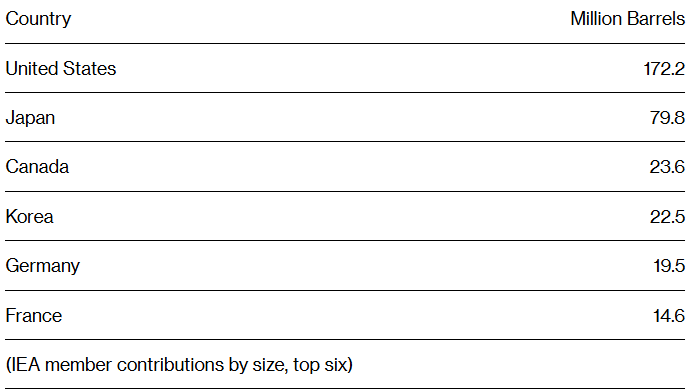
The Canadian government’s pledge to supply 23.6 million extra barrels of oil in the coming months reflects natural growth in production, according to BMO Capital Markets, rather than a specific effort to produce more crude.
The promise made by Energy Minister Tim Hodgson last month was Canada’s contribution to the 400 million barrels being released by 32 countries in the International Energy Agency. But unlike IEA members such as the US and Japan, Canada holds no strategic petroleum reserves. It is the world’s fourth-biggest oil supplier and second-largest within the IEA.
The Canadian barrels are “coming about from projects that were underway before all of this happened,” Randy Ollenberger, head of oil and gas research at BMO Capital Markets, said in an interview. “It’s not really a function of what’s happening in Iran or any request from the federal government to say, what can we contribute to this.”
Some analysts have said it would be difficult for any additional output to happen this year because oil companies were heading into spring maintenance, when they take production out of service in long planned phases, and a lack of pipeline export capacity.
Read More: Canada’s IEA Supply Pledge Faces Oil Sands Production Hurdles
The near closing of the Strait of Hormuz since the Iran war started at the end of February has curtailed shipments of the world’s oil and liquefied natural gas supplies, sending oil prices surging to around $100 a barrel.
Charlotte Power, a spokesperson for Hodgson, said the IEA provided Canada with the 23.6 million barrel figure, calculated from the country’s 5.9% share of total member-nation oil demand.
“Canadian industry confirmed they would be able to meet that number based on planned production increases this spring, with no additional measures needed,” she said in an email.
Power said between April and September, Canada is forecast to produce roughly 25.5 million barrels more than during the same period last year. While there are ways for industry to temporarily boost output — such as delaying spring maintenance — companies determined those steps weren’t necessary, she said.



Jon McKenzie, chief executive of Cenovus Energy Inc. and chairman of the Canadian Association of Petroleum Producers, said his company doesn’t expect to change its maintenance schedule. “These large maintenance events are planned years in advance, and you have contractors that are lined up to supply their services and labor, and they’re very, very difficult to move on a short-term basis.”
Read More: Canada Pushes Shipping More Gas for Gulf Coast LNG Exports
The IEA is requiring members to frequently report progress toward their oil-supply commitments. Power said the country must provide monthly oil-market data — including crude and petroleum-product supply, trade and stock levels — so the agency can monitor global availability and gauge the effectiveness of the response.
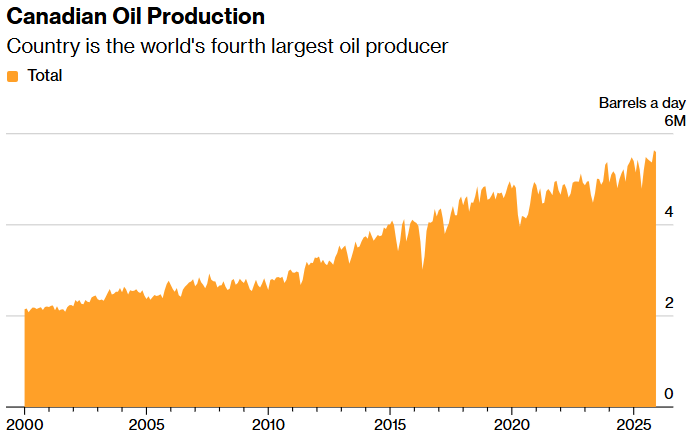
Source: Canada Energy Regulator
Most of Canada’s contribution to the IEA effort comes from oil sands companies, which account for the bulk of the country’s production, Ollenberger said. Cenovus plans to drill a 42-well redevelopment program at Christina Lake, supporting additional production volumes in 2026 and 2027, the company said in February. The company’s Foster Creek output has been rising after an optimization project was completed last year. In addition, the company is starting its West White Rose offshore project in Newfoundland in the third quarter.
Canadian Natural Resources Ltd. has recently added about 21,000 barrels a day of production at its Jackfish oil sands site, according to Alberta Energy Regulator data, after a part of the company’s Pike 1 project was completed in December with production of about 27,000 barrels a day. A second part of Pike 1 is scheduled to begin production in the second quarter.
Suncor Energy Inc. is adding production “because it’s getting better at operating as assets,” BMO’s Ollenberger said. The company could raise the capacity of its Fort Hills oil sands mine over the next three years to as much as 220,000 barrels a day from 195,000, Chief Executive Officer Rich Kruger said in February.
While output is increasing on an annual basis, the next few months are when production falls to its lowest levels of the year as oil sands producers shut machinery for maintenance.
— With assistance from Laura Dhillon Kane
Share This: