CDN NEWS |
  US NEWS







By Keira Wright

Australia’s biggest oil and gas producer Woodside Energy Group Ltd. is scaling back its clean energy ambitions to double down on fossil fuels, saying all its investments must compete equally for capital.
Woodside will target $350 million in annual cost savings from 2028, partly through a pullback of lower-carbon investments that includes retiring its scope three emissions-abatement target, abandoning a long-term plan to spend $5 billion on clean-energy projects by 2030 and reviewing its Beaumont New Ammonia project in Texas.
“We need to be guided by where markets and customers are at,” Chief Executive Officer Liz Westcott in an interview after the company’s half-year earnings were released on Tuesday. The decision reflects a “change in customer appetite” for lower-carbon products and “delay to policy frameworks,” she added. “We no longer have customers or policy to support it, so we need to be very mindful about managing our shareholder investments well.”
The reset comes as higher oil and liquified natural gas prices boost Woodside’s earnings and the company prepares to spend heavily on expanding its fossil-fuel business. Its net income rose 27% to $1.7 billion in the six months through June from the same period a year earlier, even as production fell 13% to 86.5 million barrels of oil equivalent.
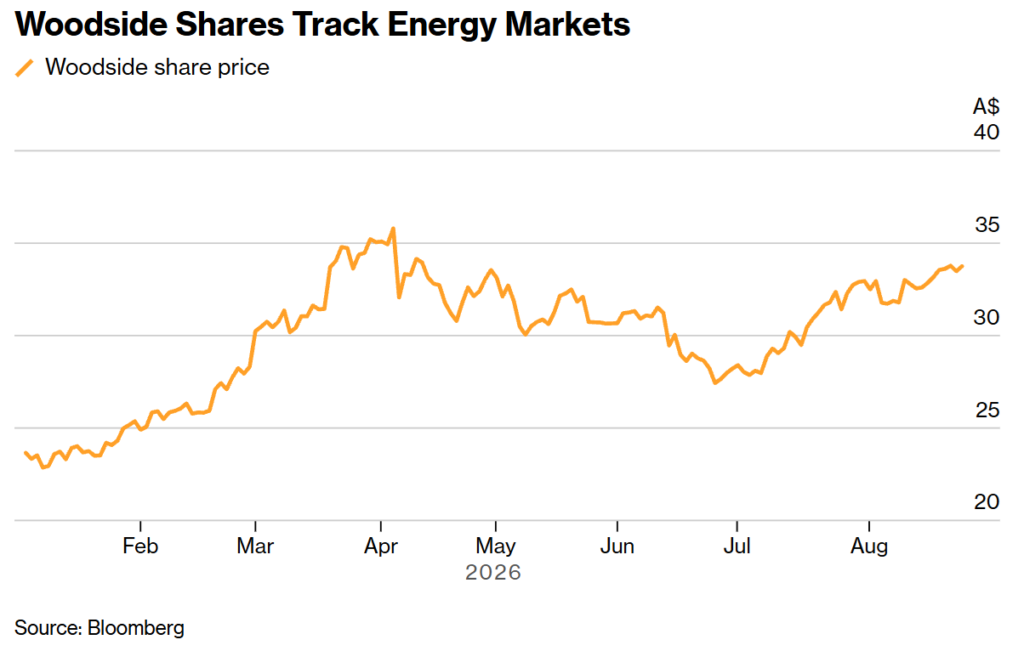



The boost to realized sales prices stemming from the US-Iran conflict has helped Woodside’s stock rise by almost a fifth since its last earnings report in February. Brent crude averaged $87 a barrel over January-June, compared with $71 a year earlier, and energy prices remain volatile as the six-month disruption to crude and LNG supplies through the Strait of Hormuz shows no sign of ending.
Westcott said the changes align with Woodside’s view that LNG has a key role in meeting long-term energy demand and global decarbonization goals. The company’s scope one and two greenhouse gas emissions reduction target remains unchanged, she said.
Raising the bar for clean energy investment may support shareholder returns, but risks inflaming tensions with investors and climate activists concerned about fossil fuel expansion, said Rohan Bowater, analyst and co-founder of Melbourne-based Accela Research. “Woodside was already a transition laggard among peers,” he said, adding it “has moved from an unproven transition platform to a clear reduction in ambition.”
Woodside’s gas and liquids production fell in the first half of the year on natural field decline, a cyclone and planned maintenance at Pluto LNG and other facilities in Western Australia. It was also impacted by portfolio changes including the Julimar-Brunello asset swap with Chevron Corp. and its Angostura divestment in Trinidad and Tobago. Output at Sangomar offshore Senegal, which pumped its first oil in 2024, has also begun to taper.
Woodside will pay an interim dividend of 57 cents per share, in line with analyst expectations. Its Sydney-listed stock rose as much as 2.9% after the results announcement, before reversing gains.
(Updates with details throughout, CEO comments in paragraph three.)
Share This: