CDN NEWS |
  US NEWS







By API – American Petroleum Institute
When people talk about “the price at the pump,” they usually mean gasoline. But the green handle at the gas station is telling us an important story about the economy, too.
The U.S. average price of diesel hit $5.58 per gallon last week, close to its all-time record. What’s putting so much pressure on diesel prices?
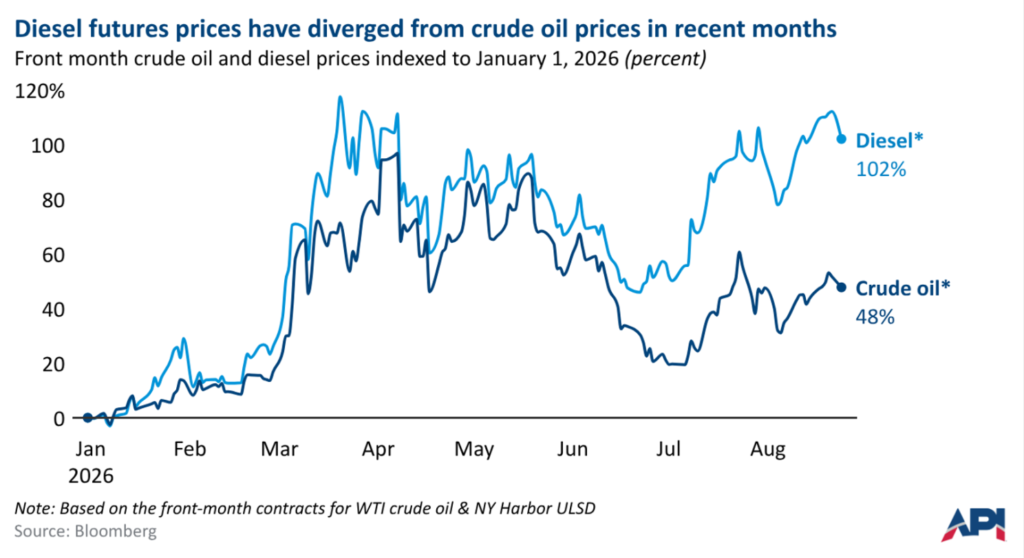
Diesel is made from crude oil, so their prices usually move together. Recently, they’ve diverged. Like crude oil, diesel is bought and sold in a global market, with its own balance of supply (how much is available) and demand (how much the world needs).
Disruptions around the world have reduced the amount of crude being turned into diesel and other fuels. That has tightened a market where demand is difficult to reduce, and refiners have limited ability to increase supply.
The world has lost almost 10% of its fuel-making capacity
If crude oil is the raw ingredient and diesel is the finished product, refineries are the kitchens. There aren’t any empty kitchens waiting in reserve — and disruptions in several major refining regions have left the remaining system running near its limits. Disruptions to refineries in three important regions is squeezing the global diesel market:
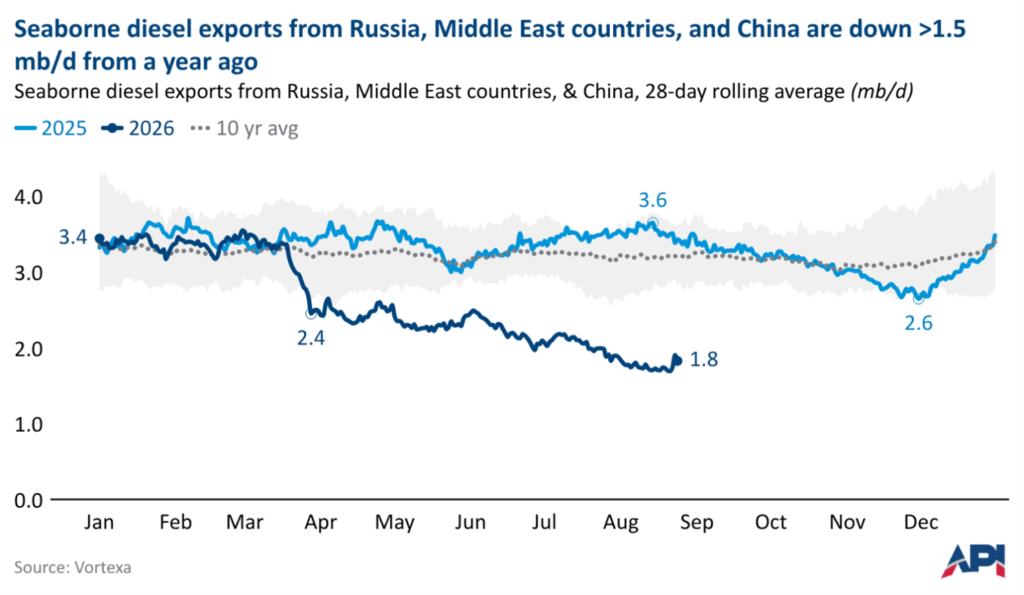
- In the Middle East, refinery damage from drone strikes and disrupted shipping through the Strait of Hormuz have reduced the amount of fuel reaching global markets.
- Russia, among the world’s largest diesel suppliers, stopped exporting earlier this year after Ukrainian strikes shut down several of its refineries.
- China is a major supplier of diesel to the rest of Asia, but sharply curtailed fuel exports earlier this year to preserve domestic supply and has only recently begun easing those limits.
The combined disruption in these three regions means the world is processing roughly 5 million fewer barrels of crude oil per day than it was a year ago — almost 10% of global supply.
Diesel is critical to the economy, so demand doesn’t disappear when prices rise
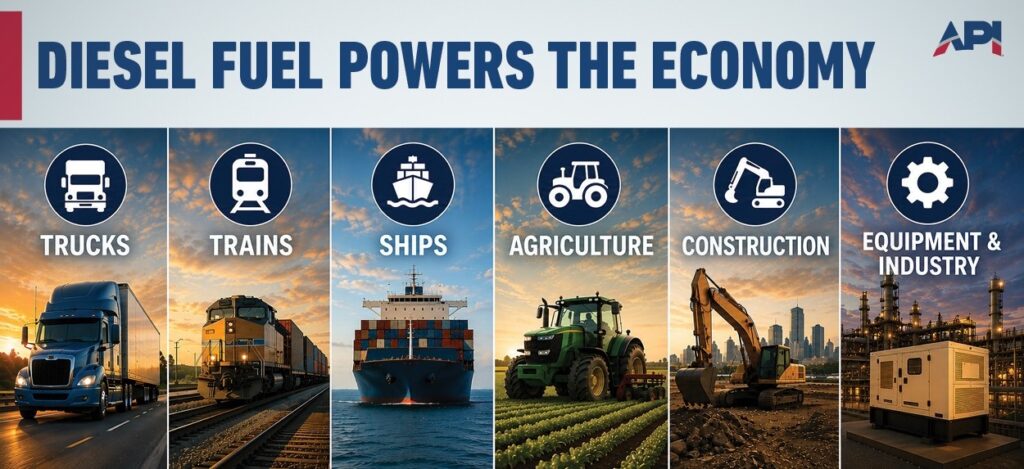
Diesel is often called the “workhorse of the global economy,” and for good reason. It fuels the trucks that move food, packages and consumer goods, the trains and ships that carry freight long distances, the tractors and combines that plant and harvest crops, and the cranes, bulldozers and other heavy machinery used on construction sites.



That means higher diesel prices can ripple through the cost of moving goods across the economy, even for people who never buy a gallon themselves.
Diesel’s economic importance also shapes how the market responds when supply tightens. For many products, higher prices can lead people and companies to buy less. But diesel tends to be different.
Trucks still have deliveries to make, farmers still have crops to harvest, and construction sites still need equipment running. With diesel demand holding relatively steady, tighter supply has translated more directly into higher costs.
U.S. refineries are already running hard to keep the market supplied
The U.S. produces more diesel than any other country — and our refineries are running all-out. They produced more diesel this July than in any July on record — operating at a 97% utilization rate.
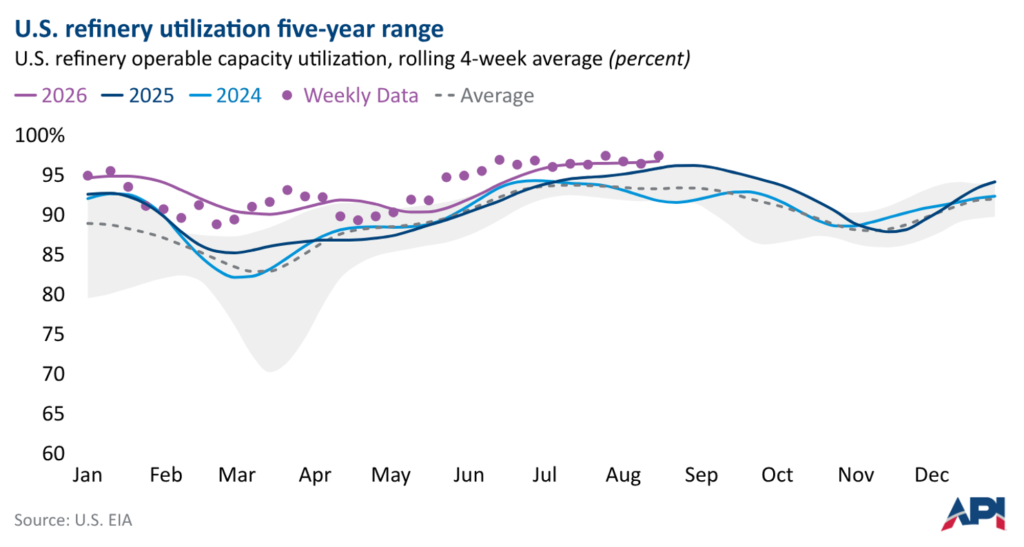
But those high utilization rates also mean that refineries don’t have the ability to further increase fuel production, and there aren’t easy ways to increase the share of each barrel of oil that becomes diesel.
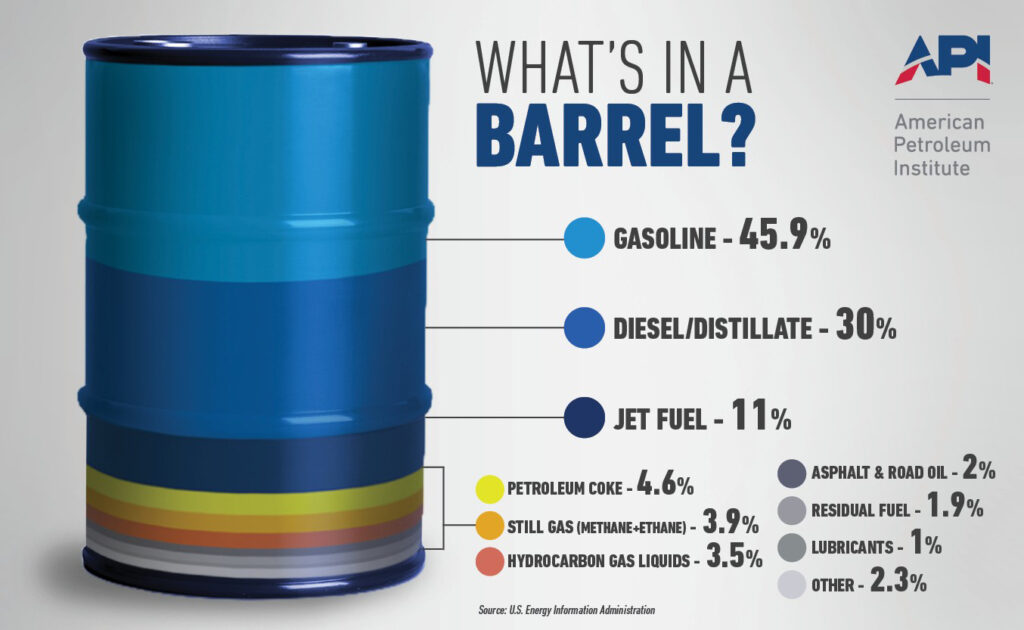
The takeaway
Diesel prices tell us something crude oil prices alone can’t: producing the raw material is only one part of a secure energy system. Crude also has to be refined into the fuels people and businesses use, supported by adequate inventories and reliable trade and transportation networks.
Right now, the strain is at the refining step. Global fuel supply has tightened while demand has held steady, and U.S. refineries are running at record rates. But no domestic refining system can fully shield consumers from a global shortage. Strong domestic production, refining capacity and resilient supply routes give the United States more options when markets come under stress.
Share This: