CDN NEWS |
  US NEWS







- Both sides have renewed strikes
- Iran says will not allow Washington to intervene in the Strait of Hormuz
- Cargo traffic had already begun to slow as tensions had increased
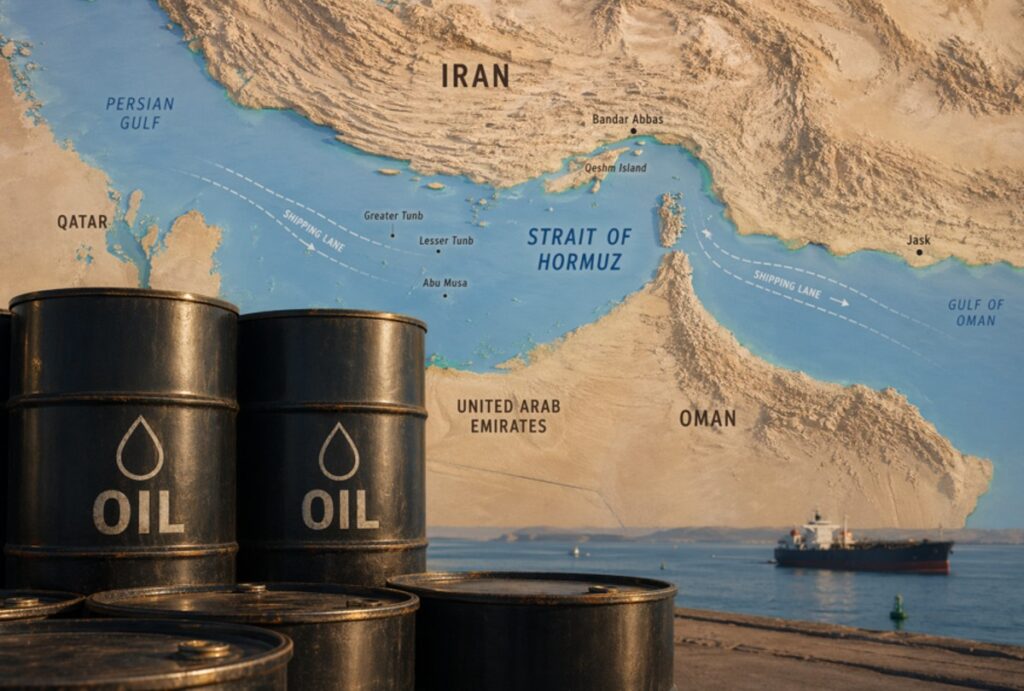
HOUSTON, July 13 (Reuters) – Oil prices jumped more than 5% on Monday after U.S. President Donald Trump said the United States was reinstating a naval blockade on Iran, reigniting concerns over energy shipments through the Strait of Hormuz.
Brent crude futures were up $4.06, or 5.34%, to $80.07 at 12:44 p.m. EDT (1644 GMT), while U.S. West Texas Intermediate crude was up $3.74, or 5.24%, to $75.15 a barrel.
Oil gained after Trump said the U.S. was reinstating the blockade and that the United States would be reimbursed 20% on all cargo shipped through the Strait of Hormuz, following renewed military exchanges with Iran.
“President Trump’s reinstatement of restrictions on Iranian maritime traffic, alongside retaliatory attacks and sharply reduced vessel flows through the strait has intensified concerns over near-term supply availability,” said Gelber & Associates analysts in a note.
Iran’s top joint military command had earlier said it would not allow Washington to intervene in the management of the strait and any attempt by the U.S. to transit without its authorization would be confronted.
The UN’s shipping agency against Trump’s proposal, saying it opposes any fees for straits used in international navigation and stressing that there is no legal basis for introducing mandatory tolls on strait transits.
Before the conflict began in late February, the Strait of Hormuz handled about one-fifth of global daily oil and liquefied natural gas supplies.
Traffic had begun to increase during a fragile ceasefire agreed in June, but had slowed as tensions rose.
“The focus will remain on the number of inbound tankers as a lower number could impact production, so currently we see a risk premium and a disruption risk supporting prices,” said UBS analyst Giovanni Staunovo.
As the prospect of long-term disruption looms, analysts expect countries to work on ways to permanently bypass the Strait of Hormuz.


Goldman Sachs estimated that expanding pipeline capacity in the Middle East could shield more than 60% of pre-war Gulf oil exports from any future Hormuz disruptions by end-2028.
The bank’s base-case forecast assumes pipeline capacity bypassing Hormuz will rise by 3.8 million bpd by end-2027 and 7.3 million bpd cumulatively by end-2028, taking total effective bypass capacity to more than 14 million bpd by end-2028.
During the interim peace deal, Tehran increased exports, which has led to an increase in Iranian oil supplies held at sea.
Sales have been slow, however, as China’s independent refiners have turned to cheaper crude from Iraq, the UAE and Qatar.
The Abu Dhabi National Oil Company set the August official selling price of its benchhmark Murban crude at $80.01 a barrel, it said on Monday, down from $101.48 a barrel the month before.
Russian energy supplies have also been disrupted as Ukraine seeks to cut off funding for Moscow’s war effort.
Ukraine’s Security Service said it struck an oil depot in Russia’s Stavropol region overnight, as well as three storage tanks at an oil-loading site in the port of Kavkaz in the southern Russian region of Krasnodar.
Meanwhile, the Caspian Pipeline Consortium, which accounts for 80% of Kazakhstan’s oil exports, cut supplies by 7% last month from May as a result of maintenance at the country’s largest oilfield, Tengiz, as well as lower Russian flows, two industry sources said on Monday.
Elsewhere, stocks of crude oil in the U.S. Strategic Petroleum Reserve fell by about 3 million barrels to 316.5 million barrels last week, the lowest level since April 1983, according to data from the Department of Energy.
The drawdowns are a part of a U.S. agreement to release 172 million barrels from the facility.
Reporting by Georgina McCartney in Houston, Anushree Mukherjee in Bengaluru, Florence Tan, Helen Clark. Editing by Muralikumar Anantharaman, Mark Potter, Barbara Lewis and Nick Zieminski
Share This: