CDN NEWS |
  US NEWS







By Jonathan Saul and Florence Tan
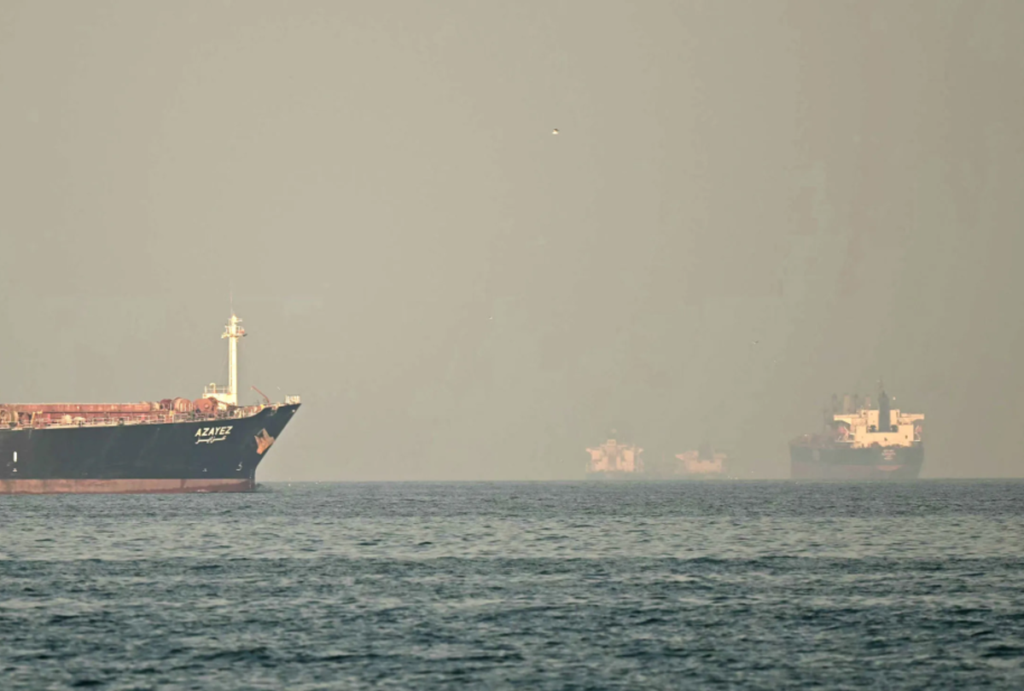
LONDON/SINGAPORE, July 13 (Reuters) – The number of tankers transiting the Strait of Hormuz fell in the past day to the lowest level in two months, shipping data showed on Monday, as renewed strikes between the U.S. and Iran and attacks on vessels heightened safety concerns.
Shipping industry sources said vessels were increasingly switching off their public AIS tracking transponders, making it difficult to determine the full number of ships crossing the waterway.
Based on available data, oil and gas tanker traffic fell to its lowest level since May 25, according to analysis from Kpler.
“Should the renewed escalation in the strait lead to another prolonged closure of Hormuz, the world will find itself in a much tougher spot,” ship broker Gibson said in a report.
“With global inventories rapidly depleted in recent months, this is a recipe for much tighter supply, higher prices and significant downside risk for tanker markets.”
The Sea Faith oil products tanker was among the few visible vessels sailing towards the entrance to the Strait of Hormuz near the Iranian side of the waterway, with a destination of Sohar, according to LSEG and MarineTraffic ship-tracking data on Monday.
The Iranian-flagged products tanker Niki separately sailed towards the strait’s entrance from the Iranian side of the chokepoint later on Monday, according to separate MarineTraffic and LSEG data.
President Donald Trump said on Monday that the United States would probably take over the Strait of Hormuz and should be reimbursed for controlling the vital waterway.
Commercial traffic through the Strait of Hormuz “continued at reduced levels”, the U.S. Navy-led Joint Maritime Information Center (JMIC) said in an advisory on Sunday.
“Traffic patterns continued to reflect operator caution following recent attacks.”
At least three pairs of tankers were involved in ship-to-ship transfers outside Hormuz off Oman’s coast in the Gulf of Oman, according to the latest satellite imagery from July 11 reviewed by Reuters.


Ship-to-ship (STS) transfers typically involve the transfer of oil from one vessel to another. Since the conflict began on February 28, STS transfers have enabled faster deliveries of oil onto waiting ships that do not need to sail through Hormuz.
“Some ships are slipping in and out,” one shipping official said on Monday.
“This has to be viewed as a managed conflict now similar to the Houthis in the Red Sea,” the source said, referring to the Yemeni militia, which paralysed traffic through the Bab al Mandeb waterway for nearly two years before calling a ceasefire in 2026.
TRUMP, IRAN DIFFER OVER STRAIT STATUS
U.S. forces completed another wave of strikes against Iran on Sunday, hitting dozens of targets at multiple locations with precision munitions, the Central Command said.
U.S. President Donald Trump said on Sunday that the Strait of Hormuz is open to commercial traffic, although Iran declared earlier that it closed the strait after a vessel travelled on an unapproved route and was struck.
Iran’s Revolutionary Guards said on Monday that their navy stopped two ships in the Strait of Hormuz last night by shutting down their systems. They did not name the ships involved.
A container ship sustained damage from an unknown projectile, which caused a fire in the engine room on Sunday, JMIC said.
TRAFFIC SLOWDOWN
Six vessels transited the strait on Sunday, ship-tracking data from Kpler showed, the lowest number in five weeks.
Tankers that exited the strait included the Very Large Crude Carrier Humanity, laden with 2 million barrels of Iranian oil, and another tanker, Capetan Andreas, carrying about 500,000 barrels of Kuwaiti oil products, the data showed, while three empty tankers entered the Gulf to load oil. Most of the tankers switched off their transponders when crossing the strait.
There were no liquefied natural gas tankers that entered the strait over the weekend that were visible on ship-tracking data.
One tanker controlled by the Abu Dhabi National Oil Co exited the strait between July 10 and July 12, Kpler data showed. The vessel was heading for Dahej port in India.
Reporting by Jonathan Saul, Florence Tan, Emily Chow, Siyi Liu and Trixie Yap; Editing by Lincoln Feast and Ros Russell
Share This: