CDN NEWS |
  US NEWS







The hyperscaler has been adding a gigawatt of data centre capacity, enough to power 750,000 homes, every three months
By Alastair Marsh and Brody Ford
Microsoft Corp. may shelve one of the industry’s most ambitious clean-energy targets as it tries to remove hurdles that could hold it back in the race to power data centres, according to people with knowledge of the matter.
The company is weighing whether to delay — or even abandon altogether — its 2030 target of matching 100 per cent of its hourly electricity use with renewable energy purchases, according to the people, who requested anonymity to discuss a private matter.
The costly and energy-intensive build-out of data centres is affecting views on the feasibility of climate commitments made before the AI era, the people said. Talks inside Microsoft are ongoing and no final decision has been made, they also said.
A spokesperson for Microsoft said the company continues to look for opportunities to maintain an annual matching goal, without commenting on the much tougher hourly commitment.
Such a retreat would mark a significant shift. Big Tech has long stood out for its public embrace of some unusually ambitious emissions-cutting goals, with Microsoft even pledging to remove more carbon dioxide from the atmosphere than it emits. But as companies including Amazon.com Inc. and Meta Platforms Inc. try to secure enough energy to meet the demands of artificial intelligence, the appeal of natural gas has been growing.
“In the race to get data centres up and running as soon as possible, clean energy targets are out of the window,” said Alexia Kelly, the former director of net zero and nature at Netflix Inc., who is now the managing director of the carbon policy and markets initiative at High Tide Foundation. Instead, “gas seems to be the fuel of choice.”
Announced in 2021, Microsoft’s flagship clean-power goal — dubbed 100/100/0 — was meant to match 100 per cent of its electricity consumption, 100 per cent of the time, with zero-carbon energy purchases (all from the same power grids from which it was drawing the energy). The hour-by-hour matching commitment was considerably more ambitious than Microsoft’s previous target, which it has already met, of buying enough renewable energy to match its annual electricity consumption.
In their latest sustainability reports, Meta, Alphabet Inc.’s Google, Amazon and Microsoft said their carbon emissions went up 64 per cent, 51 per cent, 33 per cent and 23 per cent, respectively, compared with benchmarks predating the first release of ChatGPT in late 2022. Microsoft singled out “growth-related factors such as AI and cloud expansion” as reasons behind the surge in emissions.
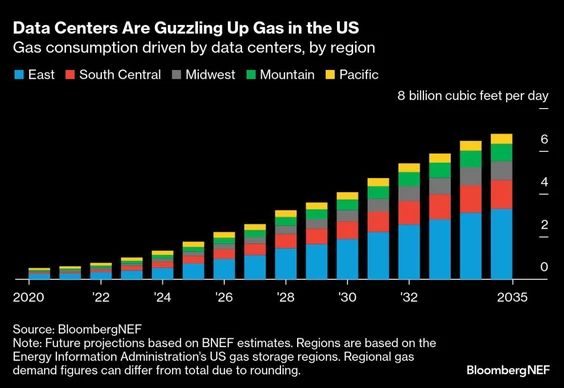
The amount of power consumed by United States data centres is likely to more than double to 106 gigawatts in the decade through 2035, with natural gas set to play a key role, according to BloombergNEF. On a global basis, renewables will meet nearly 50 per cent of the growth in data centre electricity demand, though in the U.S. gas will dominate, according to the International Energy Agency. Microsoft says it’s been adding about a gigawatt of data centre capacity — roughly enough to power 750,000 homes — every three months. This year, the company has also held talks with Chevron Corp. to fund a major natural gas plant in the West Texas Permian Basin.
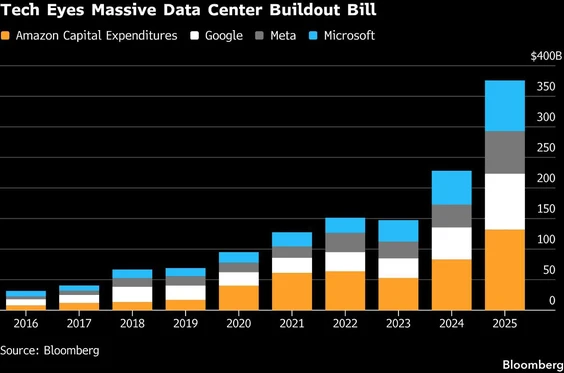
Microsoft also faces financial constraints. Through the end of December, the company expects to spend $190 billion, largely for data centres. Mounting AI costs have meant tighter budgets in many divisions, including those devoted to reducing its carbon footprint, people familiar with the matter said. That’s led to more scrutiny of financial commitments to clean energy projects, they said.
“AI is an existential fight for survival for Big Tech, and so all and any funds at their disposal are being diverted to building as much AI possible,” Kelly of the High Tide Foundation said.
Within Microsoft, living up to the 100/100/0 target was always seen as a stretch, according to people familiar with the program. Google, which has described its own equivalent plan as a “moonshot” goal, said in its latest sustainability report that it managed to use carbon free energy about two-thirds of the time.
Energy matching, whereby companies source enough clean power or renewable energy certificates to equal the total amount of megawatt hours of electricity they’ve consumed in a given period, is a popular procurement strategy for companies trying to live up to climate commitments.
By running its offices and data centres on 24/7 carbon-free energy on every grid on which it operates, Microsoft said it would encourage the growth of zero-carbon energy on the grid, while removing high-carbon energy sources over time. Critics of hourly matching say such programs may in fact discourage investment in renewable energy by imposing a cost and administrative burden that many companies will not be able to bear.
Microsoft is already scaling back its carbon-dioxide removal program, Bloomberg News reported last month. The development has sent tremors through a market in which the company was by far the biggest investor. Together, CDR and 100/100/0 are both key pillars of Microsoft’s target of achieving a negative carbon footprint by the end of this decade.
“What’s needed now is a broader reckoning — across hyperscalers, climate target frameworks, and the industry as a whole — on what credible climate commitments look like in an era of behind-the-meter gas and exponential AI demand,” said Boris Gamazaychikov, the former head of AI sustainability at Salesforce Inc.
“The systems we have weren’t built for this moment,” he said. “And pretending they still work serves no one.”
—With assistance from Emily Forgash, Matt Day, Coco Liu and Michelle Ma.



Hourly Energy Matching:
Share This: