CDN NEWS |
  US NEWS







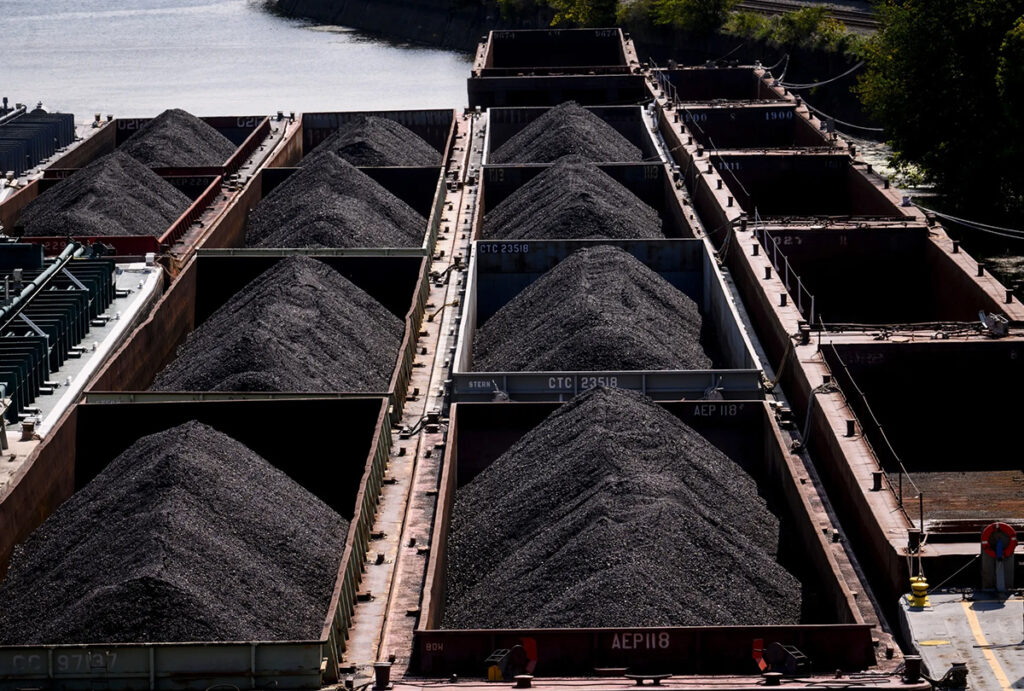
LITTLETON, Colorado, Dec 16 (Reuters) – Global shipments of thermal coal – burned in power stations – have posted their first annual decline since 2020 on the back of lower coal-fired power generation in key Asian markets.
Total seaborne exports of so-called steam coal are set to come in at about 945 million metric tons in 2025, marking a 5% or roughly 50 million ton drop from 2024, data from commodities intelligence firm Kpler shows.
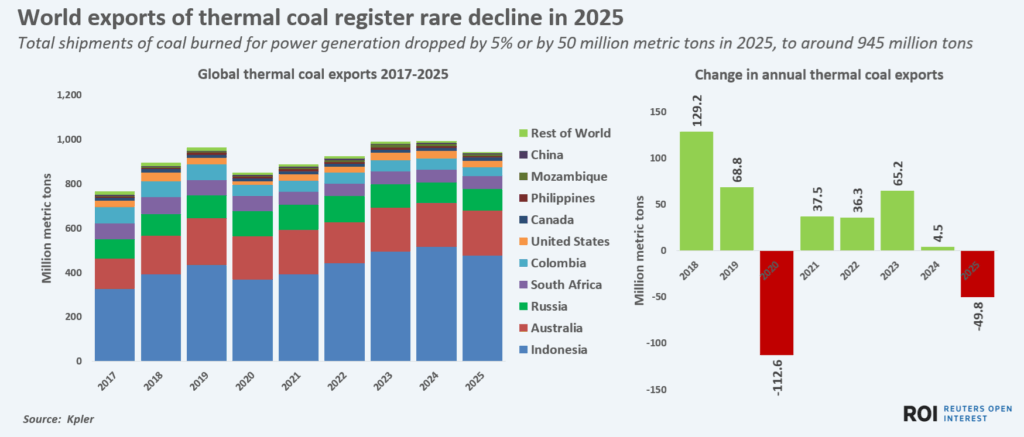
Total shipments of coal burned for power generation dropped by 5% or by 50 million metric tons in 2025, to around 945 million tons
A 7% drop in imports by countries in Asia – the top coal consuming region – was the main driver of the decline, and raises the possibility that global coal export volumes have peaked and may continue to contract going forward.
ASIAN DOMINANCE
Countries in Asia accounted for 89% of all thermal coal imports for the year to date, which underscores how concentrated coal shipments have become.
They imported 841 million tons of thermal coal, marking a 7% or 60 million ton drop from 2024’s totals.
China was the top overall coal importer this year, with roughly 305 million tons of imports, followed by India (157 million tons), Japan (100 million tons), South Korea (76 million tons) and Vietnam (45 million tons).
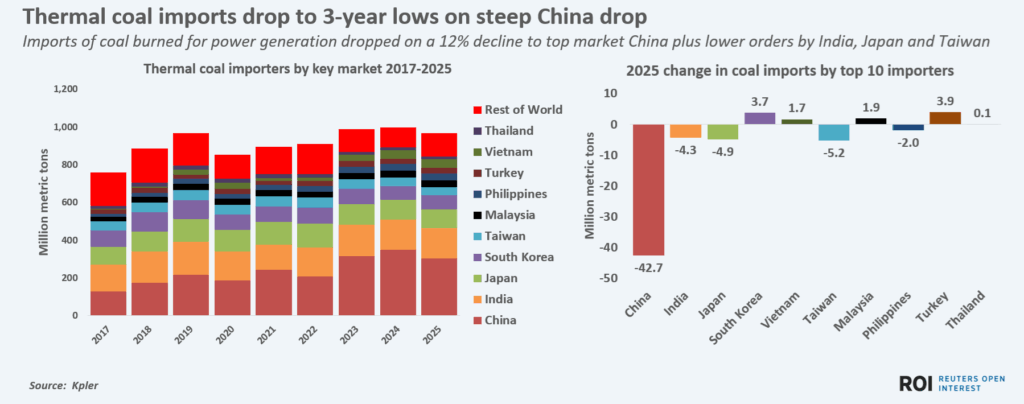
Imports of coal burned for power generation dropped on a 12% decline to top market China plus lower orders by India, Japan and Taiwan
However, only two of the five largest coal import markets – South Korea and Vietnam – posted annual rises in imports this year, which highlights the downbeat tone of coal demand even in the top coal consuming region.
And while other importers including Malaysia, Thailand and Turkey also posted year-over-year growth, their collective imports remain dwarfed by both China’s and India’s, which remain the main driving forces behind global coal import trends.
CHINA AND INDIA IN FOCUS
The two largest coal importers – China and India – accounted for 48% of all thermal coal imports, and both registered import contractions this year due to a combination of higher domestic coal production and greater power supplies from other sources.
China registered a 12% or nearly 43 million ton drop in thermal imports in 2025 from the year before, to 305 million tons. India’s imports dropped by 3% or by 4.3 million tons to around 157 million tons.


Both China and India have government policies that support domestic coal production, which generates jobs, but both countries also face the threat of overproduction of low-grade coal supplies that raise pollution levels when burned.
China’s ongoing campaign against overcapacity is likely to lead to some shrinkage in domestic coal production volumes in the years ahead, and in turn may limit any further drops in coal import demand over the near to medium term.
However, China’s rapid rollout of clean energy supplies – including record deployment of solar and wind power and rising generation from nuclear reactors – is expected to continue shrinking coal’s share of the domestic power generation mix.
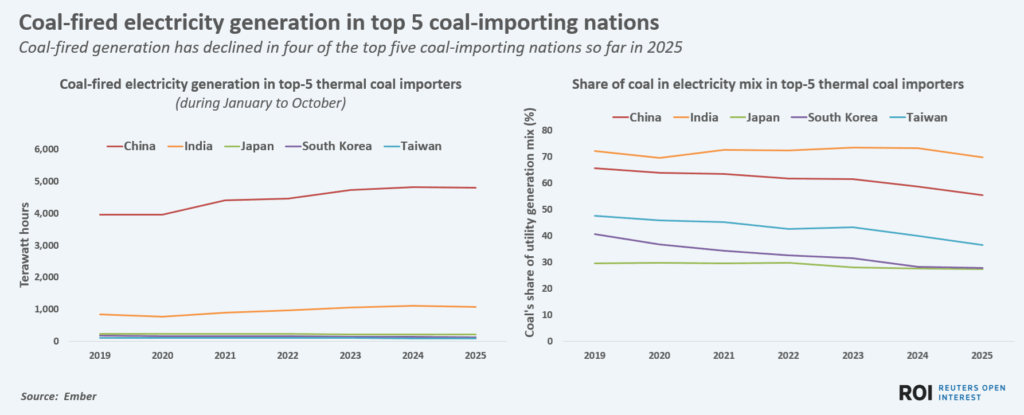
Coal-fired generation has declined in four of the top five coal-importing nations so far in 2025
Indeed, coal’s share of electricity production in China has fallen to a record low of 55.3% so far in 2025, which is down from nearly 59% in 2024, data from energy think tank Ember shows.
In India, a combination of record domestic coal mine production and declining coal use in electricity generation have resulted in the rare issuance of coal export permits.
Those export permits look set to heighten competition among exporters from early 2026, and could become a regular occurrence if the mine output increases can be sustained while domestic use of coal for electricity generation continues to contract.
Coal has generated just under 70% of India’s electricity so far in 2025, which compares to a more than 77% share during the past two years.
Coal’s loss of India’s generation share has come as a direct result of a record-fast rollout of power supplies from solar and wind farms, as well as the highest generation from hydro dams in more than six years.
With clean generation from all sources expected to keep climbing on the back of an ongoing push to expand India’s clean power capacity, further cuts to both coal’s share of the generation mix and total coal use in India could emerge.
That in turn may lead to even higher coal exports from India over the near term, which may eat into the profit margins of other coal exporters such as Indonesia and Australia.
But over time any sustained declines in coal use in China, India and other formerly major coal consumers will likely trigger steady shrinkage in coal export volumes as well, and result in a broader contraction of the overall coal industry.
The opinions expressed here are those of the author, a columnist for Reuters.
Reporting by Gavin Maguire; Editing by Edwina Gibsb
Share This: