CDN NEWS |
  US NEWS







By API – American Petroleum Institute

Diesel prices are under pressure as a global refining crisis has reduced fuel supplies and left little spare capacity to replace lost barrels.
As Washington looks for short-term relief, one proposal gained attention last week: banning or restricting U.S. diesel exports. Analysts, economists and industry voices warned it could make a bad situation worse by disrupting refinery operations and tightening global supplies.
Then the market started moving. Here’s what market movements told us.
What the market did: Global diesel futures jumped.
What it told us: Restricting U.S. diesel exports could raise the price of diesel for the entire world.
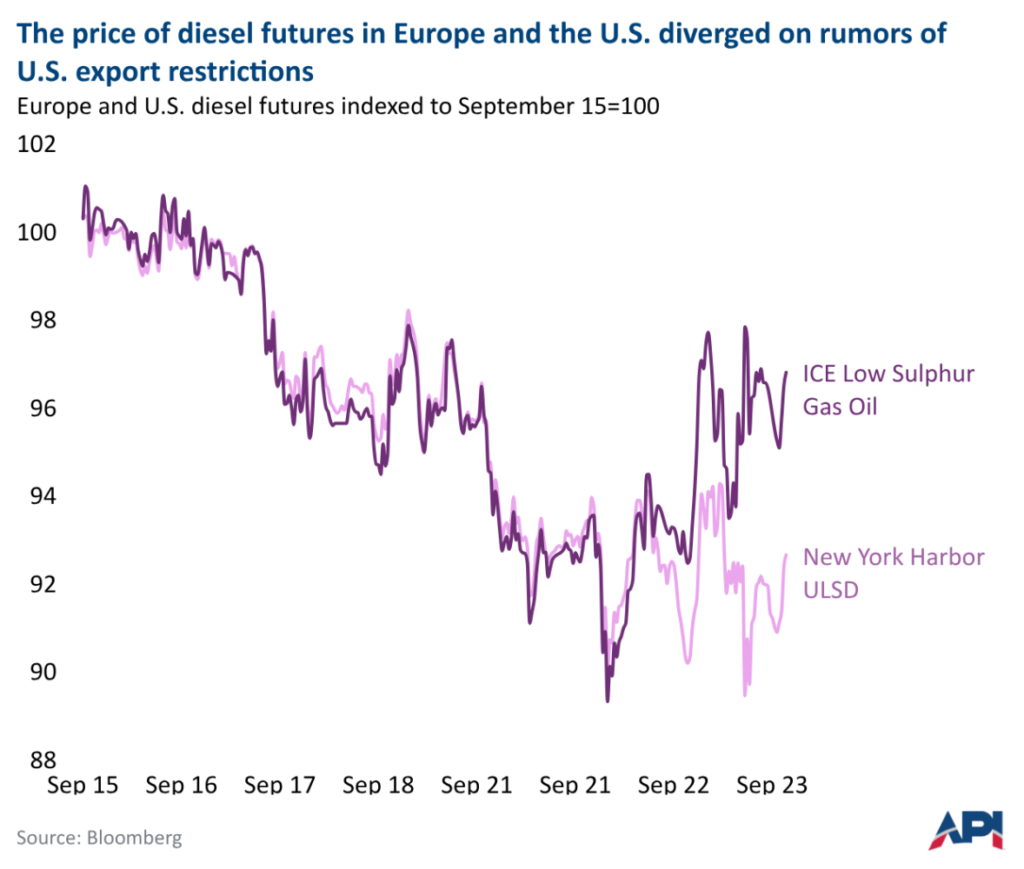
European diesel futures jumped 7% in a single day last week. That is what happens when the world’s largest diesel exporter, and Europe’s main overseas supplier, threatens to leave a market already short of Russian and Middle Eastern barrels.
An export restriction won’t create more diesel. In fact, it will do the opposite. In an already-tight market, removing U.S. supply could put more upward pressure on global prices.
As ClearView Energy Partners’ Kevin Book put it: “This is a global problem. There’s no U.S.-only solution to this.”



What the market did: U.S. gasoline futures went up.
What it told us: Restricting U.S. diesel exports could force refineries to make less gasoline and jet fuel.
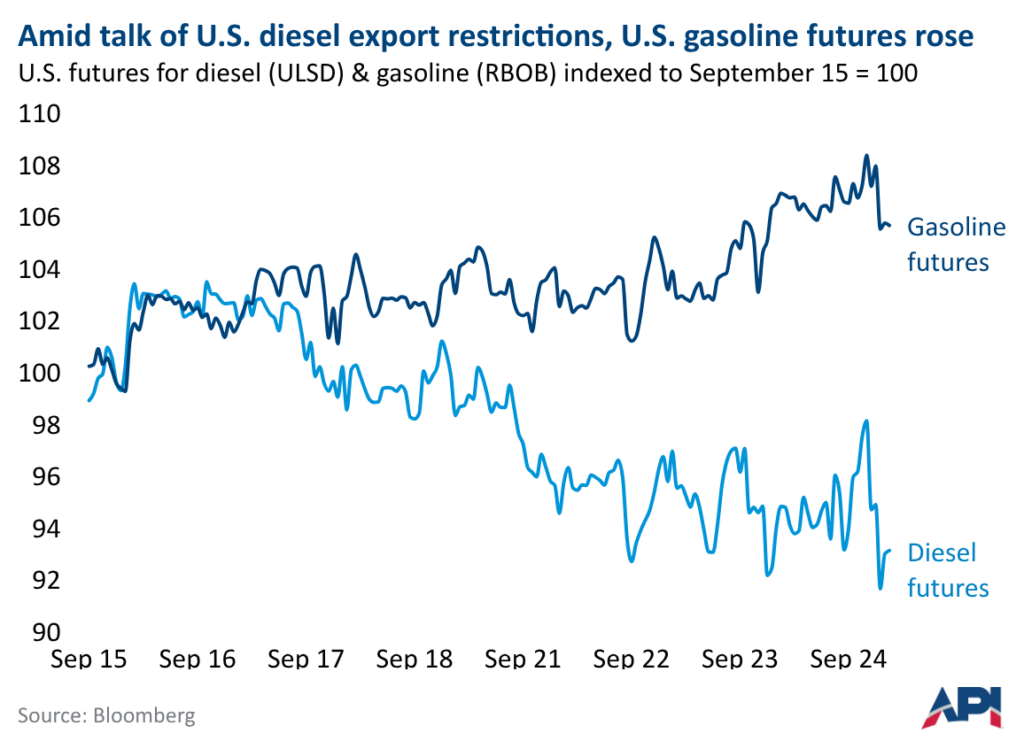
The day export-ban talk peaked, U.S. gasoline futures rose to their highest close since July. Why would a diesel policy move gasoline? Because a refinery can’t make one without the other, and every barrel of crude comes out as a mix of diesel, gasoline, jet fuel and other products.
The United States produces more diesel than it consumes and exports the rest. Limit those exports and the surplus has nowhere to go but storage. Once the tanks start to fill, a refinery’s only option is to process less crude, which means less gasoline and jet fuel, too.
S&P Global Energy estimates refiners could be forced to cut 1.9 million barrels a day — equal to the loss of about 14 medium-sized refineries, and enough to turn the United States into a net gasoline importer after a decade as an annual net exporter.
Energy Secretary Chris Wright warned of the same chain reaction: full storage tanks, less refining, higher fuel prices.
The takeaway
Last week was not a controlled experiment — fuel prices move for many reasons. But the market reaction offered an early look at the tradeoffs analysts have warned about.
Global diesel prices jumped and gasoline futures rose.
The lesson is that fuel markets are interconnected. Restricting exports might provide temporary diesel-price relief in some parts of the country, but it could also tighten global supply, disrupt refinery operations and put pressure on other fuels.
That’s how a policy designed to solve one problem could end up creating several more.
Share This: