CDN NEWS |
  US NEWS







By Jarrett Renshaw and Ernest Scheyder
- Venezuela’s mineral wealth remains largely unproven
- Country suffers from outdated data, weak infrastructure and illegal mining
- Caracas is seeking foreign investment as Washington looks to deepen its economic influence
- Trump is trying to reshape Venezuela’s oil industry and broader resource sector
Sept 8 (Reuters) – The Trump administration is seeking greater U.S. access to Venezuela’s minerals, including gold, as it expands its push to gain control and influence over the South American country’s vast natural resources beyond oil, according to three sources familiar with the discussions.
The effort could open the Venezuelan mining sector to U.S. investment and give U.S. companies access to not only oil, but supplies of minerals crucial for national security, the sources said on condition of anonymity.
It also would expand President Donald Trump’s push to more closely align Venezuela’s resources with Washington’s strategic and economic interests in the wake of the U.S. military’s ouster of Venezuelan leader Nicolas Maduro in a raid in January.
The Trump administration is considering a range of steps to increase U.S. involvement in Venezuela’s mining sector, including a possible executive order focused on critical minerals, the sources said. The order is still being drafted and the administration’s strategy to secure minerals in Venezuela could yet change, they added.
U.S. officials have also held meetings with companies to gauge interest in investing in or otherwise participating in Venezuela’s mining sector, the sources said.
“We are all watching the oil situation closely and recognize there could be a parallel track with critical minerals,” said one of the sources, an executive from a critical minerals firm who met with the administration about Venezuela.
Taylor Rogers, a White House spokeswoman, said the U.S. and Venezuela are “benefiting from renewed cooperation between our governments and new investments by Western companies in Venezuela’s key industries.”
A White House official told Reuters that there is no current need for an executive order, adding the administration believes current laws provide a solid framework for investment.
The effort fits into Trump’s broader strategy of reasserting U.S. influence across Latin America and pushing back against China’s expanding economic footprint in the region.
Maduro, a socialist who is being held in a federal jail in New York City on charges of drug trafficking, which he denies, had developed strong economic and diplomatic ties with China. Maduro’s vice president and ally, Delcy Rodriguez, has pivoted and increased cooperation with the U.S. since becoming Venezuela’s interim president after his ouster.
With its enormous oil reserves and potentially significant deposits of gold and other minerals, Venezuela offers the Trump administration an opportunity to tie resource access to its national security and economic agenda.



The administration has already taken steps to open Venezuela’s minerals sector to U.S. business.
In March, the U.S. Treasury Department’s Office of Foreign Assets Control authorized certain transactions involving Venezuelan-origin gold, including activities tied to state-owned gold miner Minerven. Later that month, Treasury broadened the authorization to cover Venezuelan-origin minerals, including gold, while allowing some mining-related services and negotiations of potential investment contracts.
The moves have created a framework for U.S. companies to pursue opportunities in Venezuela’s mining sector as the administration seeks to revive investment while expanding U.S. sway over the country’s oil industry.
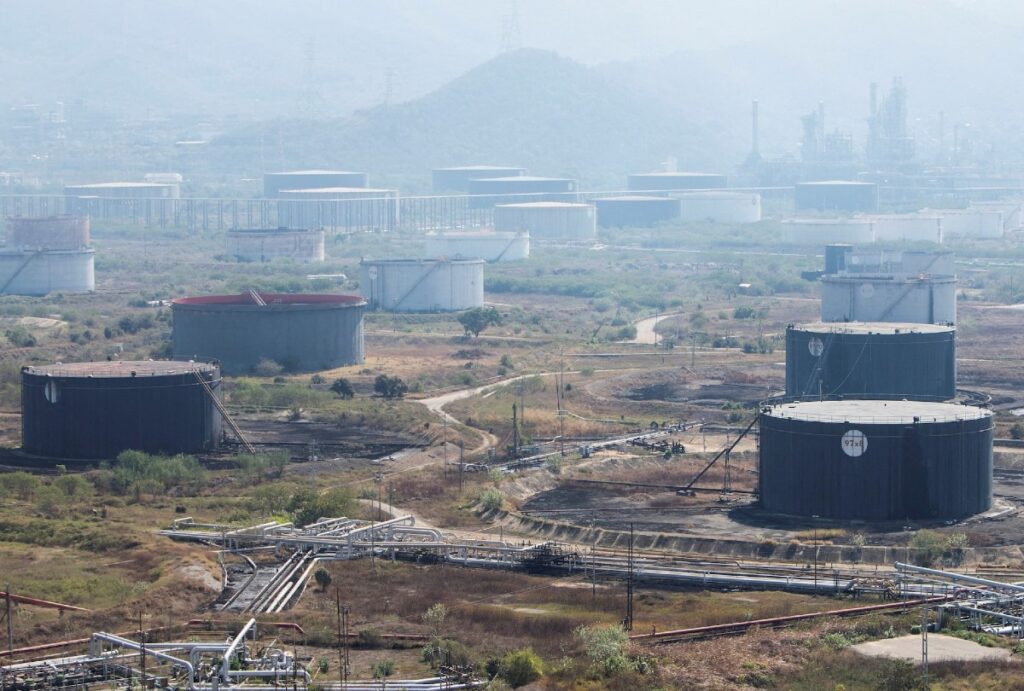
Trump already has moved aggressively to reshape Venezuela’s oil industry. Last week, he announced a deal under which the U.S. would take majority control of more than 65 billion barrels of Venezuela’s proven oil reserves, although the precise legal structure of that arrangement has not been disclosed.
There are, however, fears within Venezuela that Trump is turning the country into a modern-day colony.
FURTHER STUDY OF MINERAL RESOURCES NEEDED
Venezuela’s mineral potential remains difficult to assess because much of its geological data is outdated and illegal groups control gold deposits in the Orinoco Mining Arc, a vast area near the country’s borders with Guyana and Brazil.
While Venezuela has produced gold, iron ore, bauxite and nickel, mining companies and investors are likely to seek updated geological studies before making significant new investments, analysts have said, given the uncertainty surrounding its mineral estimates, weak infrastructure and pervasive illegal mining.
In 2012, Venezuelan officials declined to renew Anglo American’s (AAL.L) mining concession for the Loma de Niquel nickel mine, which at the time was estimated to hold reserves of more than 4 million metric tons of the metal. The Venezuelan government took control of the assets and has been trying to resume operations ever since.
A 2018 Venezuelan government report estimated the country’s resources at 644 metric tons of gold, 14.68 billion metric tons of iron ore, 321.5 million metric tons of bauxite and 407,885 metric tons of nickel. But the report used terms such as “reserve” and “resource” interchangeably, making it difficult to determine how much could be economically extracted.
A 2021 Venezuelan government map, based on data compiled in 2009, identified deposits of numerous other minerals, including copper, nickel, coltan, uranium and tungsten, but did not provide volumes.
The country does not appear to have sizeable reserves of rare earths, which are used in magnets and other advanced technologies.
Venezuelan lawmakers in April unanimously approved a mining law aimed at spurring new investment. It dictated that mineral deposits remain the property of the government and set a royalty tax of up to 13% of the gross production value of a mineral.
Reporting by Jarrett Renshaw and Ernest Schyeder; Additional reporting by Alexandra Ulmer; Editing by Veronica Brown and Paul Simao
Share This: