CDN NEWS |
  US NEWS







By Keira Wright
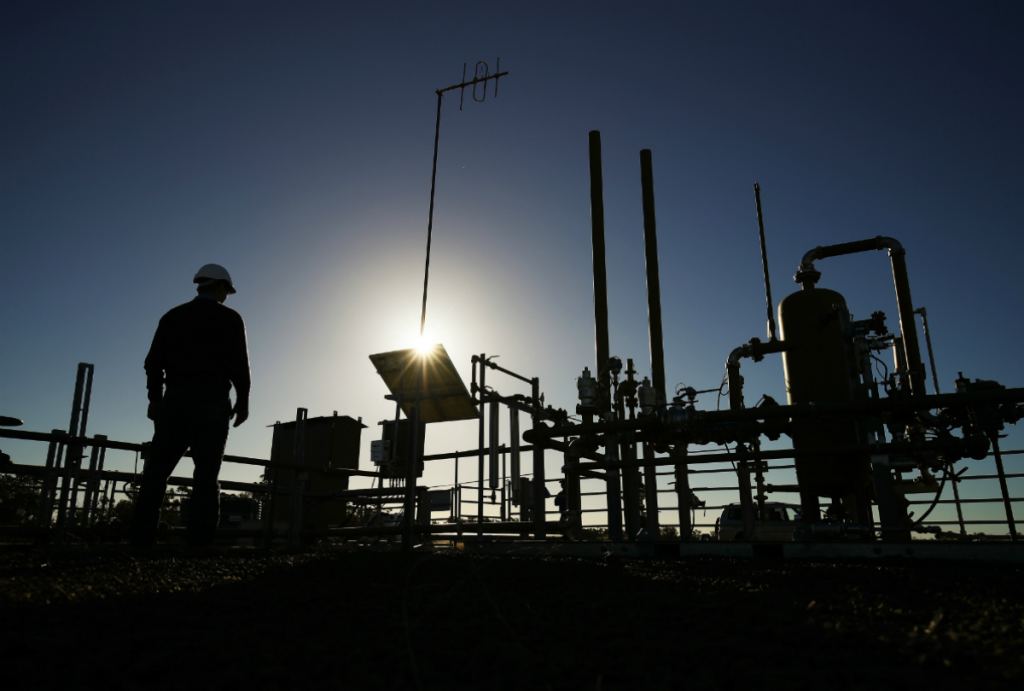
Australia’s Northern Territory started commercial production from the nation’s first shale gas wells, as a debate rages between the sparsely populated region and the federal government on whether fossil fuels should be used to power a wave of data centers.
Natural gas from Tamboran Resources Corp.’s Shenandoah South project is set to begin flowing into the Northern Territory network on Tuesday. It marks a major step toward monetizing the Beetaloo Basin, which holds one of the country’s largest onshore gas reserves and is forecast to generate more than A$17 billion ($12.2 billion) in economic value over the next two decades, according to the territory’s government.
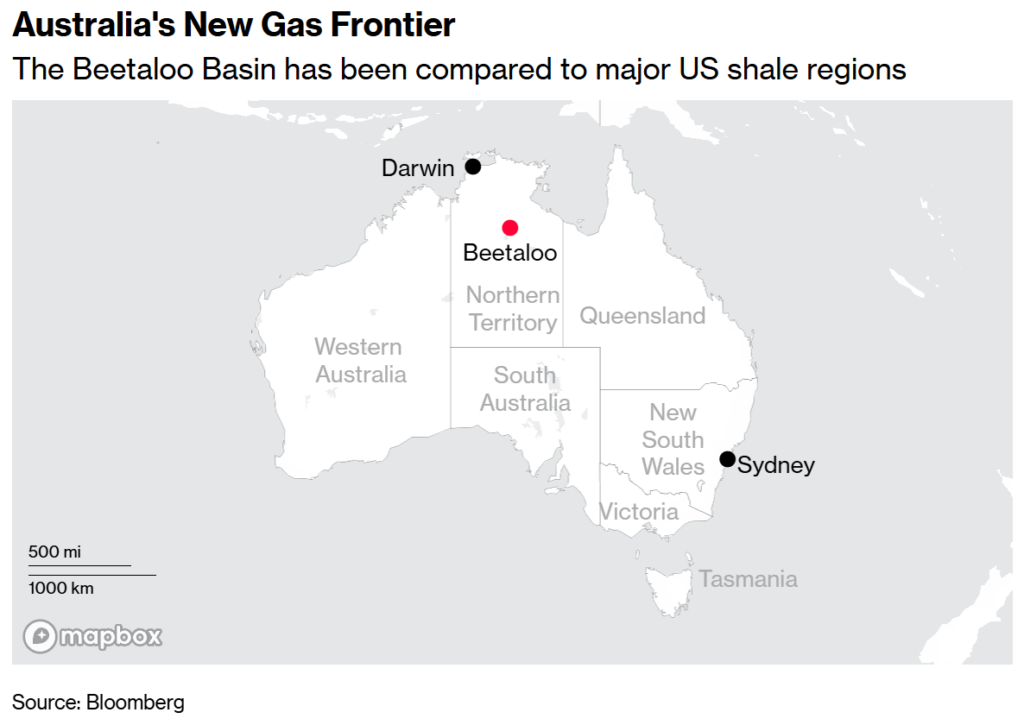
The success of these initial wells will dictate the future of Beetaloo, which could send gas thousands of miles south to replace aging fields that supply Melbourne and Sydney, fuel new export capacity or meet surging electricity demand. It comes as the Northern Territory and Queensland state oppose measures related to putting guardrails on powering the nation’s A$150 billion ($105 billion) data center pipeline, with the federal government seeking to promote renewables to curb emissions.
“First gas is an exciting milestone as the Beetaloo moves from potential to production,” Australian Energy Producers Chief Executive Officer Samantha McCulloch said in a statement. “Australia will need new sources of gas supply to meet future demand” including from data centers, she said.
While Australia has been one of the largest gas exporters for decades, the country has tapped traditional fields or coal beds rather than used hydraulic fracturing of shale rocks — the technology that turned the US into the world’s biggest producer of the fuel. The Northern Territory is looking use shale gas to power an artificial intelligence boom that it hopes will transform the region into Australia’s next digital hub.
“Data center demand solves the gas infrastructure and remoteness challenges of the Beetaloo,” said Saul Kavonic, an analyst at MST Marquee. However, the region will “likely still need LNG export market routes to underpin its development at large scale, with or without additional data center demand,” he said.



Read More: US Shale Cowboys Are Chasing a $6 Trillion Prize in the Outback
The Northern Territory’s approach is at odds with Canberra’s expectation that data centers will support the energy transition by securing additional clean generation and storage. Nationwide power use by the computing hubs is forecast to rise to 13% of the main Australian grid by 2035-36, from about 3% currently.
“Our national data centre standards will apply in every state and territory including the NT,” Energy Minister Chris Bowen said. “These standards will require proposed data centres to be powered by renewable energy, with appropriate firming arrangements.”
Tamboran has spent about $120 million on the first stage of Shenandoah South, which will initially supply a relatively small amount of gas into the Northern Territory market. But ambitions are much larger — Tamboran aims to boost production to 20 billion cubic meters a year, equivalent to roughly half the country’s total consumption.
“If Beetaloo fracking scaled up to full production scale, it would unleash around 1.2 billion tons of carbon pollution over its lifetime. That’s three times Australia’s entire annual emissions,” said Gavan McFadzean, head of advocacy at the Australian Conservation Foundation. “Big Gas should not be allowed to detonate this huge carbon bomb.”
Meanwhile, natural gas may not be the most cost-efficient form of power generation. High revenue and falling prices in the nation’s main grid have given batteries the strongest standalone investment signal, beating out wind and solar, while turbine shortages and increased costs “materially worsened” the outlook for new natural gas plants, the Australian Energy Regulator said last month.
“Early estimates indicate that Beetaloo gas is unlikely to be low cost compared to many international jurisdictions,” said Joshua Runciman, an analyst at the Institute for Energy Economics and Financial Analysis. “Given the high costs of gas generation, there will be a clear financial motive for any new data centres in the NT to use gas only to firm renewables.”
(Updates with analysis and comments throughout.)
Share This: