CDN NEWS |
  US NEWS







Costs at the pump are unlikely to come down significantly until Donald Trump can strike a lasting deal with Iran.
By Nathan Risser
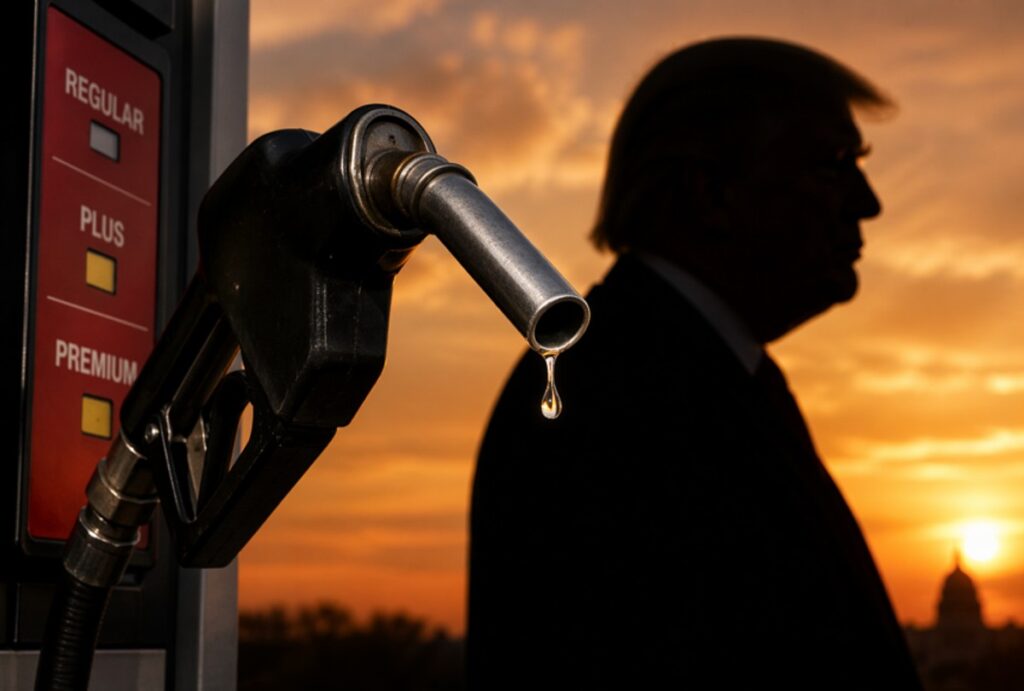
It’s peak summer driving season, a time when Americans tend to be even more fixated than usual on fuel prices. The numbers at the pump aren’t looking good.
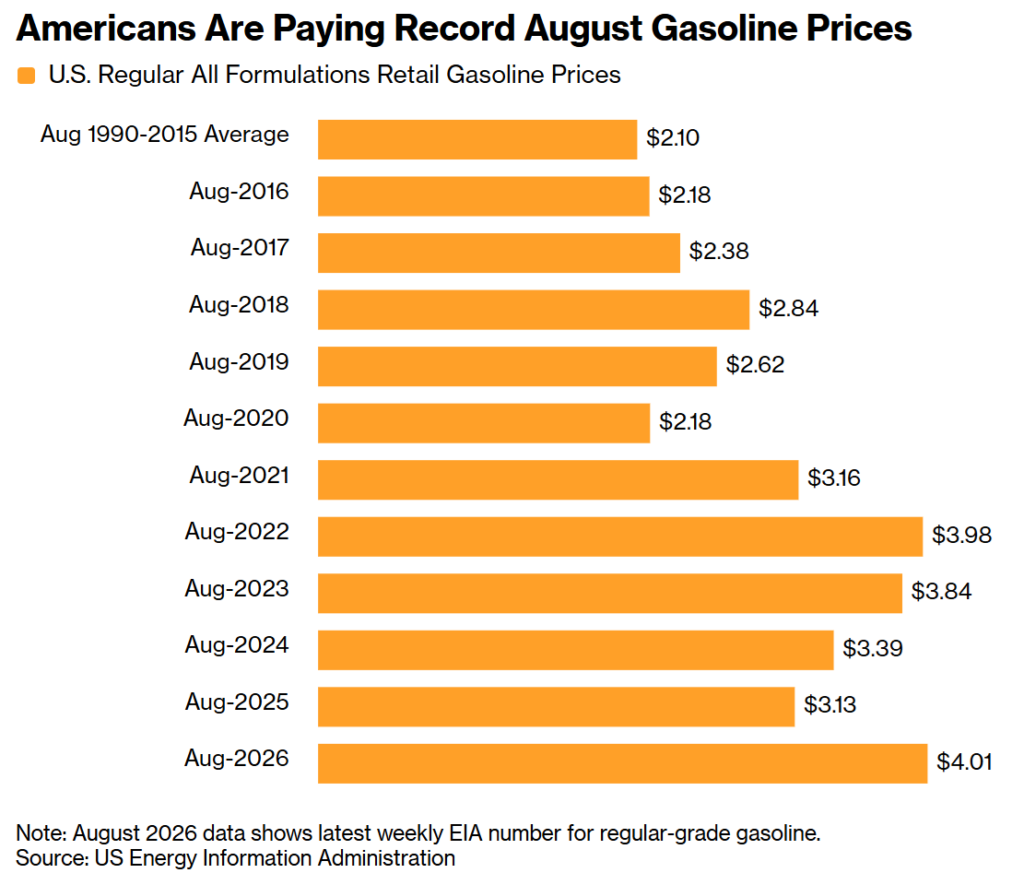
While down from peak levels reached earlier this year — and nothing like the extreme prices witnessed after Russia’s invasion of Ukraine — gasoline is still selling for more than $4 a gallon, and diesel about $5.40.
Both are at records for the time of year. Twelve months ago, those fuels were at $3.16 and $3.72, respectively.
It’s been more than five months since the Iran war started, choking the flow of oil through the Strait of Hormuz, and there seems to be little prospect of relief.



A deal to restore traffic through the waterway remains elusive, while the Trump administration vacillates between threats of military escalation and vows to crush the Iranian regime by squeezing its economy.
The US Department of Energy raised its fuel price forecasts on Tuesday, projecting gas at an average of $4 a gallon in the third quarter and $3.72 in the fourth, still well above seasonal norms. Diesel is seen falling just shy of $5 by year’s end.
That means no significant price drop before Americans head to the polls in November for midterm elections.
It’s not entirely down to the Iran war. For diesel — a vital fuel for truckers and the workhorse of the economy — the situation has been compounded by Ukraine’s sustained campaign of drone attacks against Russian refineries, cutting off a key source of global supply.
But it’s unclear how much that conflict registers with US consumers. The disruption in the Middle East is generally seen as the root cause.
And that keeps Donald Trump under pressure. The president may like to chide the oil industry for high prices, but costs at the pump are likely to stay elevated until he can strike a lasting deal with Tehran.
—Nathan Risser, Bloomberg News
Share This: