CDN NEWS |
  US NEWS







Canada has been a key supplier to the U.S. during the Iran War, which has curtailed Middle East exports
By Robert Tuttle
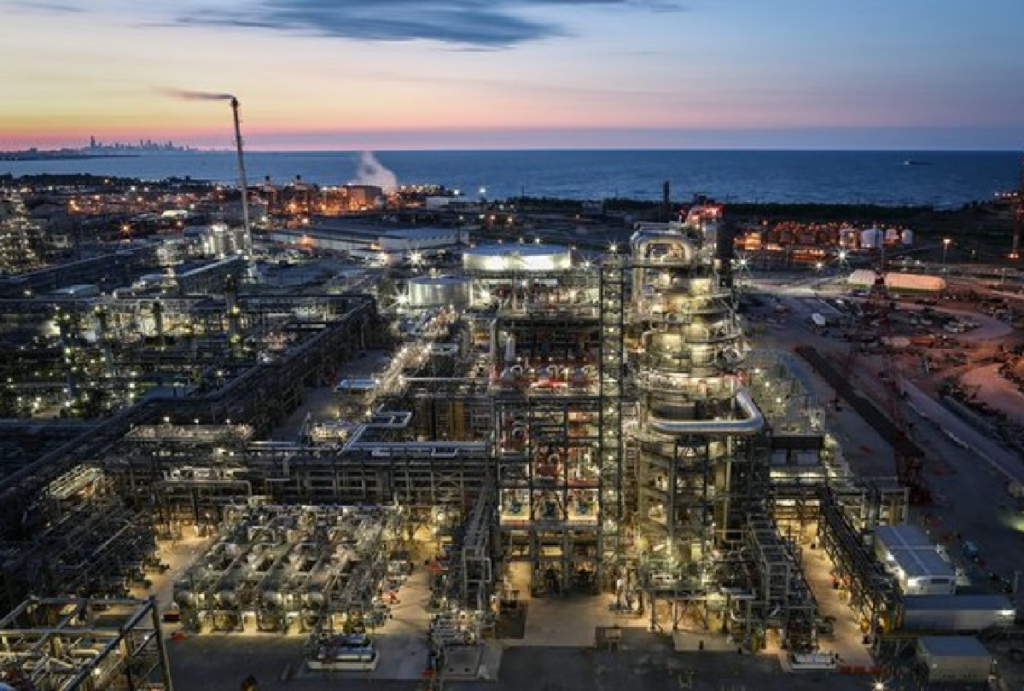
United States refiners are facing a looming supply drop from their biggest foreign crude supplier at a time when they need the oil the most.
Canada supplies the U.S. with more than four million barrels a day of crude, most produced in the oil-rich heartland of northern Alberta and then sent south to refineries in the U.S. Those refineries are processing the most crude oil in eight years, U.S. government data show, as they look to take advantage of diesel margins that hit a record this week.
But their main international supply source is set to be constrained in the coming months. Planned maintenance in the Canadian oil sands is set to take about 300,000 barrels a day of production offline next month, according to Rystad Energy. The shortfall will be difficult to make up as Alberta’s stockpiles are also at their lowest in more than a year.
Particularly vulnerable to a Canadian supply squeeze are refineries in the U.S. Midwest, which rely on the country’s oil for about 70 per cent of their supply. U.S. crude imports from its northern neighbour last week fell the most since May, according to Energy Information Administration data.
Canada has been a key supplier to the U.S. during the Iran War, which has curtailed Middle East exports through the critical Strait of Hormuz. On Thursday, a flare up in tensions caused U.S. crude futures on Thursday to their highest in several weeks. The increased oil prices are likely to be reflected at gas pumps ahead of the Labor Day holiday in September, when drivers typically hit the roads for the three-day weekend.



Canadian oil prices have recently spiked as refiners thirst for supply. Diesel-rich synthetic crude’s premium to U.S. futures rose to almost US$20 a barrel last week, according to Modern Commodities, the highest since an April spike in response to the Iran War. The grade is produced from oil sands bitumen that’s processed in refinery-like upgraders.
Companies including Suncor Energy Inc. and Canadian Natural Resources Ltd. plan to shut equipment for maintenance, including work at the Syncrude upgrader that was delayed from earlier in the year.
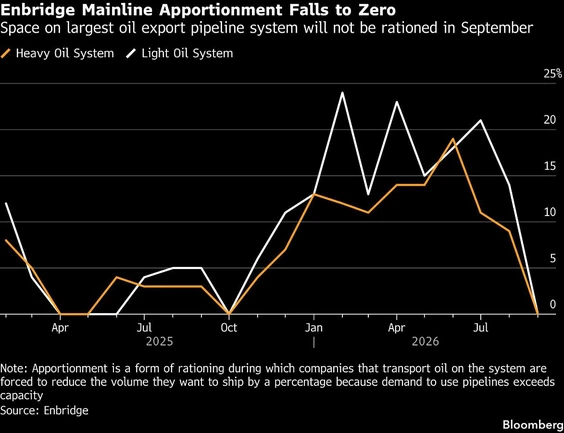
The Canadian shortfall is already being reflected in two major export pipeline systems saying they aren’t limiting space for producers as they had been, indicating a lower volume being shipped.
Enbridge Inc. isn’t going to ration space in September on its Mainline, Canada’s largest oil export pipeline system, because of maintenance at both production facilities and at U.S. refineries, the company said on Wednesday. The most recent time apportionment was zero on the system was in October of last year. The Trans Mountain Corp. pipeline from Alberta to the Vancouver area also stopped rationing space on its system in August for the first time in two months.
Inventories at the main storage hub of Hardisty, Alberta, are near their lowest since March of 2025 and the second lowest level in data stretching back to 2017, according to Kpler data. In March of last year, companies were trying to ship crude to the U.S. ahead of tariffs that were expected to apply to oil.
Bloomberg.com
Share This: