CDN NEWS |
  US NEWS







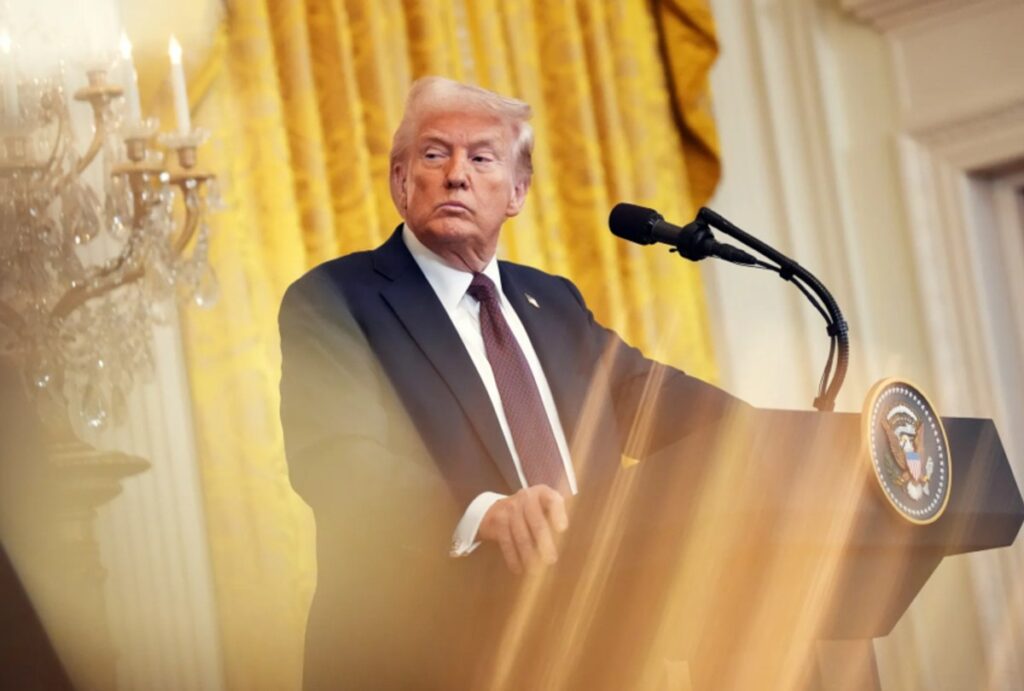
(Reuters) – One of the clever ways to deal with the unprecedented and disruptive U.S. presidency of Donald Trump is to make up acronyms using Mexican foods. This has given us TACO — Trump Always Chickens Out — to reflect the U.S. president’s tendencyto escalate a situation before retreating once the economic and political costs become too heavy. Then there was EMPANADA — Everybody Makes Promises And Nobody Actually Delivers Anything — used to describe countries making outrageous and unachievable trade promises in the hope of avoiding the worst of Trump’s tariffs. More recently, NACHO — Not A Chance Hormuz Opens — was popular. The vital Strait of Hormuz did sort of reopen after Washington and Tehran signed an interim peace deal on June 17. But even that partial relief is now in question after Trump said on Wednesday that the MOU was “over,” reviving the risk that the waterway could again become a pressure point.
Perhaps the best Mexican food acronym for Trump is TAMALES, standing for Trump Always Messes Around, Leaves Everybody Shafted. While this works on a social and political level, the sector most affected by Trump’s policies and actions is commodity trade. Trump’s policies — from tariffs on U.S. imports of copper and aluminium to his Iran war — have created market distortions including supply chain disruptions and higher inflation across the world.
IRAN MISCALCULATION
That impact was sharpest in the war he and Israel launched against Iran on February 28. Despite initial military successes, the conflict has proved a strategic and economic defeat for the U.S., with none of the stated aims achieved, including eliminating Iran’s ballistic missile capabilities. Instead, Iran’s new and more hardline rulers have learned that they can hold the world economy hostage by closing the Strait of Hormuz. Before the conflict, roughly 20% of the world’s crude oil, refined products and liquefied natural gas (LNG) — as well as significant volumes of sulphur and aluminium — passed through the narrow waterway. This means a level of risk has been placed on crude, refined products and LNG from the Gulf that didn’t exist prior to the conflict.
Gulf producers and U.S. allies such as Saudi Arabia, the United Arab Emirates and Kuwait now have to deal with an emboldened Iran, which is also likely to have more money assuming any final deal with Trump results in the release of blocked funds and an end to sanctions on Iran’s oil exports. Asian countries that rely on crude from the Middle East, such as Japan, South Korea, Singapore and, to some extent, heavyweight importers China and India, now have to reconsider energy security. This may mean increasing the size and diversifying the locations of their strategic reserves — covering not just crude and fuels but metals and commodities such as sulphur, a vital input for fertilisers and the sulphuric acid used to process metal ores.
While crude prices briefly returned to pre-war levels, they jumped more than 4% on Wednesday to a two-week high on fears of fresh disruption to Middle East supplies. Prices for refined fuels such as diesel and gasoline remain elevated in Asia, adding to costs for the region’s consumers and businesses.



COPPER VOLATILITY
Expectations that Trump would impose tariffs of up to 50% on U.S. copper imports after returning to office in January last year drove a surge in imports, as the premium for domestic prices over the London Metal Exchange global benchmark widened. If there is a consistent pattern to Trump’s presidency, it is that he creates volatility and unintended consequences through policies and actions that largely fail to achieve their stated goals. Tariffs haven’t reduced the U.S. trade deficit, nor have they resulted yet in a major revival of manufacturing.
But they have boosted inflation and resulted in shifting flows of commodities worldwide. The Iran war didn’t result in regime change or the removal of the threat of Tehran’s missiles or its nuclear programme.
But it did boost fuel prices and inflation, threaten energy security across the globe and force a rethinking of the limits of U.S. power and influence, and the value of having the U.S. as an increasingly unreliable ally.
All of the above make TAMALES an appropriate Mexican dish acronym for the Trump presidency. But in fairness, TAMALES also suffers from the same weakness as TACO, NACHO and EMPANADA — it is not always 100% accurate. The flaw is the word “always”: sometimes the Trump administration does initiate policies that deliver as intended. One example is its efforts to build supply chains for critical minerals outside China’s control or influence. The Trump administration has signed numerous agreements with countries to develop mining and processing capacity for minerals such as rare earths, lithium, cobalt and tungsten. This has unlocked capital and provided the certainty that there will be sufficient demand at economically viable prices, enabling mining projects to progress. If the Trump administration could replicate this approach, it could render acronyms like TACO and TAMALES redundant. But the risk is that the delusion and incompetence that have been the hallmark of his second term so far will continue to disrupt markets for his remaining time in office.
The views expressed here are those of the author, a columnist for Reuters.
Writing by Clyde Russell; Editing by Marguerita Choy
Share This: