CDN NEWS |
  US NEWS







By Julian Lee and Alex Longley
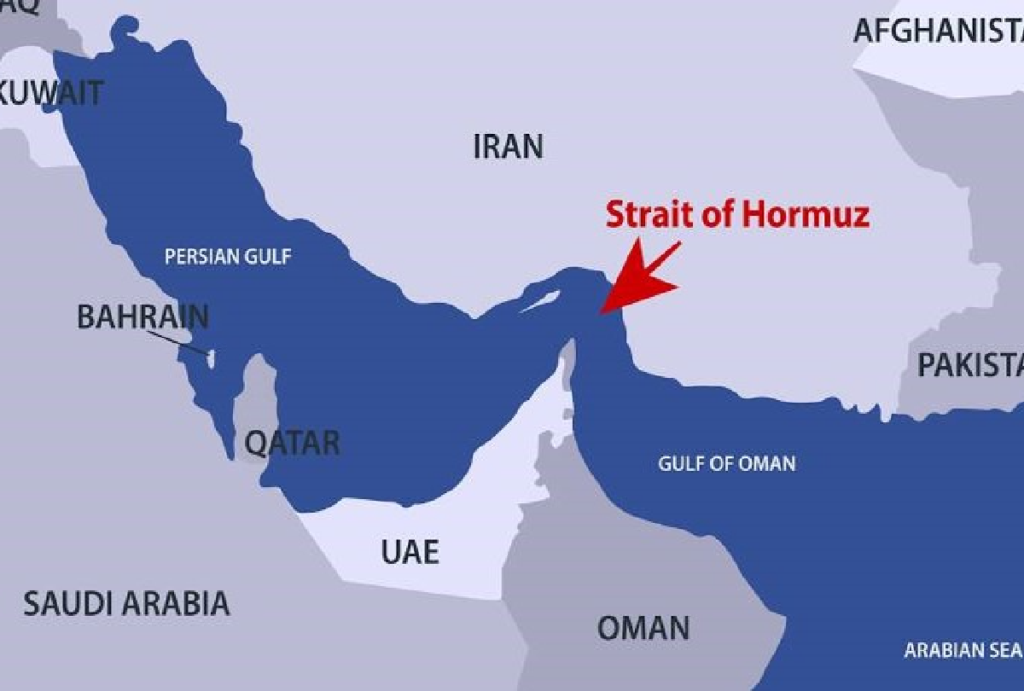
No region of the world produces more oil and gas than the countries straddling the Persian Gulf. Most of this energy can only be exported aboard tankers that cross the Strait of Hormuz — a waterway that’s effectively been blocked for more than two months.
Iran has throttled traffic through the strait since being attacked by the US and Israel in late February, and has refused to reopen the vital shipping route until the US lifts a naval blockade imposed on Iranian ports. It’s expanded its claimed area of control and announced new rules for vessels seeking to transit the waterway.
As tensions between the US and Iran flare, the economic pain from the Hormuz disruption is building across the globe. The prices of oil, gas and other commodities have risen and supply is being increasingly squeezed. Even if the two sides reach a deal to unblock the strait, there’s no certainty that free navigation will be fully restored. Iran has signaled that it intends to use its de facto control over Hormuz as a weapon to brandish in future against its adversaries.
How has the Iran war affected shipping through the Strait of Hormuz?
Following the outbreak of war on Feb. 28, Iran sporadically attacked ships in and around the Persian Gulf, leaving most shipowners unwilling to attempt Hormuz crossings and risk the loss of life, cargo and vessels. The average number of daily ship transits dropped below 10, from around 135 in peacetime.
Iran continued to move its own oil through the strait. It also allowed certain other vessels to make the journey via a corridor that hugs the Iranian coast, sometimes after requesting payments of as much as $2 million.
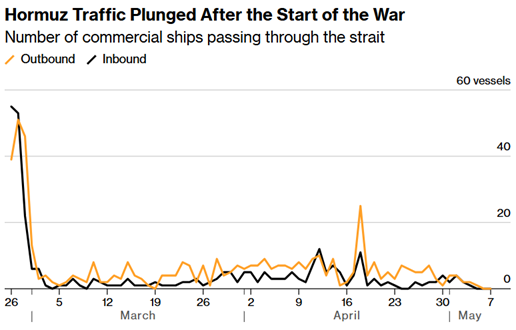
Note: Daily count of visible commercial ships based on AIS signals. Total transits in both directions observed until early May 7.
Source: Vessel tracking data compiled by Bloomberg
Traffic remained at a near-standstill even after the warring parties agreed to a ceasefire in early April. The US implemented a blockade on ships that have called at or are heading to Iranian ports from April 13, seeking to put pressure on Iran’s oil exports and spur its regime to restore the strait’s status as a toll-free zone.
Iran has so far managed to weather the blockade. As the stalemate continues, more than 1,500 commercial vessels are trapped in the Persian Gulf, according to the US military. Oil producers in the region have been forced to halt most of their output as they run out of space to store their crude.
What will it take to reopen the Strait of Hormuz?
A peace agreement is unlikely to lead to an immediate resumption of regular traffic through Hormuz. Shipowners need to have confidence that the reopening is permanent and that passage is safe. One issue is potential mines. Iran has said it’s laid mines along the most frequently used routes in the narrow strait. Sweeping for and clearing such explosives could take weeks.
Some ship operators may be unwilling to sail through Hormuz without the protection of a military escort. The US navy doesn’t have enough ships to protect the more than 100 vessels that usually transit the waterway each day, and the Trump administration has struggled to convince allies to deploy their naval assets immediately. The UK and France have been leading talks for a multinational coalition to help restore Hormuz shipping once there’s a sustained halt to the conflict.
Trump unveiled “Project Freedom” in early May, describing it as an effort to guide neutral ships from the Persian Gulf through Hormuz without risking full-scale naval escorts. The combined sea and air operation was suspended the day after it began, although it could yet be revived — Saudi Arabia and Kuwait have lifted restrictions on the US military’s ability to use regional bases, the Wall Street Journal reported.
Even if naval escorts eventually materialize, it could take weeks to clear the backlog of ships on either side of the strait. The narrow width of the waterway limits the number of vessels that can be escorted at one time and leaves convoys vulnerable to attack.



What could the Iran war mean for the long-term future of Hormuz?
Shipowners, their insurers and customers have seen how easy it is for Iran — a country with virtually no conventional navy — to swiftly bring transits through Hormuz to a halt and how hard it is to restore normal operations.
If a US-Iran peace settlement fails to remove the Iranian threat to Hormuz shipping, the economics of this key trade route may change for years to come. The most cautious ship operators may decide that sailing through the strait isn’t worth the risk under any circumstances. Higher insurance premiums may make Gulf trade uncompetitive versus other regions.
Iran has signaled that it intends to continue exercising control over Hormuz transits and monetizing its leverage over the waterway even once the war is over. A bill is making its way through parliament that enshrines Iranian sovereignty over the strait in national law and formalizes a toll system for ships crossing the strait.
What’s the significance of the Strait of Hormuz?
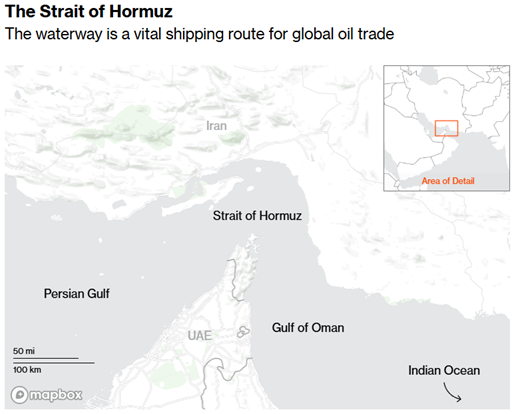
Situated between Iran to its north and the United Arab Emirates and Oman to its south, the Strait of Hormuz connects the Persian Gulf to the Indian Ocean. It’s around 100 miles (161 kilometers) long and 24 miles wide at its narrowest point. The shipping lanes in each direction are just two miles wide.
The strait is an essential route for the energy market, handling around a fifth of the world’s oil and liquefied natural gas supply. Saudi Arabia, Iraq, Iran, Kuwait, Bahrain, Qatar and the UAE all ship crude through Hormuz in normal times, and the majority of their cargoes go to Asia.
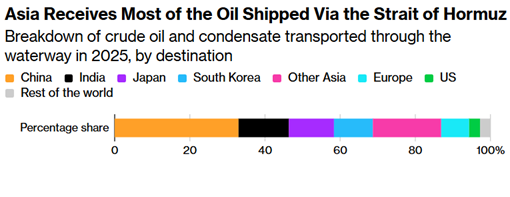
Source: Vessel tracking data compiled by Bloomberg
Gulf countries are also home to refineries that produce large volumes of diesel, jet fuel, naphtha — used to make plastics and gasoline — and other petroleum products that are exported globally via the strait.
Beyond energy, Hormuz is a choke point for products including aluminum, fertilizer and even helium, which is used in the production of semiconductors.
Can oil producers bypass the Strait of Hormuz?
Kuwait, Qatar and Bahrain have no other sea route for their exports.
Saudi Arabia, which ships the most oil through Hormuz, has rerouted its crude through a pipeline that runs westward to the Red Sea port of Yanbu. Producer Saudi Aramco is aiming to use the pipeline’s full 7-million-barrel-a-day capacity, although only around 5 million barrels a day would be available for export and the rest would be for domestic use. The Red Sea route isn’t without risk. Iran has already targeted a refinery in Yanbu and hit a pumping station on the East-West pipeline, and Iran-backed Houthi militants in Yemen have threatened to resume attacks on vessels in the Red Sea.
The UAE can likewise bypass Hormuz to a certain degree. But spare capacity is limited and the port of Fujairah, which sits at the end of a pipeline that connects the UAE’s oil fields to the Gulf of Oman, has been hit by Iranian attacks. And while Iraq is seeking to revive shipments through ports in Jordan and Syria, the amounts being considered are a small fraction of its normal shipments through Hormuz.
Does Iran have the right to control the Strait of Hormuz?
Under the United Nations Convention on the Law of the Sea, countries can exercise sovereignty up to 12 nautical miles (14 miles) from their coastline — an area known as their territorial waters.
The Strait of Hormuz runs through the territorial waters of Iran and Oman. However, nations must allow “innocent passage” of foreign vessels through their territorial waters and must not impede “innocent” or “transit passage” through straits used for international navigation. The treaty also says that countries cannot charge foreign ships merely for passage through their territorial waters.
While Iran’s government signed UNCLOS in 1982, its parliament never ratified the treaty.
Share This: