CDN NEWS |
  US NEWS







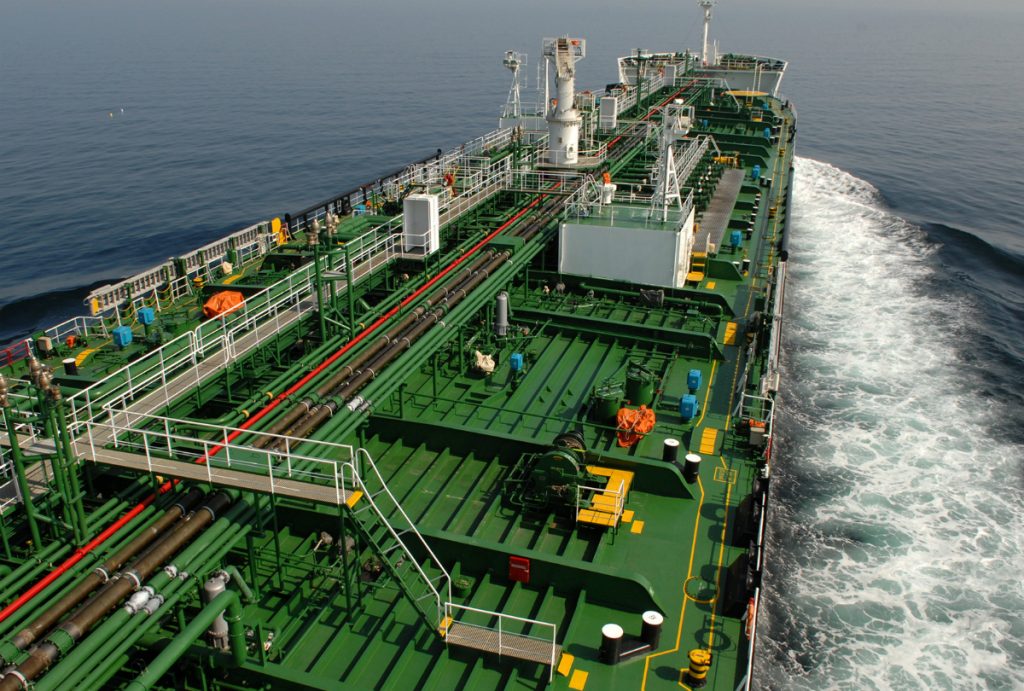
The war in Iran has sent demand for US oil from overseas toward record levels, bolstering President Donald Trump’s push for “American energy dominance.” But as shipments surge, exports are beginning to run up against their practical limits.
Constraints in infrastructure and supply are likely to keep US oil flows well below headline capacity figures often cited at around 10 million barrels a day. Traders and analysts say the system can’t realistically sustain anything close to that level. Under current conditions, they point to a more plausible ceiling of under 6 million barrels a day — or even lower.
Exports are already moving quickly toward that range. Flows are expected to approach 5 million barrels a day in April and likely top that in May. Buyers, especially in Asia, are looking for alternative supplies after the war in Iran disrupted Middle East exports and snarled flows through the Strait of Hormuz.
Read More: US Crude Exports Set for Record as Asian Buyers Snap Up Supplies
Still, there’s a limit to how much exports can grow.
The biggest logistical barrier currently stems from shipping, Julian Renton, an analyst at East Daley Analytics, said, noting that price signals suggest US barrels are competing for placement in global markets rather than struggling to reach export terminals.


“The main constraint appears to be at the maritime export interface rather than inland infrastructure, with limits around vessel availability and offshore loading increasingly shaping how much crude can leave the US Gulf Coast,” Renton said.
Freight costs for very large crude carriers, known as VLCCs, have surged, with some routes seeing records. That’s creating a meaningful drag on export economics even as dock and pipeline capacity remain available. The other issue comes from offshore logistics, particularly lightering operations used to fully load those massive ships.
Costs for lightering — the process of transferring cargo between tankers — have soared as much as tenfold in recent weeks, according to traders.
In the longer term, constraints extend beyond shipping when it comes to reaching that oft-cited figure of 10 million barrels per day.
There are capacity limits for pipelines that carry crude supplies. Dock space and loading logistics caps how much oil can ultimately leave the US. Domestic demand also remains robust, creating competition for barrels. And meanwhile, there are some mismatches between the grades of crude produced in the US and those required by global refiners.
“US production is overwhelmingly light sweet and a lot of international refining capacity is configured for heavier Brent-like barrels, so US crude requires a consistent delivered discount to clear in many markets,” Renton said. “When freight is cheap, that discount is manageable. When freight is where it is today, it becomes a real barrier.”
— With assistance from Lucia Kassai
Share This: