CDN NEWS |
  US NEWS







By John Ainger
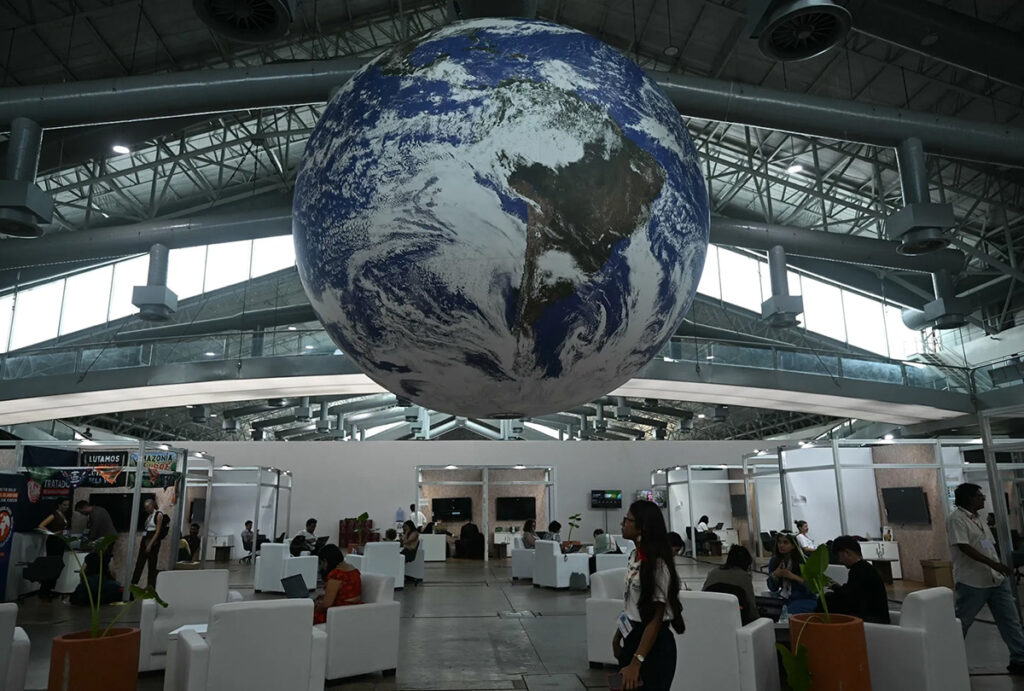
Turkey will use its role as host of this year’s COP31 climate summit to boost clean energy adoption, according to the event’s incoming president, with the Iran war showing how important it is to diversify away from fossil fuels.
Murat Kurum, Turkey’s environment minister who will oversee the talks, said in an interview that even countries whose economies rely on producing fossil fuels will need to shift to greener technologies. That includes nations in the Middle East that have historically blocked efforts to move away from emissions-heavy energy sources, he said.
“The world must transition away from fossil fuels, for sure,” Kurum told Bloomberg on the sidelines of the Petersberg Climate Dialogue in Berlin. “The recent crises have indeed showed us how crucial to have energy diversity. You should not be dependent on one single energy source.”
The Petersberg meeting is the first gathering on a long list of events that lead up to COP every year. COP31 will take place in the Turkish coastal city of Antalya in November and comes against a backdrop of soaring oil and gas prices as supplies are unable to traverse the Strait of Hormuz.
At COP30 last year, around 80 countries pushed for a pledge to develop road maps to transition away from fossil fuels. But they were unable to get the language into the final agreement due to opposition from countries including Saudi Arabia. Next week, dozens of nations will meet in Santa Marta, Colombia, to discuss how best to further that goal.
Kurum said that Turkey would take into consideration the outcome of the Colombia meeting.



He also said that the focus should be on cutting carbon dioxide emissions to zero, even if fossil fuels are still used — an approach that has been criticized by some climate activists who argue that it distracts from the pure phase out of oil, gas and coal. One way to counteract continued emissions would be through carbon capture and storage technologies, which are still in their infancy and very expensive.
“The goal is zero emissions,” Kurum said. “If you can achieve that with fossil fuels, then why not?”
Leadership of this year’s climate talks will be split between Turkey and Australia, which had originally been slated to host the conference. While Turkey will hold the COP31’s presidency, Australia’s climate minister Chris Bowen will be in charge of overseeing the negotiations.
Turkey will also be responsible for putting forward an “Action Agenda” of side deals that aim to accelerate implementation of key pledges to address global warming, and adapt to it, that have been made over the years.
Kurum said that one of the signature pillars of the Action Agenda would be a mechanism to monitor whether key targets are being met with the goal of speeding up emissions reductions to keep global warming below 1.5C from pre-industrial levels. The world is on track to breach that threshold, outlined in the Paris Agreement, though temperatures could come down if enough effort is made to curb emissions and absorb CO2.
Kurum also said that while trade would be discussed at COP31, he understood the rationale for the European Union’s Carbon Border Adjustment Mechanism, which imposes a levy on certain imports from countries with less strict climate legislation. The measure has been heavily criticized at previous summits by the likes of China and India.
This year’s COP31 summit will be the second without representation from the US, after President Donald Trump withdrew the country from both the Paris Agreement and the underlying treaty governing climate talks. Kurum said he had met with the American Chamber of Commerce, where many US companies told him that they remained supportive of climate action and would like a voice in COP31 negotiations.
“If they wish to maintain the trade activities, then they will have to pay attention to the reduction of emissions,” Kurum said. “If sectors and industries are staying away from this process, then they will lose their share in the markets.”
Share This: