CDN NEWS |
  US NEWS







Tankers hugged their home country’s coastline, indicating a different route to a northerly path through Iranian waters
By Prejula Prem, Weilun Soon, Julian Lee and Alex Longley
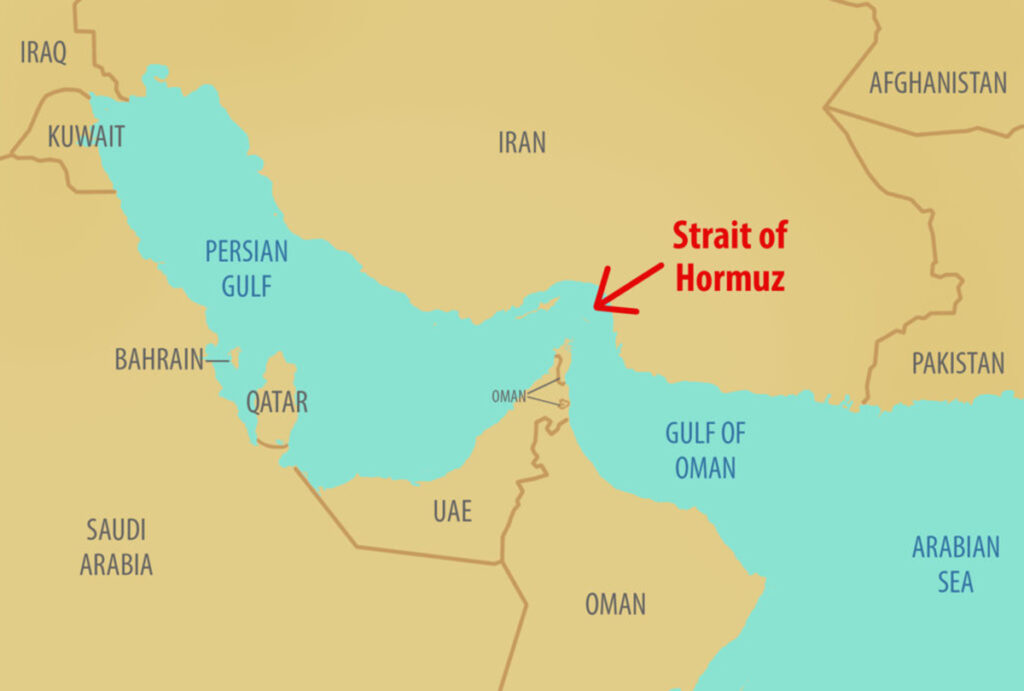
Three tankers broadcasting Omani ownership appear to have navigated the Strait of Hormuz by hugging their home country’s coastline, indicating a different route to a northerly path through Iranian waters.
Two oil supertankers, the Dhalkut and Habrut, and the liquefied natural gas (LNG) vessel Sohar LNG headed east into the strait on Thursday, based on the satellite signals they were broadcasting. All three vessels are managed by Oman Ship Management Company, according to the Equasis marine database. The company couldn’t be reached for comment.
While the Strait of Hormuz has been largely blocked since the start of the conflict, Iran has begun to negotiate transit for a handful of vessels tied to friendly nations, which have followed an agreed northerly route through its own waters. A container ship signalling French ownership recently used this path, in what appears to be the first known transit by a vessel linked to Western Europe since the Iran war all but shuttered the vital waterway.
On Thursday, Iran’s state-run IRNA cited Deputy Foreign Minister Kazem Gharibabadi as saying that Tehran is drafting a protocol with Oman to monitor traffic through the Strait of Hormuz. Muscat’s position on the comments was unclear.
The effective closure of the crucial channel has upended global energy markets, sending prices surging and putting growing international pressure on United States President Donald Trump. Iran is also trying to set up a tolling system, seeking payments of as much as US$2 million per voyage through the waterway.
The three ships transiting are particularly interesting because they are the largest type of oil tankers and the first LNG carrier to escape the gulf since the war began.


Each of the three vessels was broadcasting that they were Omani when transiting. They all stopped sending automated position signals at about 9:30 a.m. London time, when they were approaching, or just rounding, the tip of Oman’s Mussandam Peninsula that juts northward into the strait.
The vessels reappeared on tracking monitors Friday, broadcasting positions off the coast of Muscat, Oman.
Tracking ships entering and exiting Hormuz has also been complicated by the intense signal jamming in the area, as well as signal spoofing.
The tankers are each hauling about 2 million barrels of crude, while the gas carrier appears to be empty, the tracking data show. One of the tankers loaded in Saudi Arabia in late February and was signalling its destination as Kyuakpyu in Myanmar, where a pipeline carries crude into western China. The other carrier is carrying crude from Abu Dhabi to an undisclosed destination.
The route followed by the three ships lies to the south of the designated shipping lanes through the waterway, shown in orange in the map, and far from the more northerly path that runs between Iran’s Larak and Qeshm islands taken by most ships leaving the Persian Gulf in recent days, shown in yellow.
That northerly route has been associated with Iranian demands to approve and charge a fee for ships to transit the strait. But its shallower depth and tighter turns may make it unsuitable for the largest oil tankers.
—With assistance from Zainab Fattah, Mirette Magdy, Kai Schultz and Victoria Cavaliere.
Bloomberg.com
Share This: