CDN NEWS |
  US NEWS







Bakken oil traded at the Clearbrook, Minnesota, hub shot up to an US$18 premium
By Robert Tuttle and Christopher Charleston

The spiderweb of cracks in the global oil market are spreading across the Rocky Mountains and U.S. Great Plains as demand for a shrinking pool of accessible crude escalates.
Oil grades from Texas and North Dakota to Alberta are surging as refiners compete with rivals in Asia and Europe for barrels after weeks of strangled shipments via the Strait of Hormuz.
Bakken oil traded at the Clearbrook, Minnesota, hub shot up to an US$18 premium to the monthly average of West Texas Intermediate on Monday, compared with a US$1.20 discount the day before the Iran war erupted on Feb. 28, according to Modern Commodities prices.
“It’s all about U.S. exports,” said Dennis Kissler, head of energy trading at BOK Financial Securities Inc. “We’re going to be exporting a ton of crude, that’s what’s keeping WTI elevated.”
In Canada, synthetic crude produced by processing oil-sands bitumen, traded at a US$19.90 premium to WTI, up from about US$1 a month ago.


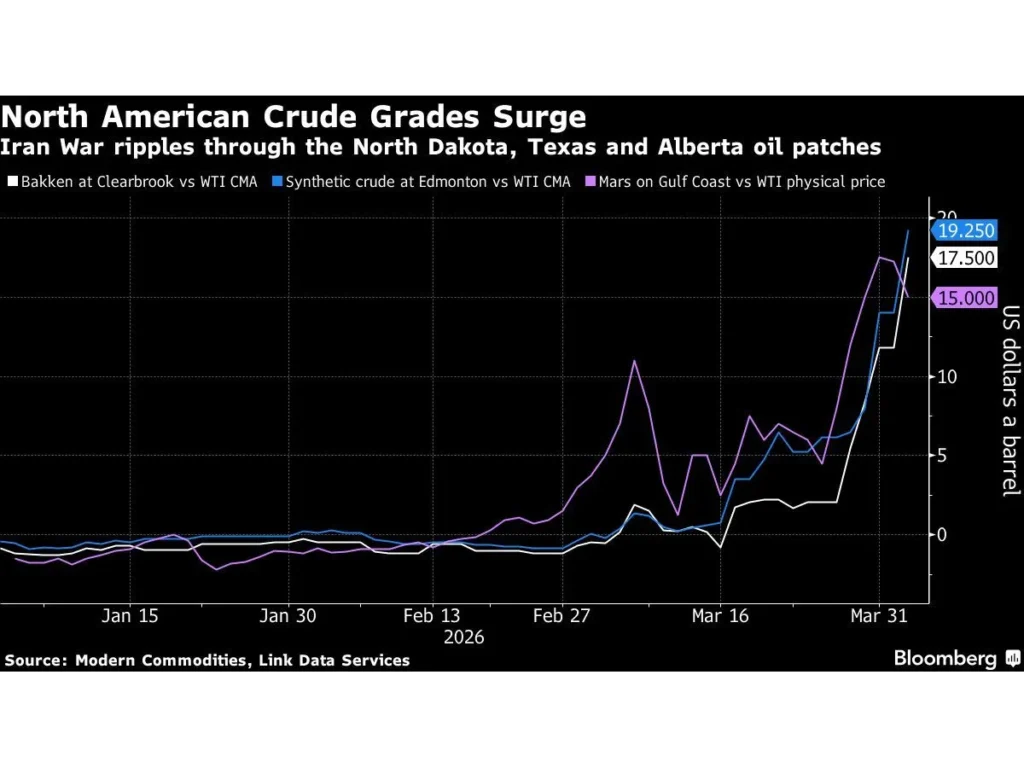
Mars crude pumped from the U.S. Gulf of Mexico climbed to around an US$18 premium to WTI last week, before easing to around US$17. Southern Green Canyon has traded above a US$7 premium for five straight sessions.
U.S. and Canadian oil is increasingly being drawn to coastal markets for export, tightening local spot supplies, according to traders.
One crude grade that wasn’t surging Monday was the local Canadian benchmark Western Canadian Select. The discount to a monthly average of WTI widened to US$16.25 from US$14.65, according to Modern Commodities, amid rising volumes of Venezuelan crude.
With assistance from Charles Gorrivan
Bloomberg.com
Share This: