CDN NEWS |
  US NEWS







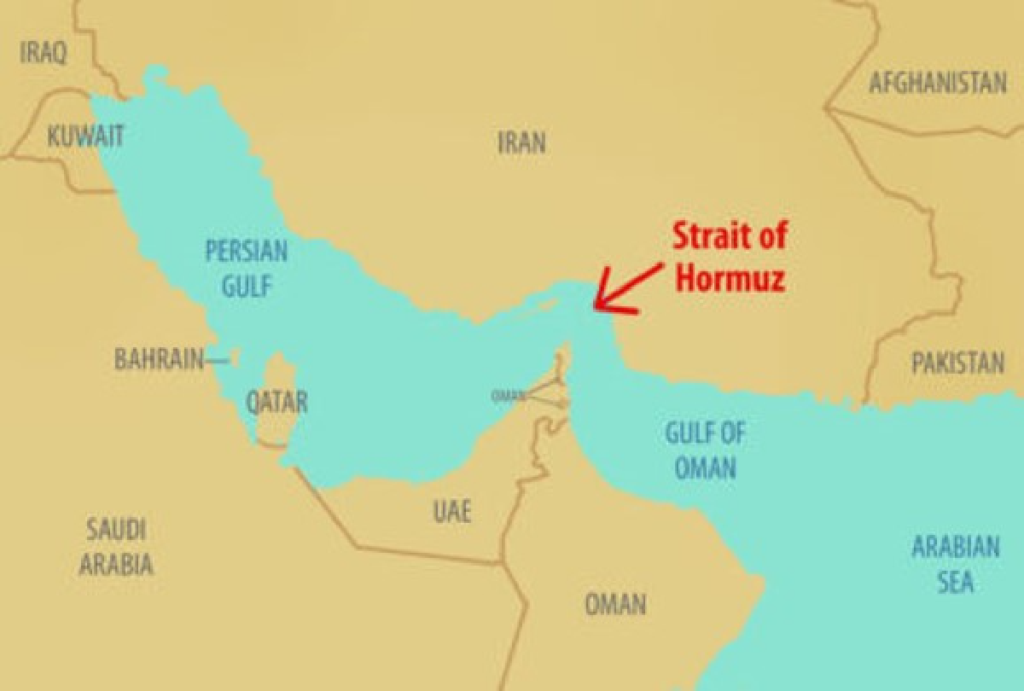
(Reuters) – Iran’s Islamic Revolutionary Guard Corps (IRGC) warned ships to keep to a route passing through its territorial waters when crossing the Gulf’s Strait of Hormuz as traffic on Thursday remained well below 10% of normal volumes.
Mitsui O.S.K. Lines, one of Japan’s big three shipping firms, is among those caught up in the confusion as firms try to work out what impact the U.S.-Irantwo-week ceasefire is having.
“It must be confirmed that the safety risks are sufficiently low,” President and CEO Jotaro Tamura told Reuters in an interview on Thursday.
The company has recently managed to bring three tankers – one loaded with liquefied natural gas and two with cooking gas liquefied petroleum gas (LPG) out of the strait.
Tamura said the company was awaiting guidance from the Japanese government on how to proceed under the two-week ceasefire.
LARAK ROUTE
The IRGC wants vessels to sail through Iranian waters around Larak Island in order to avoid the risk of naval mines in the usual lanes through the strait, Iran’s semi-official Tasnim news agency reported on Thursday.
Vessels are to enter the strait north of Larak Island and exit just south of it until further notice in coordination with the IRGC’s navy, Tasnim quoted the IRGC as saying.
“There is to be a realistic possibility of continued risk to unauthorised Strait of Hormuz transits as well as to Israel- and US- affiliated shipping attempting to transit,” British maritime security company Ambrey said in an advisory.
“Even shipping with apparent approval has been turned back in recent weeks mid-transit,” it said.
LITTLE TRAFFIC
Just six ships had passed through the strait in the past 24 hours, versus about 140 normally, ship-tracking data showed on Thursday.
They included one oil products tanker and five dry bulk carriers, data from Kpler, Lloyd’s List Intelligence and Signal Ocean showed.
A chemical tanker was set to cross destined for India, ship-tracking data on the MarineTraffic and Pole Star Global platforms showed on Thursday.


“Most shipping lines are likely to remain cautious, and two weeks will not be enough to clear the backlog even if there is a marked increase in traffic,” said Torbjorn Soltvedt at risk intelligence company Verisk Maplecroft.
More than 180 tankers carrying approximately 172 million barrels of crude oil and refined products remain stranded in the Gulf, according to ship tracker Kpler.
TOLL SYSTEM?
Media reports have suggested that Iran might want to charge a toll for ships passing through, some pinning the figure at $2 million, and ship-tracking data has shown some vessels such as the Indian-flagged Pine Gas LPG tanker are already taking the unusual route around Larak Island.
The chief officer of the Pine Gas, Sohan Lal, told Reuters they did not pay Iran a “toll” to transit and their vessel was not boarded by Iran’s Islamic Revolutionary Guard Corps when they exited the Gulf taking that route.
Western leaders have pushed back on any fees being imposed by Iran on ships sailing through Hormuz.
The Strait of Hormuz is shut and Iran must open it without conditions, the CEO of UAE state oil giant ADNOC said on Thursday.
INDIA EASES RULES
With a view to speeding delivery of energy supplies from the Gulf, India recently granted waivers to allow two Iranian cargoes aboard an older tanker and another under international sanctions to enter its ports, two officials familiar with the matter said on Thursday.
The world’s No.2 importer of LPG used for cooking, India is facing its worst gas crisis in decades, with the government introducing rationing to ensure households are supplied.
IRAN’S OWN SHIPS
The United States issued a surprise temporary waiver on Iranian oil exports last month which is due to end on April 19 in a bid to support global supply and ease fuel price rises.
Oil prices have risen by about 50% since the Iran war began on Feb 28 with the U.S. national average retail gasoline price recently topping $4 a gallon for the first time in more than three years.
One Iranian-flagged oil tanker and one bunkering tanker have sailed through the strait in the past 24 hours, according to analysis from Charlie Brown, senior adviser at U.S. advocacy group United Against Nuclear Iran (UANI), which monitors Iran-related tanker traffic.
Since Feb 28, at least 23 Iranian-flagged tankers have reached Asia, keeping up their pace from pre-war levels, Brown said.
Reporting by Jonathan Saul, Ahmad Ghaddar, Siyi Liu and Aizhu Chen; Editing by Alex Richardson and Jason Neely
Share This: