


 CDN NEWS |
  US NEWS







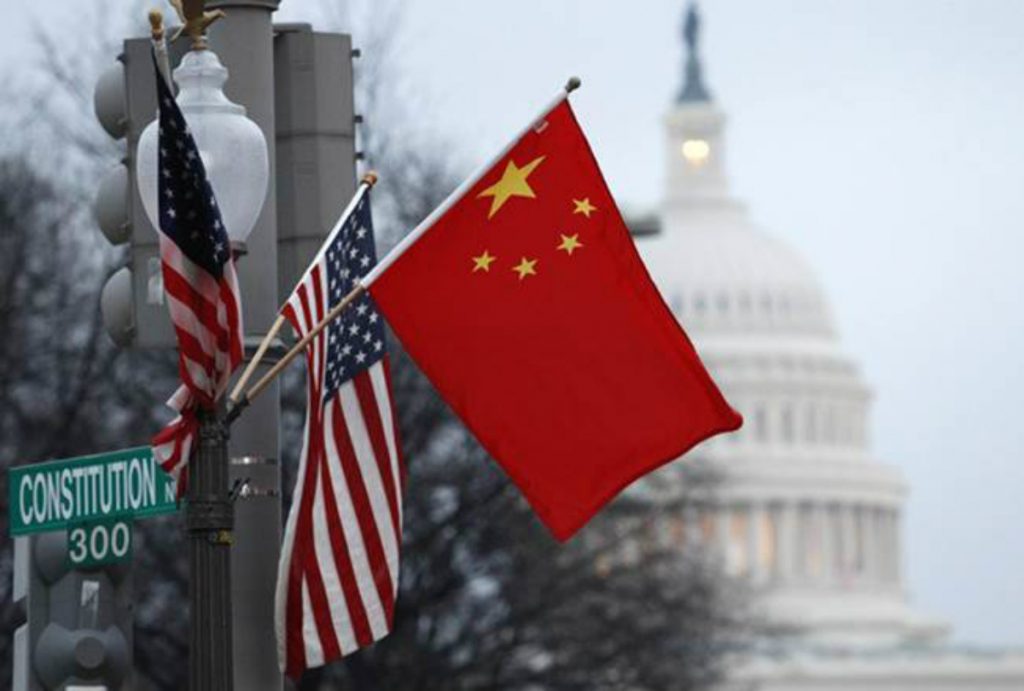
(Reuters) – Remember global imbalances?
They’re back. In a fractured world increasingly marked by self-interest and protectionism, the prospects for a coordinated response among the major economic powers to fix them and avert a crisis look remote.
The U.S. current account deficit – and the corresponding surpluses of China, oil producers, the euro zone, and other advanced economies – has been widening since the COVID-19 pandemic, reversing a decade of steady decline after the global financial crisis.
As International Monetary Fund economists Pierre-Olivier Gourinchas and Christian Mumssen wrote in a blog this week, the historical precedent is clear: widening imbalances risk triggering abrupt reversals of capital flows and pose a potential threat to global economic and financial stability.
So it proved in 2008, when deficits, surpluses, and cross-border capital flows hit record levels.
That’s not to suggest a repeat is in the cards now at all- but there are eerie parallels: wide U.S. deficits, strong Chinese exports, oil above $100 a barrel, and growing concern around opaque parts of U.S. markets (then, subprime mortgage securities; now, private credit).
But the steady narrowing of global imbalances following the global financial crisis came to a halt with the pandemic. Since then, they have widened out again, and the “overall balance” – the sum of absolute values of current account surpluses and deficits – is close to 4% of global gross domestic product. That’s high.
The IMF recipe for narrowing these imbalances and supporting sustainable growth is familiar – fiscal consolidation in deficit countries, more consumption-led growth in surplus economies, and productivity-enhancing investment elsewhere.
But current trends are going the opposite direction – large fiscal deficits and strong domestic demand in the U.S.; a record trade surplus in China, where consumption remains weak following the property bust; and subdued investment and weak productivity growth in Europe.
Adam Slater at Oxford Economics says these are “stubborn” forces. His baseline forecast for the next few years is the U.S. current account deficit staying around 3% of GDP, China’s surplus also staying around 3% of GDP, and the euro zone surplus hovering around 1.5% of GDP.
GLOBAL PROBLEM, GLOBAL SOLUTION?
Current account deficits and surpluses are not inherently risky. The concern arises when misalignments in savings and investment become “excessive” and go beyond economic fundamentals. Of course, knowing where these thresholds are, how smooth the adjustment will be, and when and what triggers it is more difficult to ascertain.


Policymakers can be forgiven for not prioritizing global imbalances, a slow-burning issue that may not manifest for years. There are more immediate problems to tackle, like energy security, inflation, trade wars, and the challenges posed by artificial intelligence.
The world economy has been hit by a series of shocks in the last year, many fueled by U.S. President Donald Trump: tariffs, unraveling U.S.-European relations, questions over NATO’s future, Federal Reserve independence, and the Iran war.
The two-week ceasefire announced by Trump on Tuesday appears to have bought markets some breathing room – oil prices have tumbled below $100 on the news – but perhaps not much more than that.
Fatih Birol, head of the International Energy Agency, said the current energy crisis is more serious than the shocks of 1973, 1979 and 2022 combined.
Global imbalances ideally require global solutions, but multilateralism is hardly in vogue. The U.S. budget deficit is running at around 6% of GDP, and the Trump administration shows no inclination to reduce it. Washington may lean harder on surplus countries like Germany, China and others in Asia to fix imbalances from their side.
But will they? Especially China, which seems as wedded as ever to its export model.
International relations right now are so fractured, even among traditional G7 allies, it’s difficult to envisage a coordinated policy response involving significant deficit-reduction in the U.S. and fiscal expansion in surplus countries, or coordinated exchange rate interventions. Or both.
Over the past 40 years, there have been two periods, each lasting roughly a decade, when global imbalances underwent a notable adjustment.
The first followed the Louvre Accord of 1987, when the world’s major powers came together to halt the dollar’s decline. The second was anything but planned or smooth: the global financial crisis of 2007–09.
Imbalances have been growing again since the pandemic, and are now at historically high levels. Policymakers ignore them at their peril.
The opinions expressed here are those of Jamie McGeever, a columnist for Reuters
By Jamie McGeever; Editing by Marguerita Choy
Share This:


















Global Imbalances are Back, and There’s No Fix in Sight: McGeever