CDN NEWS |
  US NEWS







Despite remarks that Trump wants to repatriate automakers, Hoekstra said Canada was not a top concern for U.S. officials
By Thomas Seal
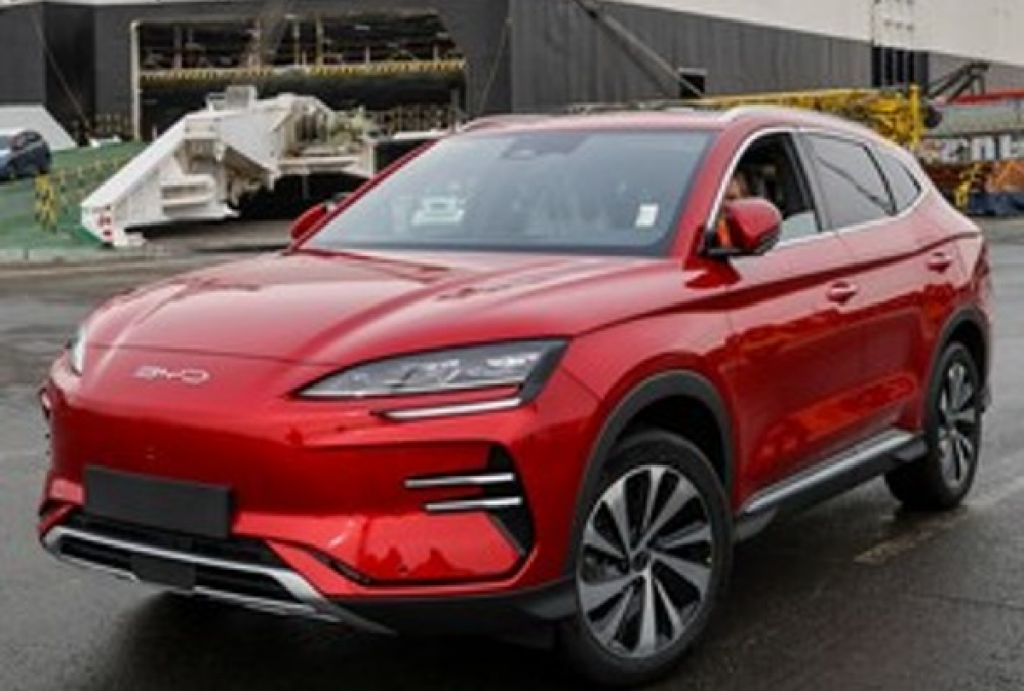
The United States won’t allow Chinese electric cars from Canada to enter its market, President Donald Trump’s ambassador in Ottawa said, after a January deal in which Prime Minister Mark Carney lowered tariffs on those vehicles.
“Those cars can come in from China, come into Canada, but they’re not going to cross the border into the U.S.,” Pete Hoekstra said in an interview with Canada’s Rebel News. “That ain’t gonna happen.”
“We’re not going to open the floodgates to Chinese cars entering the U.S. from Canada,” he said, citing security concerns related to data collected and transmitted by modern vehicles.
Hoekstra did not clarify whether he meant that Chinese cars legally imported into Canada would be denied the U.S. paperwork needed for resale, barred entirely from crossing the border, or subjected to other administrative hurdles. The U.S. has introduced regulations that restrict the sale or import of connected vehicles using technology from China and Russia.
The White House didn’t immediately respond to a request for comment.
In 2024, Canada imposed a 100 per cent tariff on Chinese electric vehicles to align with the policy of then-President Joe Biden. That prompted Chinese counter-tariffs on key Canadian agricultural exports.
Then, after taking office last year, President Donald Trump slapped tariffs on Canadian autos anyway.
Tariff tracker: Keeping tabs on the trade war
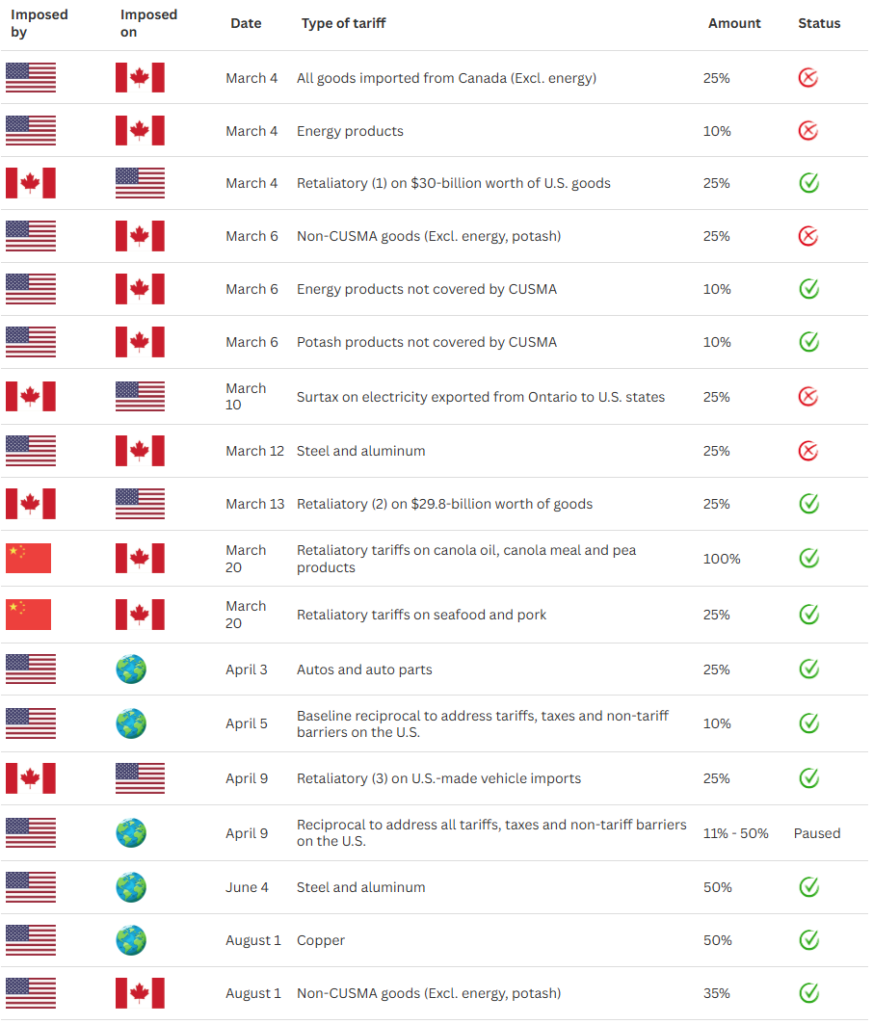
Source: Financial Post
“You guys haven’t really been harmed by the tariffs,” Hoekstra argued on the podcast, calling Canada’s current deal with the U.S. the second-best in the world. Beyond targeted sectors including autos, lumber, steel and aluminum, many Canadian goods remain exempt from U.S. levies as long as they’re traded under the rules of the Canada-U.S.-Mexico Agreement.
Squeezed by tariffs from the world’s two largest economies, Canadian officials changed course. Carney struck a tariff deal with President Xi Jinping in January that allows China to export electric vehicles to Canada at a much lower tariff rate, with an initial quota of 49,000 vehicles in 12 months. In exchange, China agreed to lower import taxes on certain food products, including canola and lobsters.


Despite Trump’s repeated remarks that he wants to repatriate auto manufacturing — a sector long integrated across the U.S.-Canada border — Hoekstra said Canada was not a top concern for U.S. officials as they seek to reshape global trading relationships.
It’s “not inevitable” that car factories shift down to the U.S., said Hoekstra, a former Congressman from Michigan, the U.S. auto heartland.
“Canada’s not our problem with autos. You have a phenomenal story to tell to our U.S. trade rep about, ‘Here’s why Canada deserves to be in the lowest tariff bucket.’”
Most Canadian-made vehicles have a significant proportion of U.S.-manufactured parts. “Cars going across the border are 50 per cent, 75 per cent U.S. content. Those are the kind of cars we like coming in,” Hoekstra said.
“Our biggest threats are from Korea, Japan, Mexico,” he added. “Those are the places where you really can move some numbers in getting car production here back into the U.S. And then we’ve got to figure out what we’re going to do with China, because that’s the biggest threat.”
Arctic Security
The ambassador also expressed disappointment with Carney’s approach to Arctic security, saying Carney’s recent announcement of $32 billion of investment in the region — followed by a trip to Norway for security talks with Nordic nations — was made in a way that seemed to sideline the U.S.
“We don’t play a role in that?” Hoekstra asked. “We think the most effective place to defend Canada and the U.S. is to do it together — but if Canada wants to go another direction, they’re free to do that.”
The Arctic investment Carney announced earlier this month included some new infrastructure in the far north. But much of it was simply about previous commitments to modernize the North American Aerospace Defense Command, the longstanding U.S.-Canada alliance that jointly defends the continent’s airspace.
“We will no longer rely on others to defend our Arctic security or to fuel our economy,” Carney said in prepared remarks at the time. “We are taking full responsibility for defending our sovereignty.”
At a news conference in Norway the next day, he emphasized that NORAD is “fundamentally integrated” with the U.S. and that Washington remains a trusted partner in Arctic security.
The Carney government’s protracted review of whether to continue with the planned purchase of 88 F-35 jets from Lockheed Martin Corp., or to mix it with Swedish-made Gripen warplanes from Saab AB, would have implications for Canada’s ability to repair and service jets, Hoekstra said.
“You know, we’ve got to integrate. It’s the model of NORAD.”
Bloomberg.com
Share This: