CDN NEWS |
  US NEWS







Most conversations about pneumatic emissions abatement start in the right place—a site, a device count, a vent rate, a regulatory deadline. An operator identifies a handful of facilities that need to move to zero-emissions pneumatics, evaluates the available solutions, and makes a decision. At that scale, almost any approach can technically work. The real question operators need to be asking isn’t “what can work at one site?”—it’s “what can work across my entire portfolio, at pace, with verifiable results?”
That’s a fundamentally different question—and it changes the technology selection conversation entirely.
The Infrastructure Complexity Trap
There are credible zero-emissions pneumatic solutions available today. But not all solution architectures are created equal, and the differences that seem manageable at a single site can become serious liabilities when you’re thinking programmatically.
Some alternatives require skid-mounted compressor systems, air dryers, filtration packages, and dedicated power generation—grid-tied or supported by combustion engines, solar arrays, and battery banks. On a single well pad, that can look manageable. But look closer and the real costs accumulate: engineered foundations for rotating equipment, weather-rated enclosures, electrical control infrastructure, dedicated pad space on already-constrained sites, and an ongoing maintenance regime that rotating equipment demands.
Now multiply that by 100 sites—or 500. Each deployment becomes its own small capital project, with its own permitting exercise, civil work, commissioning timeline, and maintenance obligation. You haven’t just scaled your emissions program. You’ve scaled every layer of complexity and cost that comes with it.
At enterprise scale, complexity isn’t just a nuisance. It’s a program killer.
Built for Remote. Built for Scale.
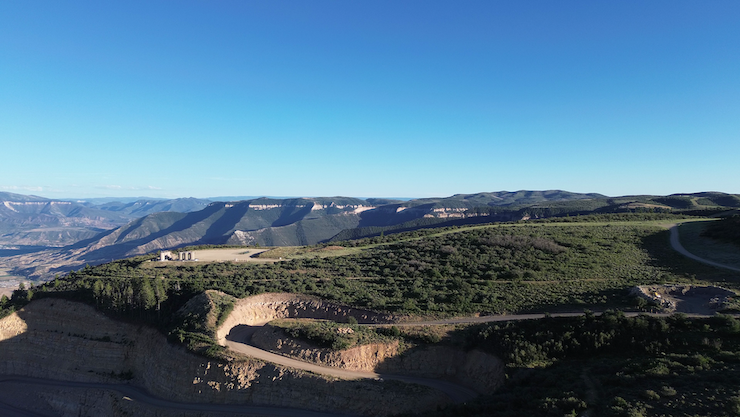
Kathairos was built around a different premise: eliminate emissions without adding operational complexity or infrastructure burden.
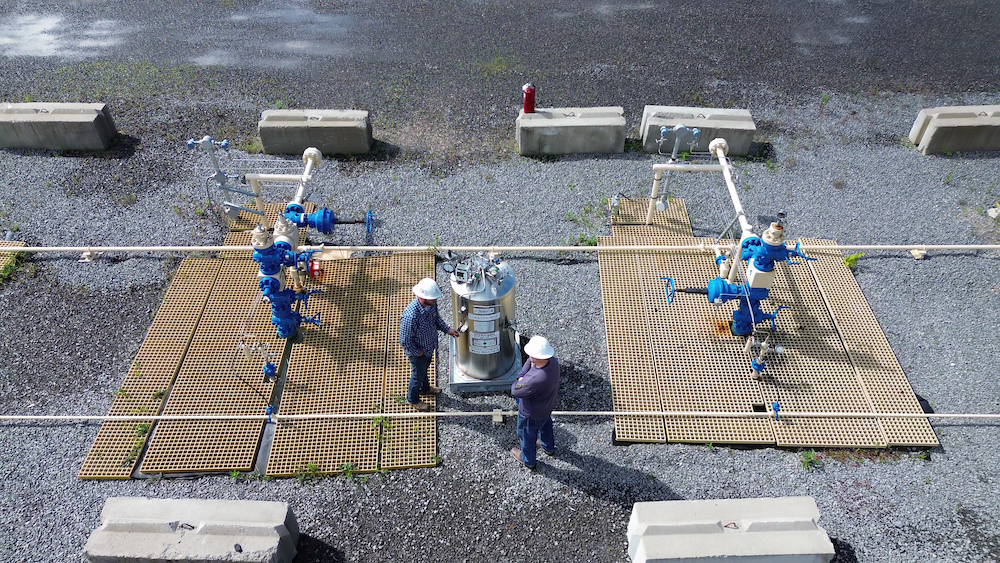
The system uses liquid nitrogen—stored in a cryogenic tank—to replace methane as instrument gas. Nitrogen is inert, safe, and vents harmlessly to atmosphere after actuation. The thermodynamics of the cryogenic tank generate all the pressure needed to drive pneumatic controllers, with no moving parts, no external power requirements, and no need to replace the pneumatic devices operators already rely on.
The site footprint is a tank. A picker truck delivers the unit. Installation is a two-hour tie-in to existing pneumatic lines—no foundations, no enclosures, no electrical infrastructure, no solar panels competing for limited pad real estate. No permitting hurdles tied to new power systems. No civil prep beyond a simple rig mat or gravel pad.
When the work is done, a remote site that was venting methane is running on zero-emissions nitrogen—and the site looks virtually the same as it did before.
That simplicity isn’t just aesthetically clean. It’s what makes the economics and logistics of a large-scale program actually executable.
Consistency at Scale
When one DJ Basin producer set out to address roughly 8,000 pneumatic devices across its Colorado operations, the scope demanded a solution that could be deployed repeatedly and reliably without generating a new management burden at every site. With Kathairos, campaigns of 300-plus tanks were deployed in under three months; 2,200 wells were addressed in nine weeks.
That pace is only possible because the deployment model for site one is operationally identical to site one thousand. No site-by-site engineering. No variable infrastructure requirements. No surprises. Every site that doesn’t require a foundation, an enclosure, or a dedicated power system is a site that gets commissioned faster, runs cleaner, and costs less to sustain.
Data as the Backbone of Accountability
Scaling an emissions program is also an accountability challenge. With Kathairos, operators get real-time monitoring—tank levels, pressure, utilization, and calculated emissions reductions—delivered via cellular and satellite from every deployed system gives operators audit-ready data for regulatory filings, investor disclosures, and carbon credit verification. Reporting aligned with OGMP 2.0 and other recognized frameworks means that data holds up under scrutiny.
When you’re running 10 sites, you can manage data gaps manually. When you’re running 500, you can’t afford to. Programmatic success requires that every site generates defensible, verifiable performance data as a standard output—not an afterthought.
Think in Programs, Not Projects
The operators who will lead the next phase of methane abatement are the ones who stop treating emissions reduction as a series of individual site projects and start treating it as an enterprise program—one that demands predictable deployment, minimal infrastructure, and transparent, scalable reporting.
The fewer variables introduced per site, the more predictable the program becomes. In a capital-disciplined environment with tightening regulatory timelines, that predictability isn’t just operationally convenient. It’s a strategic advantage.
Kathairos Solutions has been deployed at thousands of sites across 17 North American shale basins by more than 70 upstream and midstream producers. To learn how we can support your enterprise emissions program, send us a message at [email protected].
Share This: