CDN NEWS |
  US NEWS







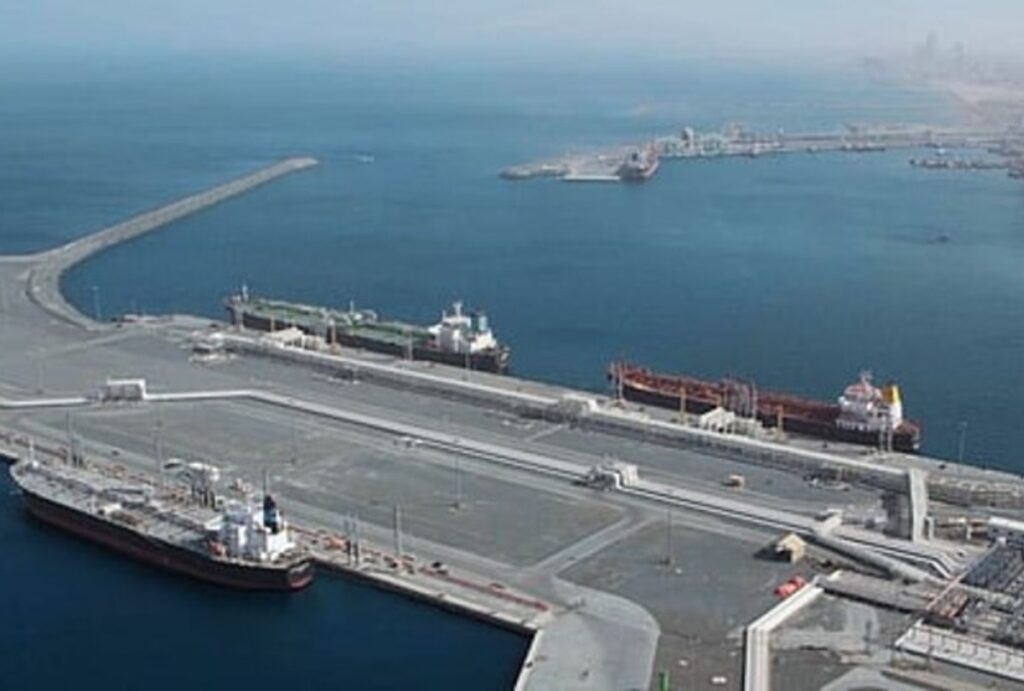
Oil loading operations at the United Arab Emirates’ Fujairah emirate, a major bunkering hub and crude export terminal, have resumed after a drone attack and fire on Saturday, four sources told Reuters, but it was unclear if the operations were back to normal.
An Indian-flagged vessel loaded with 80,800 tonnes of United Arab Emirates’ Murban oil, sailed for India on Sunday from Fujairah, India’s government said.
The vessel, Jag Laadki, was loading oil at the single point mooring, when Fujairah terminal was attacked, India’s Ministry of Petroleum and Natural Gas said on Sunday.
The vessel and all Indian seafarers on board are safe, the statement said.
The US-Iran war has already cut Middle Eastern oil production by over seven million barrels per day or seven per cent of global supply. Disruptions at Fujairah might force OPEC’s third-largest crude producer to shut down more production after already cutting output at its offshore fields.
Iran threatened new attacks on UAE ports on Saturday after US strikes on its Kharg Island facilities. Iran warned residents to leave areas near Jebel Ali port in Dubai and Khalifa port in Abu Dhabi as well as Fujairah, Iranian news agencies reported.
WHY DOES FUJAIRAH MATTER GLOBALLY?
Fujairah exported more than 1.7 million barrels per day of crude oil and refined fuels on average last year, according to Kpler data, a volume equal to about 1.7% of daily world demand.
The port is located on the Gulf of Oman, approximately 70 nautical miles from the Strait of Hormuz, which is effectively closed due to the Iran war, increasing the importance of Fujairah’s flows to the global market during the current conflict.
It sold 7.4 million cubic metres (about 7.33 million metric tons) of marine fuels in 2025, making it the fourth largest in the world after Singapore, Rotterdam and China’s Zhoushan.


WHY DOES IT MATTER TO THE UAE?
The UAE, which before the war began produced more than 3.4 million bpd of crude, operates a 1.5 million bpd pipeline that can transport some crude to bypass the Strait of Hormuz.
The Abu Dhabi Crude Oil Pipeline (ADCOP), also known as the Habshan–Fujairah Pipeline, transports oil from Abu Dhabi’s fields to Fujairah. The port loads the UAE crude grade Murban, sold mostly to buyers in Asia.
With Hormuz largely shut to exports, significant disruptions at Fujairah would force OPEC’s third-largest crude producer to shut down more production.
WHY DOES IT MATTER TO CRUDE AND FUEL MARKETS?
The port has a storage capacity of 18 million cubic metres, making it one of the world’s top hubs for storing crude and fuels as well as blending operations.29dk2902l
Blending in the oil industry is the process of mixing different petroleum components to create finished products such as gasoline and bunker fuels that meet specific standards.
Major global storage companies operate at the port, including VTTI, Vitol, ADNOC, Vopak, and others.
The Fujairah Oil Industry Zone hosts the Middle East’s largest commercial storage capacity for refined products.
(Reporting by Ahmad Ghaddar, editing by Alex Lawler and Louise Heavens)
Share This: