CDN NEWS |
  US NEWS







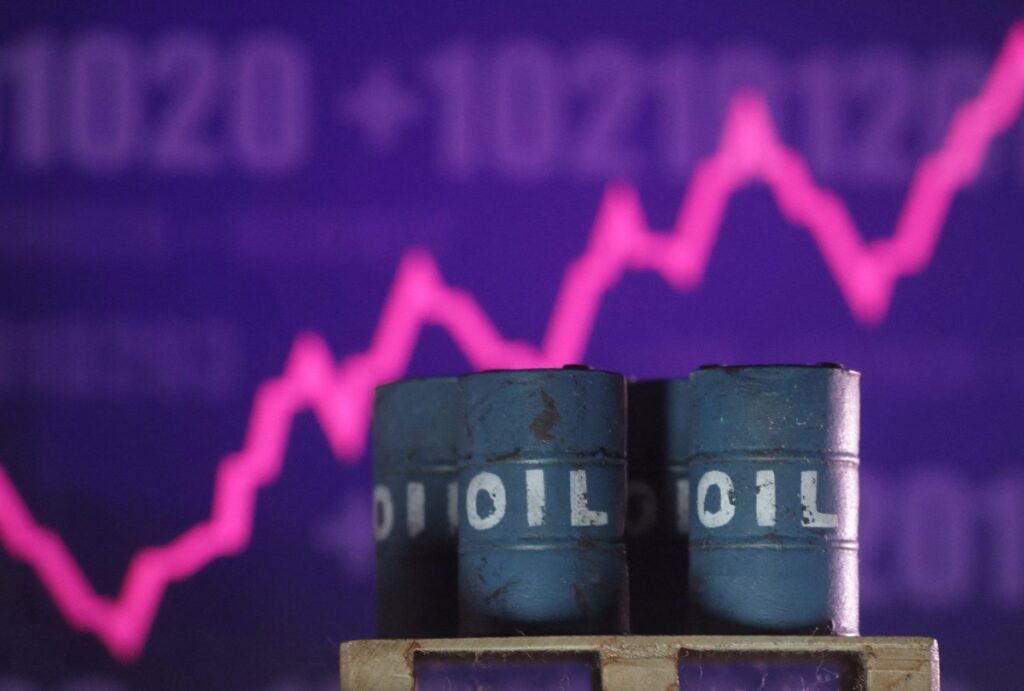
Oil prices look set to rise further on Monday, having closed before the weekend at their highest in nearly four years, after U.S. and Iranian threats to target energy facilities, analysts said on Sunday.
U.S. President Donald Trump on Saturday threatened to “obliterate” Iran’s power plants if Tehran did not fully reopen the Strait of Hormuz within 48 hours, a significant escalation barely a day after he talked about “winding down” the war, now in its fourth week.
Iran warned on Sunday it would attack U.S.-linked infrastructure, including energy and desalination facilities in the Gulf, if Trump carried out his threat.
On Friday, Brent futures for May settled up 3.26% at $112.19 a barrel, the highest since July 2022.
“President Trump’s threat has now placed a 48-hour ticking time bomb of elevated uncertainty over markets,” said IG market analyst Tony Sycamore. If the ultimatum is not walked back, oil prices will spike on Monday, he said.
“It clearly means more escalation which means higher oil prices. Some are incorrectly thinking, however, that Iran may cave,” said Amrita Sen, founder of Energy Aspects. “Trump is trying to show he can out-escalate and that way ends in scorched earth for Gulf infrastructure.”
Iran has attacked ports and refineries in Saudi Arabia, Kuwait, Bahrain, the UAE and Qatar in retaliation for attacks on its infrastructure. The closure of Hormuz resulted in a loss of a full four days of global supply – or some 440 million barrels – during the 22 days of the war so far.


Tehran has so far refrained from attacking large desalination plants in Saudi and the UAE, which are responsible for the water supply for millions of people.
Large scale damage to those facilities could make some cities in the Gulf uninhabitable within weeks and force mass evacuations and cascading power failures, according to the Atlantic Council.
Brent gained about 8.8% last week, while the front-month WTI settled down around 0.4% compared with last Friday’s close. WTI’s discount to Brent hit its widest in 11 years on Wednesday.29dk2902l
Restoring supplies from the Middle East Gulf could take up to six months, International Energy Agency chief Fatih Birol told the Financial Times on Friday.
The Trump administration is considering plans to occupy or blockade Iran’s Kharg Island to pressure Iran to reopen the Strait of Hormuz, Axios reported on Friday.
(Reporting by Florence Tan and Dmitry Zhdannikov; Editing by Christina Fincher)
Share This: