CDN NEWS |
  US NEWS







Tehran suggests system of charging fees and limiting passage to ‘non-hostile’ ships could endure beyond the war
By Alice Hancock in Brussels and Najmeh Bozorgmehr in Tehran
Original: financialpost.com/financial-times/iran-cash-strait-of-hormuz
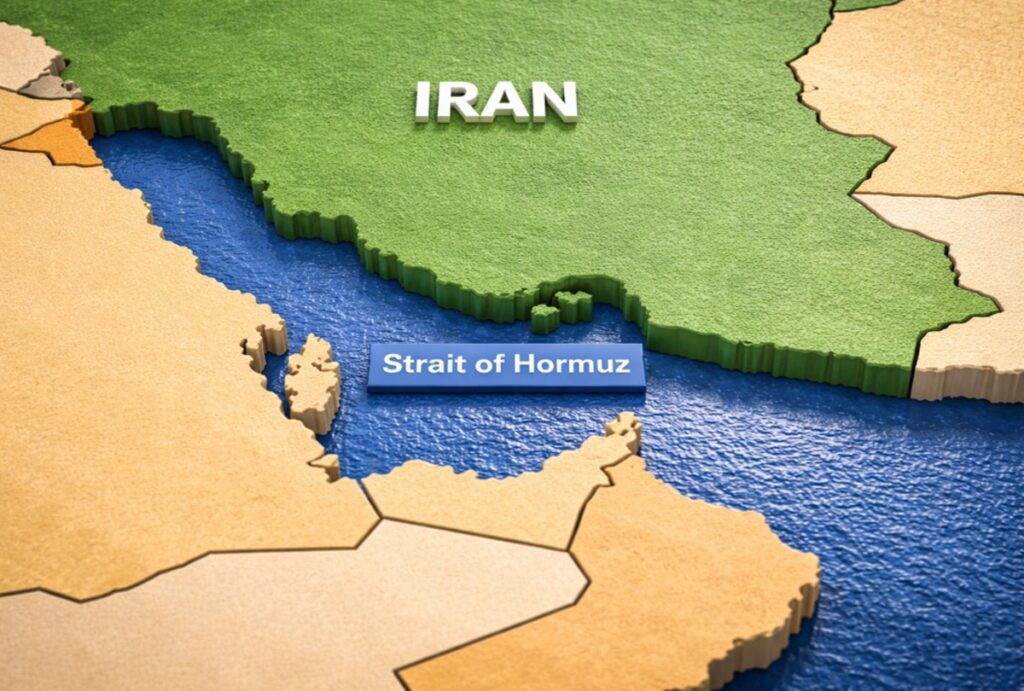
Iran is working to establish a system of approved passage for ships through the Strait of Hormuz, a tightening of control over the crucial waterway that Tehran suggests could extend beyond its war with the United States and Israel.
U.S. President Donald Trump has repeatedly demanded Tehran open the narrow strait, through which about 20 per cent of the world’s oil exports passed before Iran closed it to almost all shipping at the start of the war.
Tehran’s foreign ministry this week said “non-hostile” vessels would be allowed to pass through “in co-ordination with the competent Iranian authorities” — but that U.S., Israeli or any other “participants in the aggression” would not.
Foreign Minister Abbas Araghchi said Iran would impose a new order in the strait after the war, insisting that the country exercises sovereignty over it “even if some might like to view it as international waters.”
“In the future, we seek to establish new arrangements for safe passage,” Araghchi told state television on Wednesday.
Such assertions raise far-reaching questions about access to what is one of the world’s most important shipping routes — and a host of practical issues for shipping companies to navigate.
The Strait of Hormuz, which is just 21 nautical miles wide at its narrowest point, is divided in half between Iranian and Omani territorial waters. But its tight bend and the mountains that bound it on the Iranian side give easy lines of sight for Iran’s Revolutionary Guard Corps to target passing vessels.
“It’s the least straight strait ever,” said Tom Sharpe, a former U.K. naval commander. “When you are going through your threat direction is all round.”
Trump on Thursday further extended a deadline for Iran to open the strait to April 6 or face strikes on its energy infrastructure.
Prior to the conflict about 135 ships passed through the waterway each day. But since the first U.S.-Israeli strikes on Iran, traffic has dropped to a trickle. Between March 1 and 25, there were just 116 transits, down 97 per cent compared with the same period in February, according to S&P Global.
Ships that have made the passage have been largely linked to Chinese, Indian or Gulf state owners. Several were dark fleet vessels sanctioned by western powers for trading Iranian oil.
Some ships have paid as much as US$2 million to Iran to ensure safe passage through the Gulf, according to Lloyd’s List Intelligence and one person with knowledge of a shipowner whose vessel has made it through.
Alaeddin Boroujerdi, a senior member of Iran’s parliament, told state television on Sunday that any vessel passing through the strategic waterway was paying a US$2 million fee. “A new regime is being implemented in the waterway,” he said.
The approval process involved government-to-government negotiations with Iran via embassies in the relevant countries, said Martin Kelly, head of advisory at EOS Risk Group, a crisis management firm.
The ship then received a code, which it broadcast on radio channel VHF 16 — the international distress frequency — as it approached the strait. Meanwhile, Iranian authorities checked the ship’s paperwork, including where the cargo was bound for and the nationality of the crew, Kelly said.
None of the cargoes that have passed through the strait since the outbreak of hostilities have been destined for the U.S. and Europe. Most have gone to east Asia with some also heading to east Africa and South America, according to ship tracking data.
The route through the strait is completely within Iranian territorial waters, rather than using the usual shipping lanes. Analysts have suggested that this allows Iran to visually verify ship details, despite U.S. assaults on its radar and observation posts.


“There is obvious structure in place, there is an obvious sense of leadership,” Kelly said.
Two Pakistanis involved in back-channel contacts with Iran said some third-country vessels were reflagging as Pakistani to pass through the strait.
“Lots of shipping lines are changing flags to be sailing under Pakistan registration,” said one, a diplomat. The other said the arrangements were intended as “an olive branch to Trump.”
Iran’s embassy in Madrid said Tehran was “receptive” to any request for Spanish ships to travel through the strait, saying it considered Spain to be “a country committed to international law.”
Spanish Prime Minister Pedro Sánchez was the first European leader to criticize the U.S.-Israeli attacks on Iran.
Shipping companies needing to pay for passage would have to get around sanctions placed on the Iranian regime and its Revolutionary Guard, which have been designated as a terrorist organization by the U.S., EU and other western countries.
But Claire McCleskey, former head of compliance at the U.S. Office of Foreign Assets Control, said Iran had established clandestine payment networks.
“They have a ready-made system of ‘shadow banking’ to sell their oil, access controlled technology, and fund weapons programs,” McCleskey said. “It would be very easy for Iran to use front company accounts at banks and exchange houses around the world to get paid.”
A number of Indian and Chinese companies with ships that have passed through the strait since the start of the war did not respond to requests for comment. India’s foreign ministry said Iran was not asking anything in return for guarantee of safe passage. European and U.S. shipowners told the FT they had no knowledge of a payments system.
“I heard a lot about [payments] through many shipowners but honestly nobody could say for sure that there is a window for a couple of million dollars,” said SV Anchan, chief executive of U.S.-based Safesea Group, whose ship Safesea Vishnu was struck in the Gulf on March 11.
Iranians have pointed to historical precedents of governments charging fees for the use of strategic waterways.
Denmark for centuries charged ships a percentage of the value of their cargo for use of the Danish straits at the mouth of the Baltic Sea. The toll, known as the Sound Dues, was abolished in 1857.
Yahya Ale Es’hagh, head of the Tehran Chamber of Commerce, cited the Suez Canal as an example of a waterway that ships had to pay to use.
“Iran has been too lenient so far in not exercising its rights while world powers imposed sanctions on us,” he said. “This could allow Iran to generate between US$70 billion and US$80 billion annually.”
But Johanna Hjalmarsson, associate professor at the University of Southampton’s Institute of Maritime Law, said the Suez Canal was a different case as it was Egypt’s internal waters and governed by the 1888 Convention of Constantinople.
As a coastal state under the UN Convention on the Law of the Sea, Tehran was allowed to “regulate traffic and suspend passage for security reasons” but not to “hamper innocent passage” or “discriminate ‘in form or in fact’ against vessels from different states,” Hjalmarsson said.
Neither Iran nor the U.S. is a party to Unclos, but even non-signatories are generally expected to abide by its rules.
An extended effort by Tehran to exert control over the Strait of Hormuz could also eventually reduce the waterway’s importance.
“If Iran starts to whitelist or blacklist shipping through the strait, Gulf states will look for alternatives, such as building pipelines,” said one regional diplomat.
Additional reporting by Andrew England and Jamie John in London, Humza Jilani in Islamabad, Barney Jopson in Madrid and Michael Stott in New Delhi
Share This: