CDN NEWS |
  US NEWS







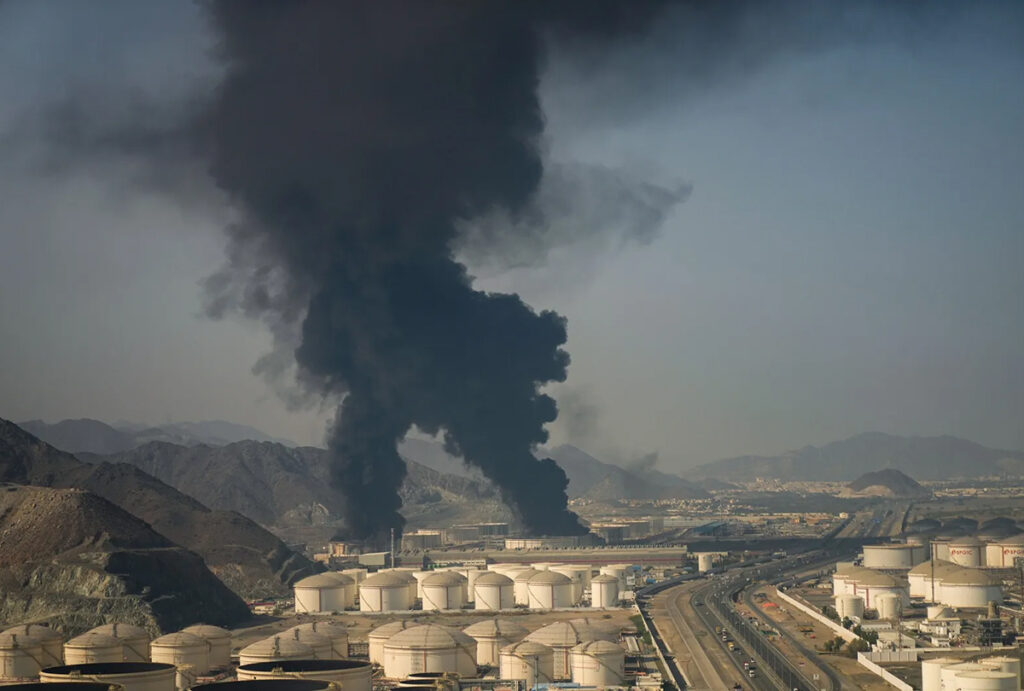
Fire and plumes of smoke rise from an oil facility in Fujairah, United Arab Emirates on March 14. Photographer: Altaf Qadri/AP Photo
Dozens of refineries, oil fields, gas plants, ports and other energy infrastructure have been damaged by missile and drone strikes, with the Iran war now well into its fourth week.
As Tehran rejected a 15-point US proposal to end the conflict, it has kept up attacks on Arab Gulf states and Israel. Still, in recent days, Iran has largely avoided Persian Gulf oil and gas infrastructure, after President Donald Trump postponed strikes on energy sites in the country.
Here is a list of some of the Middle East’s most important energy facilities that have been hit or disrupted during the conflict. Some facilities have restarted after being temporarily shut, but the operational status of other sites remains unclear.


Oil Refineries:
- Ruwais, UAE: One of the biggest refineries in the world was shut as a precautionary measure after a drone strike caused a fire in the industrial area where it’s located.
- Ras Tanura, Saudi Arabia: Saudi Aramco temporarily halted operations at the kingdom’s largest crude processing plant — with 550,000 barrels a day of capacity — after a drone attack in the first few days of the war. The facility has since been restarted.
- Samref, Saudi Arabia: A drone fell on refinery that’s half owned by Exxon Mobil Corp.
- Bapco Energies, Bahrain: The 400,000 barrel-a-day plant was damaged in an attack and declared force majeure on operations that had been impacted.
- Mina Al-Ahmadi, Kuwait: The refinery suffered another attack Friday that shut down some units, a day after the facility was targeted in a wave of strikes.
- Mina Abdullah, Kuwait: A fire at the plant was extinguished following a March 19 attack. One of the country’s two refineries was already shut in, after Kuwait’s oil output was cut by at least half.
- Lanaz, Iraq: Operations were suspended at the plant in the northern city of Erbil after a fire caused by a drone strike, Reuters reported, citing unidentified provincial officials.
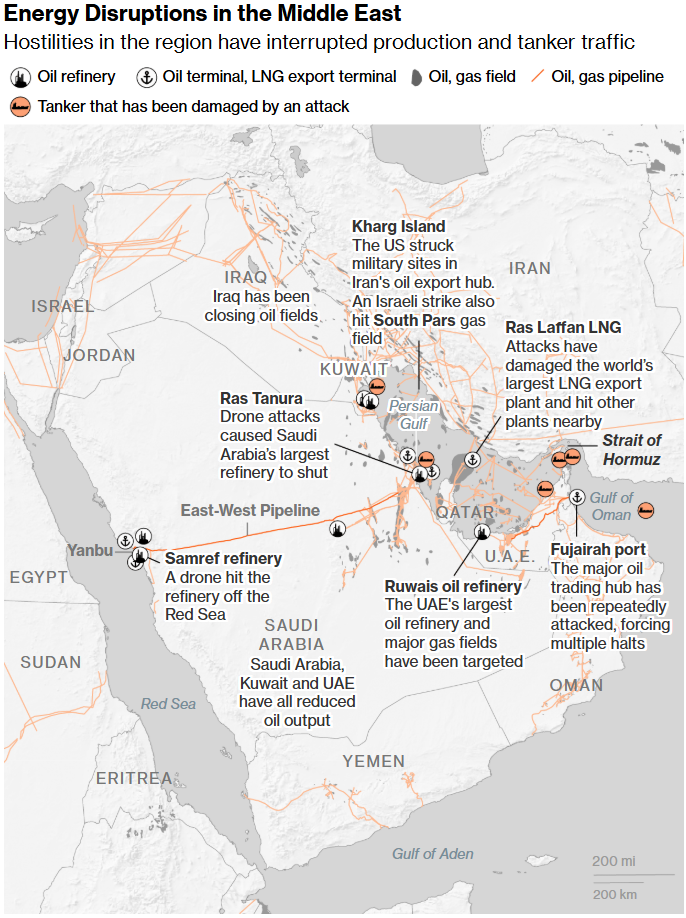
Sources: Bloomberg reporting, Institute for the Study of War and AEI’s Critical Threats Project; US Central Intelligence Agency; US Department of Energy
Gas Facilities:
- Ras Laffan, Qatar: QatarEnergy said LNG facilities were hit by Iranian missiles, triggering fires that caused extensive damage, including to Shell Plc’s gas-to-liquids plant. QatarEnergy has declared force majeure on some long-term supply contracts.
- Habshan, UAE: Abu Dhabi has restarted the gas facilities that were shut after being hit by falling debris from an intercepted strike.
- South Pars, Iran: Israel attacked facilities at Iran’s giant gas field, with fires causing some units to be taken out of production, according to the semi-official Tasnim news agency.
- Isfahan, Iran: A gas pressure-regulation station and an associated administrative building were targeted this week in central Isfahan province in recent US–Israeli attacks, the semi-official Fars news agency reported.
- Shah, UAE: Operations were suspended after an Iranian drone attack on March 16 caused a fire at the massive natural gas field.
- Das Island LNG, UAE: Abu Dhabi plant in the Persian Gulf is operating at low levels due to inability to export via the Strait of Hormuz.
Oil Fields:
- Majnoon, Iraq: The oil field in the south of the country was targeted by an attack, according to a statement from Iraq’s Oil Ministry, which didn’t provide any additional details.
- Shaybah, Saudi Arabia: The 1 million barrel-a-day field in the kingdom’s east has been repeatedly targeted by multiple drones. No damage has been reported.
Nuclear Plants:
- Bushehr, Iran: There was another strike near the operating power unit of the Iranian nuclear plant on Tuesday evening, Interfax reported, citing Rosatom Chief Executive Officer Alexey Likhachev.
Ports:
- Yanbu, Saudi Arabia: Loadings at the key Red Sea port resumed after a brief halt, following an Iranian attack last week. The facility has become crucial as the Kingdom races to boost exports following the near standstill in the Strait of Hormuz.
- Fujairah, UAE: The critical Emirati port outside Hormuz has been periodically shut by drone strikes, impacting flows of both crude and fuels.
- Jebel Ali, UAE: DP World has previously suspended operations at the key container port in Dubai as a precautionary measure.
- Sohar, Oman: the port has resumed operations after being shut after the area was hit by drones.
- Mina Al Fahal, Oman: Crude export terminal resumed operations on March 12 after being closed as a precautionary measure.
- Salalah, Oman: Terminal operations were suspended following drone attacks, but have since been restarted.
- Khalifa Bin Salman, Bahrain: Maersk’s APM Terminals unit suspended operations at the port.
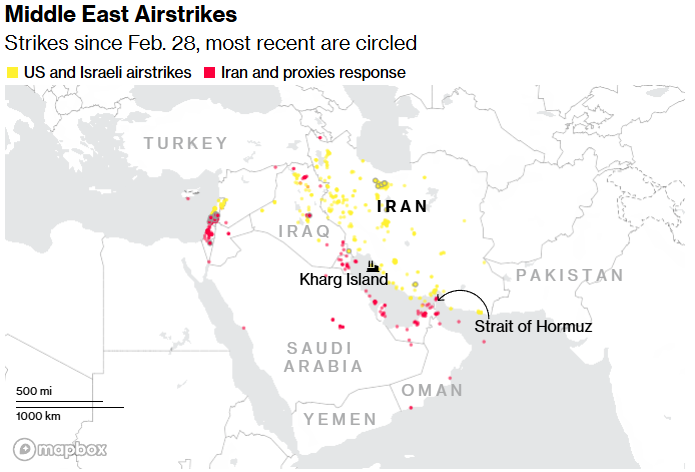
Sources: Institute for the Study of War and AEI’s Critical Threats Project as of March 22 evening Middle East time, Bloomberg News reporting
— With assistance from Nayla Razzouk, Anthony Di Paola, Salma El Wardany, Fiona MacDonald, Alex Longley, Olga Tanas, Priscila Azevedo Rocha, Elena Mazneva, David Wethe, Prejula Prem, and Ruth Liao
Share This: