


 CDN NEWS |
  US NEWS







By Priscila Azevedo Rocha, Sing Yee Ong, and Stephen Stapczynski
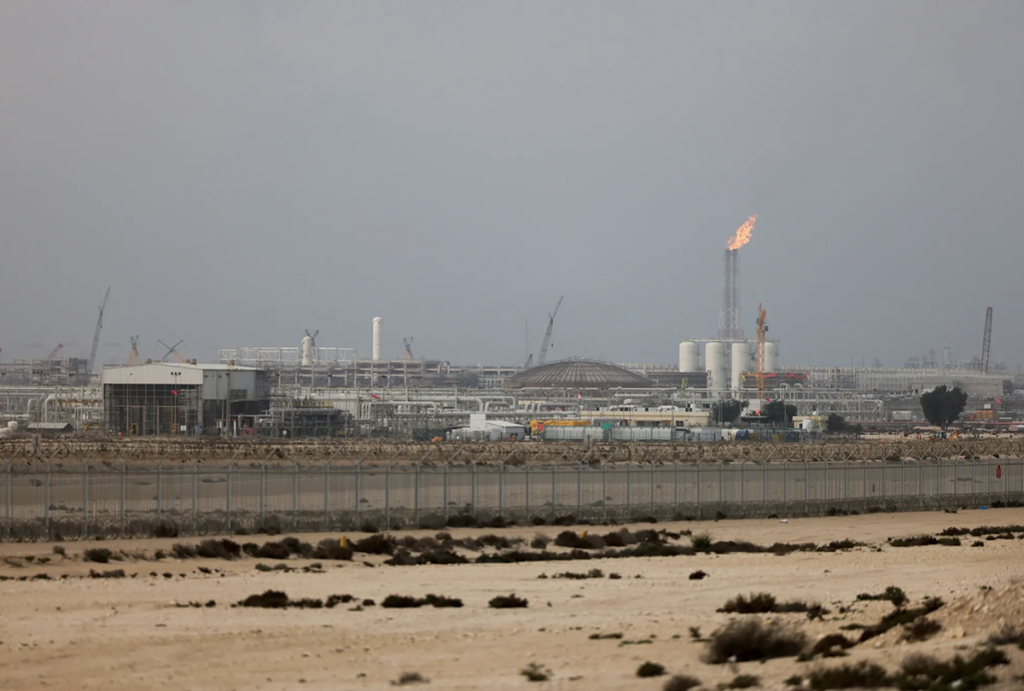
A tense global hunt for liquefied natural gas sparked by the war in the Middle East is starting to shift physical supply flows, as more shipments bound for Europe are diverting to Asia.
At least nine cargoes initially headed to Europe have changed course to Asia since the start of the fighting, according to ship-tracking data compiled by Bloomberg, with the trend accelerating in recent days. A buffer of spare supply is quickly drying up, threatening more competition and higher prices for both regions.
Adding to the turmoil, LNG suppliers, including Shell Plc, are declaring force majeure for customers across Asia due to halted flows from the Middle East, according to people with knowledge of the matter. This illustrates a growing ripple effect throughout the global gas market.
The conflict has shut down Ras Laffan, the world’s largest LNG export facility in Qatar, and halted traffic through the Strait of Hormuz. For each day the disruption continues, roughly three Qatari LNG cargoes are effectively removed from the market, according to Bloomberg calculations based on 2025 output data. A smaller LNG export plant in Abu Dhabi is also unable to ship cargoes. Combined, the outages amount to about 20% of global LNG supply.
“If this situation were to persist for multiple months, dragging well into the summer, there aren’t enough alternative LNG sources to sufficiently supply the global market,” said Mathieu Utting, an analyst at Rystad Energy. “The two other major LNG suppliers, the US and Australia, are already operating at full capacity with little room to increase utilization.”
For Europe, there’s urgency to attract more LNG as it needs to refill storage tanks nearly depleted during the winter. In parts of Asia, hotter-than-normal weather is slated to boost air-conditioning use over the next several months. Prices in both regions have soared dramatically over the past week, sparking fears over inflationary pressures and economic ramifications.
Bidding War
“Asian buyers will need to supplement their term supply with spot cargoes,” said said James O’Brien, head of LNG at D.Trading, a unit of Ukraine’s private energy company DTEK. “This will inevitably pull more Atlantic molecules east.”
Buyers in India, Bangladesh and Thailand have already turned to the spot market to shore up supplies, but challenges are starting to emerge with some recent tenders for March delivery, including ones from India, going unawarded due in part to a lack of sellers and sky-high prices.


BloombergNEF data show that global LNG imports totaled 8 million metric tons last week, down 26% from the previous week. During the same period, LNG supply declined 16%.
Supplies from the US, the world’s largest LNG producer, aren’t likely to fill the gap anytime soon. While several facilities there are under construction, flows will come online incrementally.
Golden Pass in Texas, a joint venture between Qatar and Exxon Mobil Corp., is close to completion but has not yet started. Cheniere Energy Inc.’s Corpus Christi plant in Texas is gradually adding new capacity, and Venture Global is ramping up its second Louisiana plant, Plaquemines, and building a third, CP2.

Source: Bloomberg
The situation is diminishing the odds that a long-awaited LNG supply glut will materialize this year. Morgan Stanley analysts including Devin McDermott said in a note that any extension in the Qatar LNG outage beyond one month “quickly brings a deficit,” after the bank initially foresaw 6 to 8 million tons of oversupply this year.
Rabobank’s energy strategist Florence Schmit sees a similar picture. With every week that Qatari production remains shut, the expected surplus is reduced by 1.5 million tons, leaving roughly five weeks before the market turns to a supply deficit, she said. QatarEnergy’s decision to delay the start of a major expansion project will also weigh on supply in 2026.
“Markets are now facing a supply deficit even with higher US flows,” Schmit said. “The LNG glut has been delayed by a year.”
— With assistance from Ruth Liao, Elena Mazneva, and Andrew Janes
(Updates with suppliers declaring force majeure in third paragraph)
Share This:


















COMMENTARY: The Dangerous Politics of US Oil-Driven Redistribution