CDN NEWS |
  US NEWS







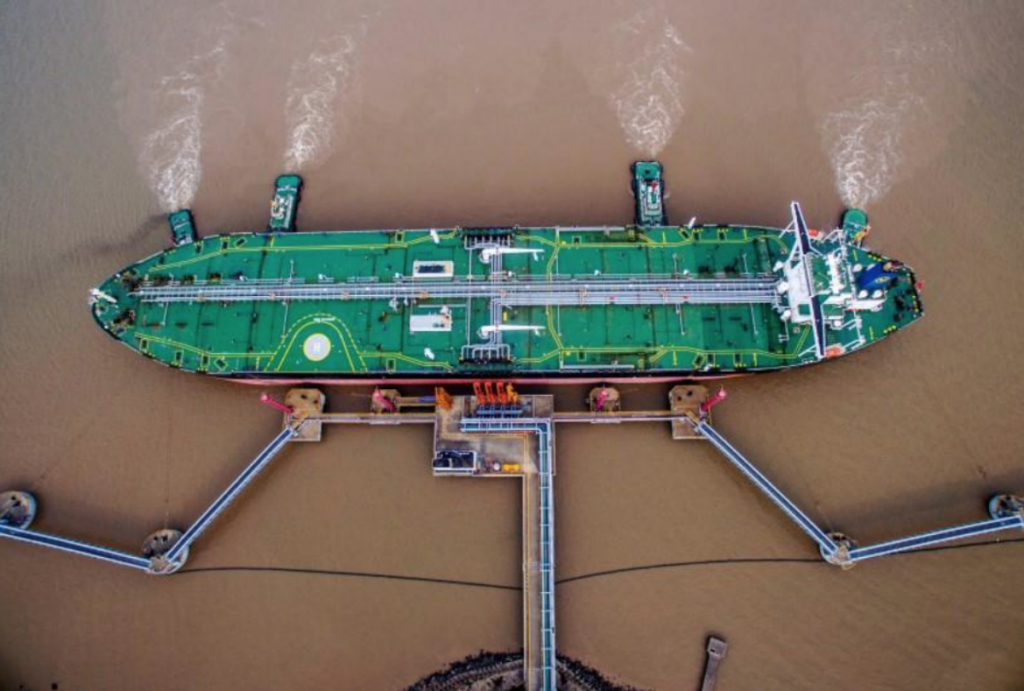
(Reuters) – China is the world’s largest energy importer and would therefore appear vulnerable to the surge in crude oil and natural gas prices from the conflict between Israel and the United States against Iran.
But the opposite is most likely the case, with China’s vast stockpile of crude a cushion against price spikes, meaning that any energy-led inflation in the rest of the world will not hit China.
It is also possible that China’s refiners could reap windfall profits in the event of a prolonged disruption to crude supplies from the Middle East, by ramping up exports of refined products.
If Asia’s export-orientated refineries in countries such as India and Singapore start to run low on crude supplies, China will have the ability to refine stockpiled crude and export products such as diesel and gasoline to take advantage of the inevitable surge in fuel prices.
China has other advantages as well, insofar as it remains the major buyer of sanctioned, but discounted, Russian crude and is also the destination for any Iranian crude at sea that managed to exit the Strait of Hormuz before the weekend attacks by Israel and the United States.
China does not disclose how much crude it adds to commercial and strategic inventories, but an estimate of the surplus oil can be made by adding together crude imports and domestic production and then subtracting refinery throughput.
On this basis, China’s surplus crude was 1.13 million barrels per day (bpd) in 2025, with especially strong builds toward the end of the year as imports rose sharply, hitting a record high of 13.18 million bpd in December.
While official data on imports and refinery production for the first two months of this year are yet to be released, it is likely the strong builds in inventories continued.
China’s crude imports are estimated at 12.47 million bpd for the first two months by LSEG Oil Research, as the country’s refiners took advantage of discounted Russian and Iranian barrels.
If domestic output remained largely steady from December levels of around 4.2 million bpd and refinery throughput held around 14.7 million bpd, the surplus for the January-February period may be as high as nearly 2 million bpd.
This level of surplus crude offers China two options.
Firstly it means they can cut imports in coming months and thus mitigate some of the impact of the sharp rise in prices, with Brent crude futures jumping 7.3% to end Monday at a one-year high of $77.77 a barrel.
It would not be surprising to see China’s imports drop to about 10.5 million bpd to 11.0 million bpd by May and June.


The second option is for China to maintain robust refinery throughput, thus ensuring domestic supply and even allowing for increased fuel exports, should Asian prices surge in the event of tighter supply of crude from the Middle East.
Since Beijing also controls domestic prices of retail fuel that means Chinese consumers and businesses will not be exposed to any spike in energy-led inflation that affects competitors in the United States and Europe.
COAL, LNG
China’s advantage extends beyond crude oil to both coal and liquefied natural gas (LNG).
The world’s biggest importer of LNG, China has shown in past episodes of high prices it will cut spot purchases and only take long-term cargoes, which tend to be either on fixed or oil-linked prices.
China may also resell LNG cargoes, allowing its utilities to boost profits.
Domestic natural gas output can probably be boosted for a short period and China can also maximise imports via pipelines from central Asia and Russia, thus ensuring that any global price spike does not cross into the domestic market.
Benchmark Asian LNG prices jumped almost 39% on Monday morning, with the S&P Global Energy Japan-Korea-Marker, widely used as an Asian LNG benchmark, standing at $15.068 per million British thermal units, Platts data showed.
China is the world’s biggest coal producer and importer and has flexibility to increase domestic output and trim imports if seaborne coal prices rise amid increased demand as an alternative for LNG for power generation.
But China mainly imports thermal coal from Indonesia, and it tends to be of a lower energy content and therefore not sought by European buyers or utilities in Japan and South Korea.
This means that similar to crude oil and LNG, China is largely insulated from any surge in coal prices.
These are already showing signs of moving higher in response to the Iran crisis, with globalCOAL assessing Australia’s benchmark Newcastle coal at $121.13 a metric ton on Monday, up 4.7% from the prior close.
The views expressed here are those of the author, a columnist for Reuters.
Editing by Clarence Fernandez
Share This: