CDN NEWS |
  US NEWS







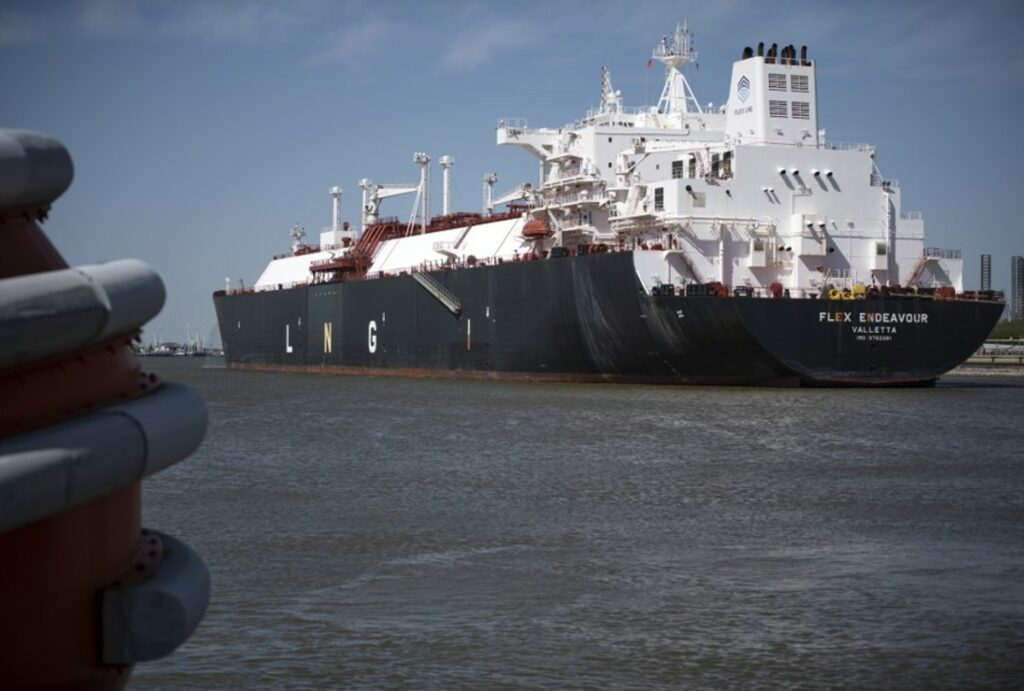
(Reuters) – In the ten years since the first export cargo of liquefied natural gas (LNG) left Texas, the United States has grown rapidly into the top supplier of the ultra-cooled fuel to world consumers.
That dramatic expansion shows no sign of slowing down, with analysts and industry executives projecting that record U.S. LNG export capacity will double in just five years.
Whether the world market, already showing signs of saturation, will be able to absorb those supplies is an open question.
Shell’s CEO Wael Sawan said earlier this month that the LNG sector was expanding at a rate of about 3% per annum, outpacing the gas market.
Cheniere Energy exported the first LNG cargo from the lower 48 states on February 24, 2016, from its Sabine Pass facility, marking a new era for the U.S. LNG industry that would eventually see it overtake heavyweights Qatar and Australia.
Cargoes of LNG had previously been exported from Alaska in thin quantities.
Now, the United States is processing around 18 billion cubic feet per day of natural gas into LNG, according to LSEG and EIA data, making it the top supplier. Gas at the wellhead is measured in cubic feet while LNG is measured in metric tonnes.


“LNG exports from the United States increased for several reasons, including abundant natural gas supply and reserves, flexible LNG export contracts, and relatively low feedgas costs,” the U.S. Energy Information Administration said in a statement on Tuesday.
Increasing international demand – particularly from Europe following Russia’s invasion of Ukraine – and a favorable investment climate have supported LNG infrastructure expansions in the U.S, the EIA said.
The EIA said late last year that LNG exporters in the U.S. have announced plans to bring U.S. liquefaction capacity up to 28.7 bcfd by 2029, from 11.4 bcfd at the start of 2024.
Two of the world’s three largest LNG exporters are located in the U.S., Cheniere and Venture Global LNG.
Cheniere told Reuters it has invested $50 billion in growing its two export facilities over the past decade and aims to double output to 100 million metric tonnes per annum by the mid-2030s.
“At the end of 2016, our operational capacity was approximately 9 mtpa. Today, it is approximately 52 mtpa and climbing, as we continue to bring Corpus Christi Stage 3 trains online,” Cheniere told Reuters in an email response on Tuesday. Venture Global did not immediately reply to a request for comment.
Reporting by Curtis Williams in Houston Editing by Nick Zieminski
Share This: