CDN NEWS |
  US NEWS







One of the biggest problems facing Tesla these days is the fact there are plenty of other EV options to choose from
By Hannah Elliott
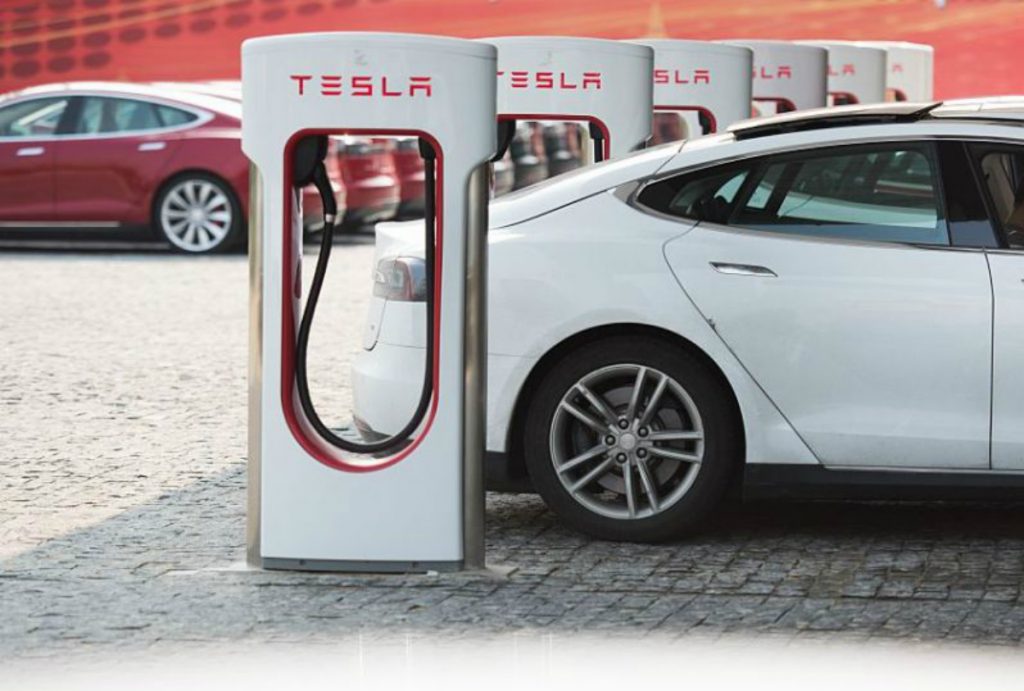
Tori Horowitz loved her 2021 Tesla Model S. “It worked for my life because I’m in my car all the time,” says the realtor, who drives weekly from Los Angeles 80 miles north to Ojai, California. “It felt efficient. It was zippy. It was intuitive. It was exactly what I needed.”
But she didn’t love the reputation of Tesla co-founder and chief executive Elon Musk, who’s polarized consumers by engaging in public spats with presidents and endorsing an antisemitic post on X, the social media site he owns. In 2024 he was sued for sexual harassment and accused of erratically using ketamine and other drugs. (Musk has denied the accusations of harassment and said that he took ketamine under prescription years ago but not since. He did not respond to a request for additional comment. A representative for Tesla did not respond to multiple requests for comment.)
By 2024, Horowitz had traded her Model S for an electric Audi Q4 e-tron. “I was not cool with supporting, or telegraphing supporting, him,” she says.
Horowitz is not alone. Customer-experience measurer Creative Strategies cited owner frustration with Musk as a distinct vulnerability for Tesla back in 2022. Research firm Escalent found in a 2021 study of EV owners that Musk was considered among the top drawbacks of the brand.
“Tesla would do a lot better if it wasn’t polarizing in that way, on either side,” says Anthony Salerno, senior vice president of automotive analytics at J.D. Power, a global analysis and consumer intelligence firm.
Sales results show Tesla Inc. is indeed struggling even as its fourth-quarter adjusted earnings exceeded analysts’ estimates. In 2025, sales declined nine per cent worldwide. United States sales fell seven per cent from 2024, according to Cox Automotive; in California, its biggest U.S. market, the percentage of Teslas among all newly registered vehicles dropped to under 10 per cent in 2025, down from 11.6 per cent in 2024, according to Experian.
But the reasons behind Tesla’s struggles are much more complicated than mere dislike of Musk.
There’s been a broader slowdown in EVs worldwide. Growth in global sales of electric vehicles is expected to slow again in 2026, according to BloombergNEF, which predicts an increase of only 12 per cent from a year earlier — weaker than the 23 per cent sales growth in 2025. (Compare that with 2024, when EV and plug-in hybrid sales climbed 26 per cent, and it was 34 per cent in 2023, according to Bloomberg’s Electric Vehicle Outlook.)
The mood around EVs can be attributed to many factors, such as the loss of federal tax credits in 2025; the end of emissions waivers and revenues from carbon credits; and diminished aftermarket values as consumers fear battery degradation and anticipate quickly evolving technologies. Even China is ending some subsidies, and Europe has scaled back on attempts to eliminate combustion engines. Inefficiencies in charging still stymie many owners, even as the infrastructure expands in the U.S. and Tesla’s Supercharger network is widely recognized as the best available.
It’s not uncommon for EV owners to find their way back to combustion. “I just missed having the tactile experience,” says Christian Delise, a Denver resident who put more than 50,000 miles on his 2013 Model S before giving it up for a Porsche Panamera GTS in 2022. “I don’t mind if my Panamera is slower; I still love the sound.”
Still, more than two-thirds of consumers who leave Tesla switch to another EV, according to S&P Global. That highlights one of the biggest problems for Tesla: These days, there are plenty of other EVs to choose from.
The company faces intense competition from legacy and Chinese manufacturers. Today, there are more than 100 EV models for sale in the U.S., according to data from Argonne National Laboratory. Tesla’s U.S. market share dipped below 50 per cent for the first time in 2024—a sign that its first-mover advantage has faded since it delivered the first Roadster in 2008 and the Model S in 2012. The company’s brand value dropped to US$43 billion in 2025, down 26 per cent from 2024, according to consultancy Brand Finance; Chinese automaker BYD has passed it as the bestselling EV manufacturer in the world.


“Back then, the brand was more than just the vehicle,” says Tom Libby, a consultant at S&P Global Mobility and the author of its Tesla brand loyalty report. “It was perceived as a leader, and the vehicles themselves were leading-edge EVs, although they are not necessarily at the forefront anymore.”
The company is having to cope with its portfolio of aging models. Tesla hasn’t launched a fully new model since the Cybertruck in 2023, and Musk announced on Jan. 28 that it will soon discontinue its two oldest vehicles, the Model S and Model X (which started deliveries in 2015). It’s expected to start production of a ride-hailing Cybercab vehicle and share more details about a next-generation Roadster, initially unveiled in 2017, later this year.
“A big driver for the decline is lack of new products,” says Stephanie Valdez Streaty, director of industry insights at Cox Automotive. “Any automaker that doesn’t have new products is going to lose market share. Tesla needs new products.”
Other issues, such as outdated technology and inferior components, came up as common complaints in my conversations with more than a dozen former and current Tesla owners.
Electric vehicles in general are notorious for poor build quality. According to Consumer Reports, they are 80 per cent more likely to have problems than conventional cars, and it’s notable that this year EV competitor Rivian is rated the least reliable automaker of all. (A spokesperson for Rivian did not respond to a request for comment.) In 2025, Consumer Reports ranked the Tesla Model 3 as the 10th-most-reliable EV behind frontrunners from Lexus, Hyundai and Porsche and the highest of any Tesla on the list. (A spokesperson for Tesla did not respond to a request for comment regarding the quality of Tesla vehicles.)
Multiple owners also mentioned that lackluster customer relations led them away from the brand, and there’s no shortage of Reddit threads expanding on this. Last summer, fed up with “dealing with Tesla customer service” and the inconvenience of getting to service stations an hour away from his home in Kingston, New York, Oresti Tsonopoulos sold his 2018 Tesla Model 3 and 2020 Tesla Model Y and got a Hyundai Ioniq 9. “It was nice to consolidate from those two cars,” he says, adding that although the price on the Ioniq 9 was comparable, to him the Hyundai represented a better overall value.
Such defections are typical, according to S&P Global, which reports that many people then choose vehicles with similar or higher prices. “Tesla defections are not cost-driven,” Libby wrote in his report. “Households are choosing alternative vehicles in comparable or higher price bands — often for differences in format, capability, or brand — rather than trading down for affordability.”
For its part, Tesla may looking further ahead. It’s increasingly focusing on robotics, and Musk has said that Tesla will eventually derive 80 per cent of revenue from Optimus, a robot trained for repetitive tasks. There are also indications Musk could merge Tesla with his artificial intelligence company, xAI, or with SpaceX, his rocket company. Musk plans to merge SpaceX with xAI, Bloomberg reported on Monday.
The new focus could be the path toward regaining some of the brand’s prodigal customers, who still see Tesla vehicles as mules for cutting-edge software. “The excitement from Tesla is gonna come in the form of technology,” says J.D. Power’s Salerno. Meanwhile, after its deepest dip last spring, brand loyalty for Tesla has started to inch back up, possibly boosted by aggressive incentives and Musk’s more subdued persona, says S&P’s Libby.
In Venice, California, Brett Baer says he would consider driving his Tesla again if Musk delivers on the autonomous driving he’s been championing publicly since 2015. Despite its nomenclature, Tesla’s current system called Full Self-Driving (Supervised), or FSD, is not fully autonomous. The company is facing a possible suspension of its sales license in California after the state’s Department of Motor Vehicles accused it of misleading consumers about the automated-driving capabilities of its vehicles. (In a post on X on Dec. 16, Tesla North America said it was a “consumer protection order about the use of the term ‘Autopilot’ in a case where not one single customer came forward to say there’s a problem.” The company did not respond to a request for additional comment.)
For the most loyal customers, hope springs eternal, says Salerno. The fewer disruptions from billionaire CEOs, the better.
“Full self-driving is something that Tesla will conquer and probably do it better than anyone else,” he says. “Honestly, I think Elon just needs to focus on the business and get rid of the distractions in his life.”
Bloomberg.com
Share This: