CDN NEWS |
  US NEWS







By Julian Hast

US natural gas consumers withdrew more gas from storage last week than they ever have before as a powerful late-January storm boosted demand for the heating fuel while also disrupting production across key gas-producing basins.
Consumers withdrew 360 billion cubic feet of gas in the week leading up to Jan. 30, the largest weekly storage decline on record, according to an Energy Information Administration report released Thursday.
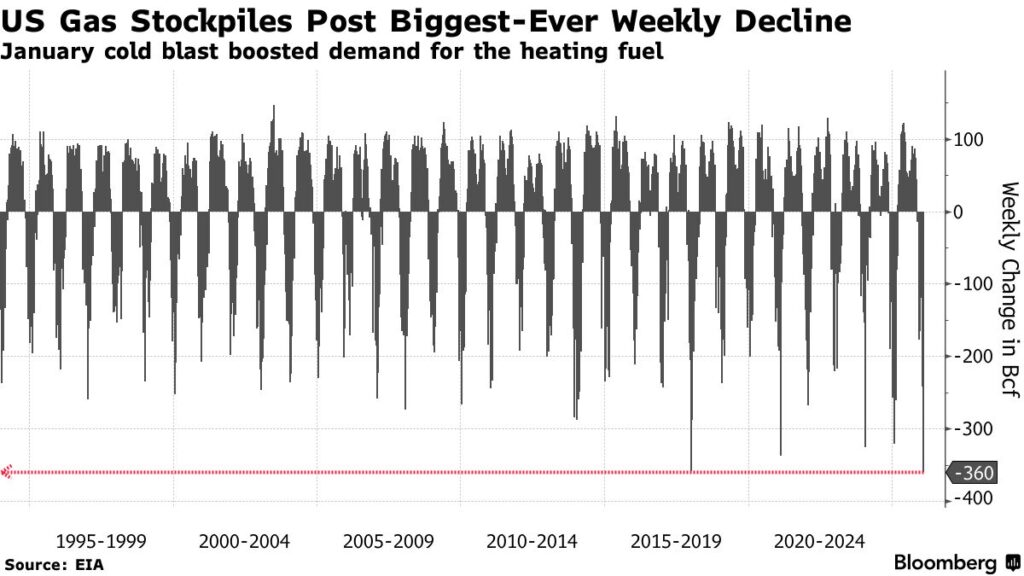


Stockpiles totaled 2.463 trillion cubic feet in the same period, the report said. That’s 1.1% below the five-year average. By comparison, inventories were 5.3% higher than average a week earlier.
Nearly half of US grid power is generated by natural gas, which means gas-fired power plant operators and other businesses withdraw more stored gas to meet heating demand when temperatures drop sharply.
Severe winter weather during the last days of January choked off as much as 18% of US gas production as water froze in wellheads, causing pipeline “freeze-offs.” Frigid conditions over the same period pushed gas demand 25% higher than the average for the time of year, BloombergNEF data show. Anticipation of the cold blast also spurred the largest-ever weekly price increase for US gas futures, while prices for physical near-term delivery of gas at the US benchmark on Jan. 26 hit a record high.
Wholesale gas prices in the US are strongly correlated with weather because of consumers’ reliance on gas furnaces and electric heat. Regional grids declared emergencies as the storm battered fuel supplies, triggering blackouts across the South and record power prices in the Northeast. Record gas prices forced some grids to switch from gas to burning dirtier, less efficient oil to keep the lights on.
Share This: