CDN NEWS |
  US NEWS







By Robert Cyran
NEW YORK, Jan 23 (Reuters) – Greenland deal or no, the international order is fraying. As the Trump administration ramped up – before stepping back from – brazen territorial claims, Canadian Prime Minister Mark Carney captured the mood at the World Economic
Forum in Davos: “Great powers have begun using economic integration as weapons.” The global linkage most vulnerable to disruption, from the 1970s oil shock to Russia’s aggression in Europe, has been energy. The United States controls enviable supplies. The possibility of weaponizing them, though, is ebbing.
While Uncle Sam is the world’s largest oil producer, churning out over 13 million barrels daily, it also consumes most of what it makes. That leaves just over 2 million barrels of net exports, about 2% of global consumption.
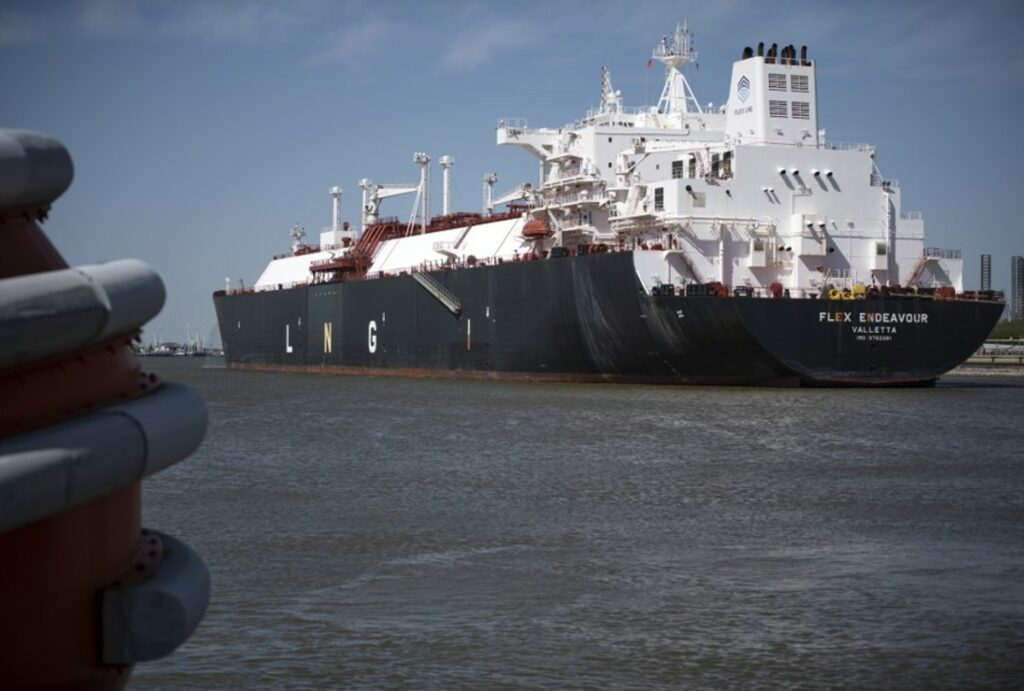
Where it dominates is sales of liquefied natural gas. It sold 111 million metric tons last year, roughly a quarter of all exports, according to LSEG data. Nations are frenziedly building facilities to handle shipments as the United States tracks toward roughly doubling export capacity by 2030.


The reason is simple. Domestic gas production surged nearly 50% over the past decade, largely thanks to a boom in hydraulic fracturing. That subdued local prices. The Henry Hub benchmark, despite a recent cold-snap-induced spike above $5 per million BTU, probably will spend most of this year below $4, judging by futures pricing.
In post-Ukraine-invasion Europe, prices are substantially higher, around $13 per million BTUs for March, based on the Dutch TTF benchmark. As the European Union sought to wean itself off Russian fuel, the United States has become the supplier of over 60% of its LNG, about a quarter of total gas supplies. This especially matters during winter doldrums, when renewable power generation falls and nations deplete their storage reserves.
However, this overstates Europe’s bind. Germany could not switch to a different supplier to fill Russian pipelines. Any ship could supply an LNG terminal. There would be delays, given that gas is usually sold via long-dated contracts. But if U.S. tankers go toward Asia instead, then gas from Qatar, Australia or elsewhere will find its way directly to Europe, or Asia buyers might re-ship gas off to the EU. After all, LNG is a fungible commodity. Meanwhile, the EU has reduced consumption by about a fifth since 2021.
A further 25% drop is expected by 2030, according to the IEEFA, thanks to curtailed demand and growth in green electricity and batteries. Anxiety over U.S. belligerence might increase decarbonization budgets. That’s before getting into a rapidly growing domestic U.S. demand from data centers or rising export capacity elsewhere. The simple arbitrage underlying of cheap U.S. gas and European demand with nowhere to go was always going to wane. Trump has given his putative allies every reason to accelerate the shift.
The author is a Reuters Breakingviews columnist. The opinions expressed are his own.
Editing by Jonathan Guilford; Production by Maya Nandhini
Share This: