CDN NEWS |
  US NEWS







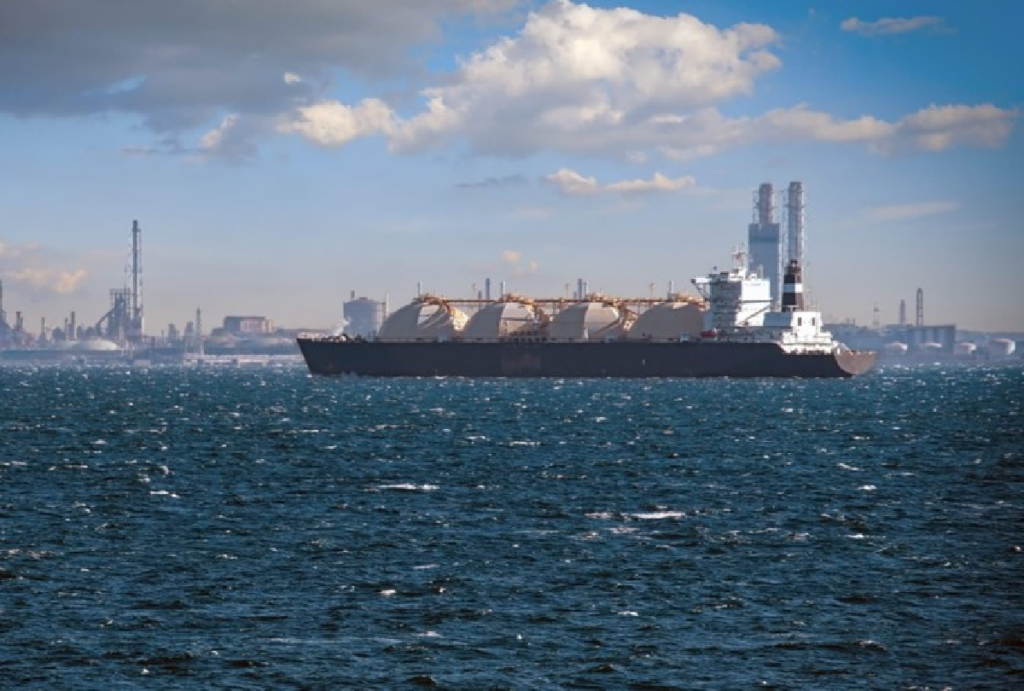
(Reuters) – Europe’s vast natural gas storage network is set to exit winter at its lowest level in years, yet market prices indicate a complacency starkly at odds with the enormous challenge traders face in refilling inventories.
Replenishing underground storage has become a central feature of Europe’s gas market – and by extension, the international liquefied natural gas (LNG) market – ever since Russian pipeline flows collapsed following Moscow’s invasion of Ukraine nearly four years ago.
European gas storage dropped to 44% of total capacity on January 26, according to European energy data platform AGSI. That is the lowest level for this time of the year since 2022, when it hit 40% as the market scrambled to replace Russian supplies, and it is well below the 10-year average of 58%.
And if current trends persist, storage could plunge to 30% or lower by the end of March, based on Reuters analysis of historic data.
If Europe ends winter with storage only 30% full, about 60 billion cubic metres (bcm) of gas will need to be injected to return stocks to 83% – the level at which the region entered last winter.
More importantly, not all imports go into storage. Most are used to meet daily demand, so Europe’s total buying requirements in the coming months could be enormous.
Of course, Europe also imports pipeline gas from Norway, North Africa, and Azerbaijan, and has some domestic production. But the task of refilling the continent’s underground caverns ahead of next winter remains immense.
LNG TO THE RESCUE … AGAIN
The good news is that Europe should be able to ramp up its already enormous LNG purchases.
The chilled fuel has played a pivotal role in Europe’s gas market in recent years. Indeed the continent’s LNG imports last year soared 30% to hit an all-time high of over 175 bcm. This importance is set to increase moving forward, as the European Union earlier this month agreed to fully phase out pipeline gas and LNG imports from Russia by late 2027 at the latest. This will end five decades of heavy dependence on Russia.
The ban will reduce Russian supplies by 33 bcm between 2025 and 2028, or roughly 12% of total European gas imports last year, according to the International Energy Agency. That shortfall will primarily be filled by LNG purchases, which the world’s energy watchdog sees hitting a fresh record of 185 bcm this year.


Luckily for Europe, global LNG production is expected to continue its robust expansion this year, with projections for a 7% increase in 2026, its fastest pace since 2019, mostly through new export terminals in the U.S., Canada and Mexico, according to the IEA.
And this trend should continue in the coming years, with new capacity, mostly from North America and Qatar, expected to total some 300 bcm per year between 2025 and 2030. That’s a 50% jump from current levels.
CONFUSED PRICE SIGNALS
In the meantime, however, current benchmark European gas prices are complicating the task of refilling stocks.
Summer TTF futures are trading at a premium to winter prices – the opposite of the pattern needed to make storage profitable. Winter prices must exceed summer prices enough to justify storage and extraction costs. Today’s so-called backwardation removes that incentive. The reasons for this trend are murky. Traders may assume governments, especially Germany, will intervene with subsidies or mandates to ensure the EU meets its legally required 90% storage target by December 1. But such intervention seems unlikely.
Another explanation is that traders expect Europe to rely less on storage as global LNG supplies balloon, making it easier to replenish inventories year-round. But, if that’s the thinking, the logic is flawed. Even if global LNG availability is high, Europe could still struggle to source sufficient supplies in the coldest months if it enters winter with low storage levels.
A third factor may be rising speculative activity in the European gas market. According to Energy Flux founder Seb Kennedy, around 444 funds held TTF positions last week – well above an average of 185 in 2022. Increased speculative participation can distort signals and amplify volatility, potentially contributing to today’s unusual summer-winter spread, Kennedy said.
To be sure, there is still time for the curve to correct, and the spread could revert as fundamentals reassert themselves. A similar mismatch last year hampered refilling efforts until prices adjusted ahead of summer.
But resolving the current pricing disconnect is essential. With storage set to emerge from winter at multi-year lows, Europe cannot afford a market structure that discourages replenishment.
As it stands, the continent risks heading into another heating season without a sufficient buffer – a risk European leaders likely will not want to take.
The opinions expressed here are those of the author, a columnist for Reuters
Ron Bousso Editing by Marguerita Choy
Share This: