CDN NEWS |
  US NEWS







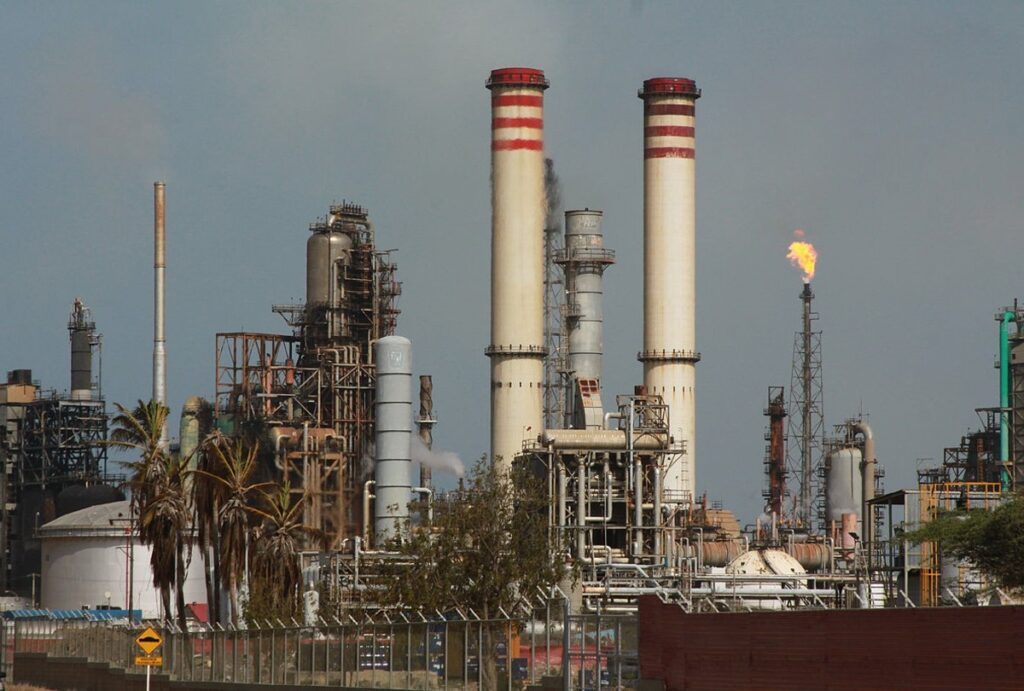
(Reuters) – Oilfield services company Baker Hughes said on Monday that there is significant revenue opportunity in Venezuela, with the main considerations for operating there being safety and conditions for employees, and clarity on legal and regulatory frameworks. The Houston-headquartered company has been working with authorities on Venezuela after the U.S. earlier this month removed President Nicolas Maduro from power and called on oil companies to rebuild the South American country’s dilapidated oil industry.
The company, which generated about half a billion dollars of revenue in Venezuela in 2012, said it had maintained an ongoing presence in Venezuela, supporting licensed oil producers with their activities. “We’re taking a prudent long-term view as we continue to evaluate opportunities and also the activity we have in the market,” Lorenzo Simonelli, CEO of Baker Hughes, said during an earnings call. Moderate production increases in Venezuela will require substantial investment in well integrity, off-grid power generation, equipment replacement, upgrades and services, Simonelli said, adding that a significant bump in oil production would provide Baker Hughes opportunities on the oilfield services side, as well as in the industrial and energy technology business.


‘WORK IN PROGRESS’
“The incremental opportunity of revenue is significant, and will be obviously programmatic as we go back, and there’s a lot of work in progress,” Simonelli said. Rival services company SLB said last week it can rapidly increase its activities in Venezuela, provided the appropriate licensing, safety parameters and compliance measures are in place. Halliburton said earlier that it would seek to re-enter Venezuela as soon as commercial and legal terms, including payment certainty, are resolved. Baker Hughes, which reported an 11% rise in adjusted profit for the fourth quarter on Sunday, forecast 2026 revenue between $26.2 billion and $28.3 billion, which at its midpoint came in below last year’s revenue of $27.7 billion.
Adjusted earnings before interest, tax, depreciation and amortization are expected to range between $4.6 billion and $5.2 billion, compared with $4.8 billion in 2025.
Reporting by Arathy Somasekhar in Houston and Sumit Saha in Bengaluru; Editing by Nathan Crooks.
Share This: